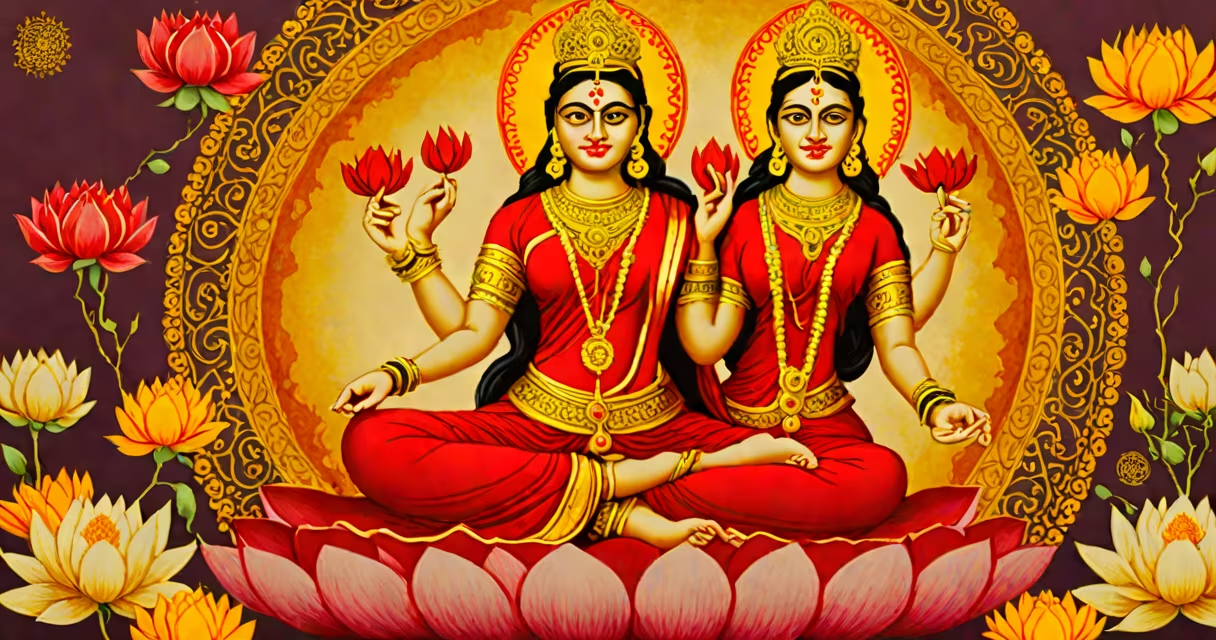
The 4th day of Navratri is dedicated to Goddess Kushmanda, the creator of the universe whose radiant smile is believed to have birthed the cosmos. This day falls on the fourth lunar day (chaturthi) of the bright fortnight (shukla paksha) in the Hindu month of Ashwin, marking the midpoint of the nine-day festival honoring the divine feminine.
Goddess Kushmanda appears in a golden hue, riding a lion, with eight arms holding weapons and a lotus. Her name derives from "Kushmaṇḍa," meaning "the one who resides in the cosmic egg." She is associated with solar energy, vitality, and the power to heal both physical and spiritual ailments. Devotees observe fasts, offer prayers, and perform rituals to invoke her strength and grace.
Navratri spans nine nights, each dedicated to a different form of the goddess Durga. The 4th day specifically honors Kushmanda as the embodiment of creative force and cosmic balance. Fasting on this day is considered especially potent for cleansing the body and mind, aligning with the festival's core purpose of spiritual renewal.
Navratri follows the lunar calendar, with each day corresponding to a specific deity. The 4th day begins at sunrise on the fourth day of the bright fortnight in Ashwin, which typically falls in September or October. The timing is determined by the position of the moon and varies annually across regions.
Devotees begin the day with a ritual bath using water mixed with turmeric and sandalwood paste. They then prepare a small altar with a clay or metal idol of Goddess Kushmanda, place fresh flowers, incense, and offerings such as kheer (sweet rice pudding), fruits, and raw or boiled vegetables. The prayer chant "Om Shreem Hreem Kshum Kshum Kushmandayai Namah" is recited 108 times during the puja.
Fasting involves abstaining from grains, salt, and meat. Many follow a fruit-based diet or consume only sattvic foods-simple, pure ingredients like milk, nuts, and fruits. Some eat only one meal a day, usually before sunset. The fast ends at sunrise on the 5th day after completing the evening puja.
While the core rituals remain consistent, regional practices differ. In North India, especially in Uttar Pradesh and Rajasthan, families gather for community pujas at homes or temples. In Gujarat, people perform Garba dances in the evenings, often pausing to honor Kushmanda with special songs and lamps.
In South India, particularly Tamil Nadu and Kerala, the focus remains on temple rituals. Temples dedicated to Durga or Shakti hold special abhishekams (ritual bathing of idols) on this day. The sound of bells and chants of "Jai Maa Durga" echo through cities like Chennai and Kochi.
| Region | Ritual Focus | Food Restrictions |
|---|---|---|
| North India | Home pujas, family gatherings | Grains, salt, meat excluded |
| Gujarat | Garba dancing, community events | Only sattvic foods; no onions or garlic |
| Tamil Nadu | Temple abhishekams, processions | Strict vegetarianism; no root vegetables |
A lesser-known fact: In some parts of West Bengal, devotees believe that eating a single date on the 4th day brings immunity to illness. This practice stems from ancient Ayurvedic texts that associate Kushmanda with digestive health and immune support.
Many assume the 4th day is merely a continuation of the previous days' routines. In reality, it marks a shift toward inner transformation. While the first three days emphasize protection and strength, the 4th day focuses on creation and regeneration. The goddess is not just a warrior but a life-giver.
Another misconception is that fasting on this day requires extreme deprivation. According to the Manusmriti, fasting should be moderate and sustainable. The goal is not self-punishment but mental clarity and devotion. A 24-hour fast is common, but shorter durations are acceptable for elders or those with health conditions.
Some confuse Kushmanda with other forms of Durga, such as Chandika or Mahakali. But Kushmanda is distinct: she represents the initial spark of creation, while others embody destruction or preservation. Her iconography includes a sun-like aura, unlike the fierce expressions of other goddesses.
I attended a Navratri puja in Ahmedabad during the 4th day in 2023. The home was filled with marigold garlands and diyas lit around a silver statue of Kushmanda. A group of women chanted mantras in unison while a priest offered kumkum and jaggery. After the ceremony, we shared a meal of sabzi made from pumpkin and lentils-traditional dishes linked to Kushmanda's association with the sun and fertility.
One elder woman told me that her family has fasted on this day for four generations. "We don't eat because we're punishing ourselves," she said. "We do it because we feel stronger, clearer, and closer to the divine."
Modern research supports the benefits of intermittent fasting, which aligns with Navratri's traditional practices. A 2021 study published in Nature Reviews Endocrinology found that short-term fasting improves insulin sensitivity and reduces inflammation. These effects mirror the spiritual goals of purification and renewal observed during the 4th day of Navratri.
The festival reinforces cultural identity. For diaspora communities, observing the 4th day connects younger generations to ancestral traditions. In Toronto and Chicago, local temples host virtual pujas and live Garba sessions, ensuring continuity across borders.
The 4th day of Navratri is not just a religious observance-it is a living tradition rooted in cosmology, health, and community. By honoring Goddess Kushmanda, devotees engage with a timeless narrative of creation, healing, and inner awakening.