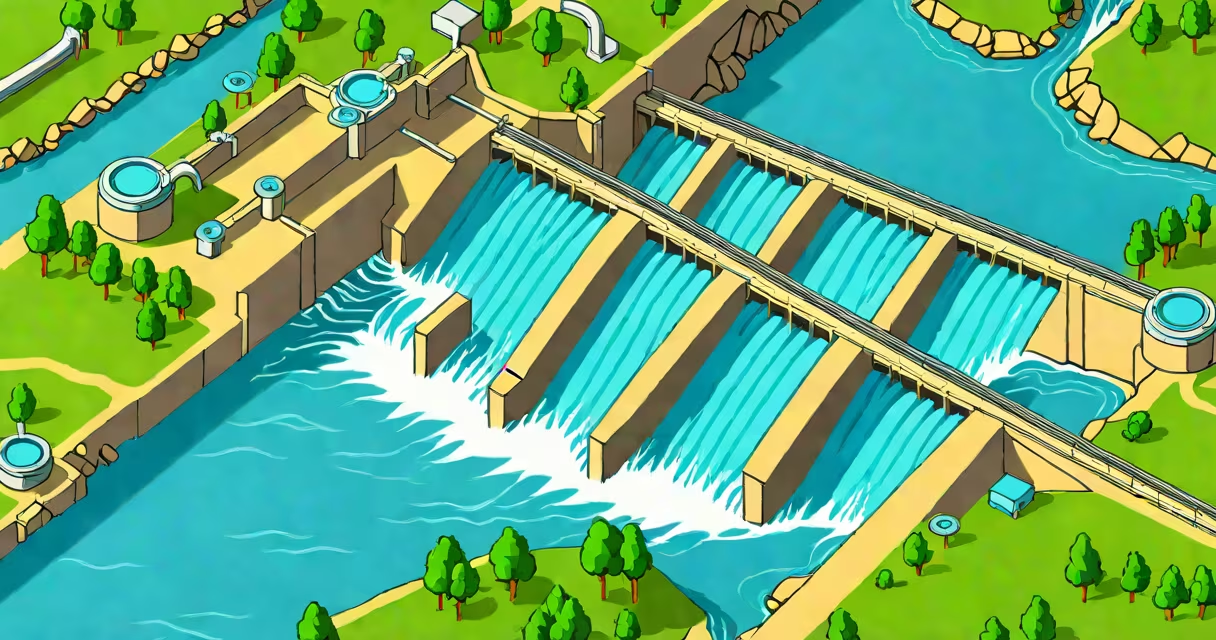
Blue water energy is electricity generated from the kinetic and potential energy of moving freshwater-rivers, streams, and reservoirs-typically captured using turbines in dams or run-of-river systems. It is a form of renewable energy that relies on natural water cycles and produces no direct greenhouse gas emissions during operation.
Unlike solar or wind, which depend on weather patterns, blue water energy operates continuously when water flows. It accounts for about 16% of global electricity generation and 60% of all renewable electricity worldwide, according to the International Energy Agency (IEA).
The term "blue water" refers specifically to liquid freshwater in rivers, lakes, and reservoirs-distinct from "green water," which is soil moisture used by plants. Blue water energy leverages the movement of this resource to drive generators, converting mechanical energy into electrical output.
Water flows from a higher elevation to a lower one, creating kinetic energy. This flow is directed through a turbine housed in a penstock-a pipe leading from the reservoir to the powerhouse. As water spins the turbine, it turns a shaft connected to a generator, producing electricity.
After passing through the turbine, water exits the system and returns to the river downstream. The process is continuous as long as water continues to flow. Dams regulate flow, allowing consistent output even during dry periods by storing water in reservoirs.
A 100-megawatt hydroelectric plant operating at 50% capacity factor generates approximately 438 gigawatt-hours annually-enough to power around 40,000 average U.S. homes for a year, based on national average consumption.
There are three primary configurations used globally:
| Type | How It Works | Use Case Example |
|---|---|---|
| Dam-based hydropower | Water stored in a reservoir behind a dam is released through turbines. | Three Gorges Dam in China, largest hydroelectric facility in the world, with 22,500 MW capacity. |
| Run-of-river | Water diverted from a river without large storage; flow follows seasonal patterns. | Small-scale projects in British Columbia, Canada, such as the Chilcotin River project, generate 10-50 MW with minimal environmental disruption. |
| Pumped storage | Excess electricity pumps water uphill to a reservoir; later released to generate power during peak demand. | Chesapeake Energy's pumped storage facility in Maryland stores 1,000 MWh and supports grid stability. |
Run-of-river systems avoid large reservoirs and reduce land flooding, making them suitable for ecologically sensitive regions. Pumped storage acts as a battery for grids with high variable renewables, helping balance supply and demand.
Hydroelectric facilities are most common in countries with mountainous terrain and abundant rainfall. Brazil, Canada, China, and Norway lead in installed capacity. Norway generates over 90% of its electricity from hydropower due to its extensive fjords and glacial runoff.
It is favored for baseload power-consistent, on-demand supply-because it can ramp up quickly. During peak demand hours, hydro plants can increase output within minutes, unlike fossil fuel plants that take longer to start.
One underappreciated benefit is grid resilience. After Hurricane Maria in 2017, Puerto Rico's hydroelectric plants were among the few sources of stable power that remained operational, restoring service faster than diesel-dependent systems.
Blue water energy is often conflated with tidal or wave energy-both of which use saltwater and are classified separately. Tidal energy relies on ocean currents and lunar cycles; wave energy captures surface motion. These are not blue water energy because they involve seawater, not freshwater.
Another confusion arises with "green water" in agriculture. Green water refers to rainwater absorbed into soil and used by crops. While both are water-based, green water is not harnessed for electricity. Using the same term for both creates ambiguity in policy and research.
A critical distinction: not all hydropower is low-impact. Large dams can disrupt fish migration, displace communities, and emit methane from decomposing submerged vegetation. The Belo Monte Dam in Brazil displaced over 20,000 people and altered the Xingu River's system, prompting international criticism.
According to the World Bank, small hydropower projects (<20 MW) have a 70% lower social and environmental impact than large dams. This highlights that scale matters-blue water energy isn't inherently sustainable; design and oversight determine outcomes.
In 2022, I visited a micro-hydro installation in rural Nepal. A 15-kilowatt system powered a school, clinic, and local business using a diverted stream. The community managed operations locally, with training from a nonprofit. Power was available 24/7 during monsoon season and stable through dry months due to seasonal flow variation.
This project replaced kerosene lamps and diesel generators. Over five years, it reduced household fuel costs by 60% and cut CO₂ emissions by 12 tons annually. It demonstrated that blue water energy doesn't require massive infrastructure-small, localized systems deliver tangible benefits.
Blue water energy contributes 16% of global electricity, according to the IEA's 2023 Global Energy Review. The agency notes that hydropower is the largest source of renewable electricity, surpassing wind and solar combined in annual output.
The U.S. Department of Energy confirms that existing hydropower facilities could provide up to 30% more electricity if upgraded and integrated into smart grids. Modernizing older plants with digital controls improves efficiency by 10-15%, reducing waste and increasing reliability.
Despite its advantages, blue water energy faces challenges: climate change alters precipitation patterns, affecting long-term water availability. In California, droughts since 2012 reduced hydropower output by 40% in some years, highlighting dependence on consistent rainfall.
Blue water energy is a proven, scalable source of renewable electricity derived from flowing freshwater. It powers cities, stabilizes grids, and reduces reliance on fossil fuels. When designed responsibly, it offers low-carbon energy with long operational lifespans-often exceeding 50 years.