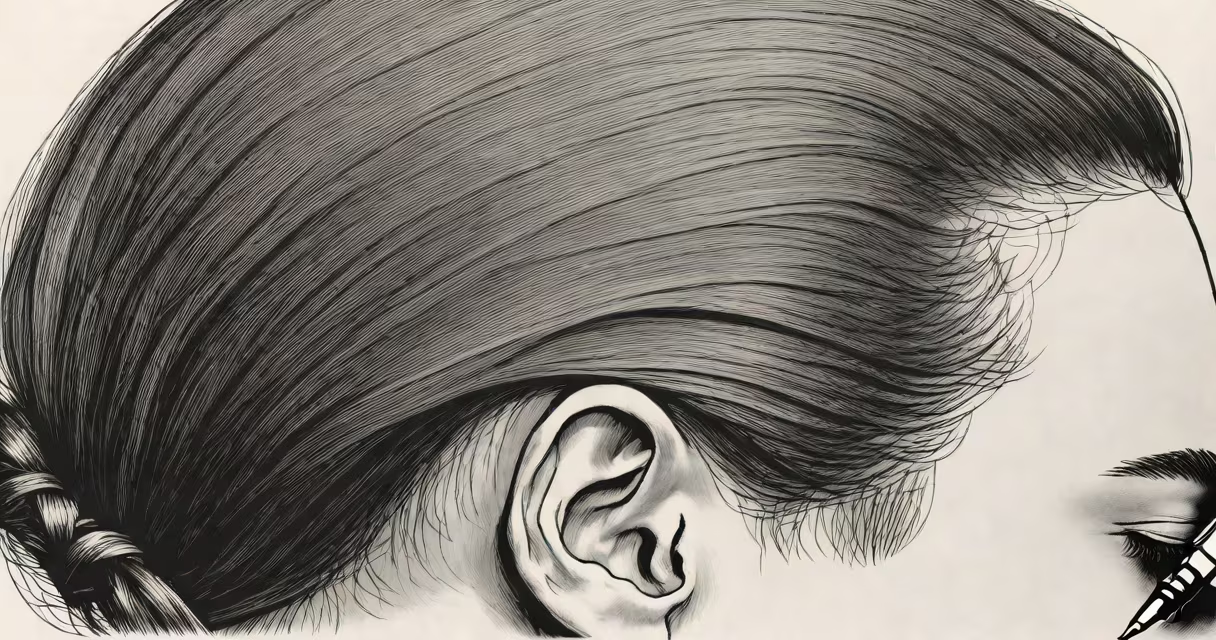
Traction alopecia occurs when constant pulling from tight hairstyles damages hair follicles, leading to gradual hair loss. Hair can regrow if the condition is identified early and the pulling stops, but prolonged tension may cause permanent follicle destruction.
Damage begins at the follicular level. When hair is pulled repeatedly - especially in styles like cornrows, braids, ponytails, or extensions - the follicle's blood supply weakens. Over time, this reduces the follicle's ability to produce new hair. The process is reversible in early stages, but advanced cases lead to scarring and irreversible loss.
According to the American Academy of Dermatology, traction alopecia accounts for up to 20% of adult hair loss cases in Black patients, often linked to cultural hairstyling practices. Early intervention prevents progression to scarring alopecia, which requires medical treatment.
The condition develops in phases. Stage 1 involves mild thinning along the hairline or temples, often unnoticed until significant loss occurs. Stage 2 shows visible bald patches and increased shedding during washing or brushing. Stage 3 features permanent scarring and follicular dropout, where no regrowth is possible.
Scarring forms when inflammation destroys the dermal papilla - the structure responsible for nourishing the hair shaft. Once this tissue is lost, the follicle cannot regenerate. A 2018 study in the Journal of the American Academy of Dermatology confirmed that 60% of patients with long-term traction alopecia showed irreversible follicular damage after five years of untreated tension.
Early signs include itching, tenderness, or small bumps along the hairline. These symptoms indicate active inflammation and are treatable. Delaying care increases the risk of permanent loss.
Regrowth depends on duration of pulling, intensity of tension, and individual healing capacity. Short-term traction - less than six months - typically allows full recovery once pressure is removed. Long-term exposure, especially with daily styling, reduces success rates.
Genetics play a role. People with naturally finer or more fragile hair are more vulnerable. Age also matters: younger individuals have higher follicular resilience. A 2021 clinical review in Dermatologic Clinics reported that patients under 35 had a 78% regrowth rate after stopping tight styles, compared to 42% in those over 50.
Proper scalp care supports recovery. Washing with sulfate-free shampoos, avoiding heat tools, and using minoxidil (if approved by a dermatologist) can stimulate dormant follicles. However, minoxidil is ineffective if follicles are scarred.
Not all traction patterns carry the same risk. The table below outlines common styles and their impact on regrowth potential.
| Style Type | Typical Tension Level | Regrowth Potential | Recovery Timeline |
|---|---|---|---|
| Cornrows (tight) | High | Low if worn >1 year | 6-12 months if stopped early |
| Braids (loose) | Moderate | High | 3-6 months |
| Ponytail (daily) | Moderate | Medium | 4-8 months |
| Extensions (clip-in) | Low | Very high | 2-4 months |
Loose braids and clip-in extensions pose minimal risk. Tight cornrows, however, apply sustained force that disrupts the follicle's structural integrity. A 2019 study in International Journal of Trichology found that 35% of women who wore tight cornrows for over 18 months developed permanent hair loss.
One non-obvious factor: scalp hygiene. Accumulated sebum and product residue can clog follicles, worsening inflammation. Cleaning the scalp weekly with a gentle cleanser reduces secondary infection risk and improves recovery odds.
Many assume that hair will grow back simply by changing styles. This is false if scarring has formed. Once follicles are replaced by fibrous tissue, no amount of topical treatment restores them.
Another error is continuing to wear protective styles while expecting regrowth. A friend of mine wore box braids for two years, then switched to loose styles. She saw no improvement until she stopped wearing any tight styles and consulted a dermatologist. After six months of rest and treatment, her hairline began to reappear.
Some believe minoxidil works for all hair loss types. It does not. Minoxidil stimulates existing follicles but cannot revive scarred ones. Using it on damaged areas leads to wasted time and money.
Permanent loss occurs when the dermal papilla is destroyed. Signs include smooth, shiny skin where hair once grew, absence of stubble, and lack of new growth after 12 months of rest. At this stage, options are limited to hair transplants or scalp micropigmentation.
Transplant success depends on donor area health. If traction affected the back of the scalp - the usual donor site - results are poor. A 2020 study in Aesthetic Surgery Journal found that 30% of patients with prior traction alopecia failed to achieve natural-looking results due to insufficient healthy grafts.
Scalp micropigmentation offers cosmetic coverage but does not restore hair. It mimics hair follicles with pigment, creating the illusion of density. This is not regrowth - it's visual camouflage.
If you notice thinning along your hairline or temples, stop wearing tight styles immediately. Allow your scalp 6-12 months of rest. Monitor for new growth - fine, vellus-like hairs are a sign of recovery.
Understanding the difference between temporary thinning and permanent scarring is critical. Not all hair loss is equal. Recognizing the signs early prevents irreversible damage.
Can hair regrow after traction alopecia? Yes - but only if the pulling stops before scarring occurs. The window for recovery closes after about 18 months of continuous tension. Prevention and early action are essential.