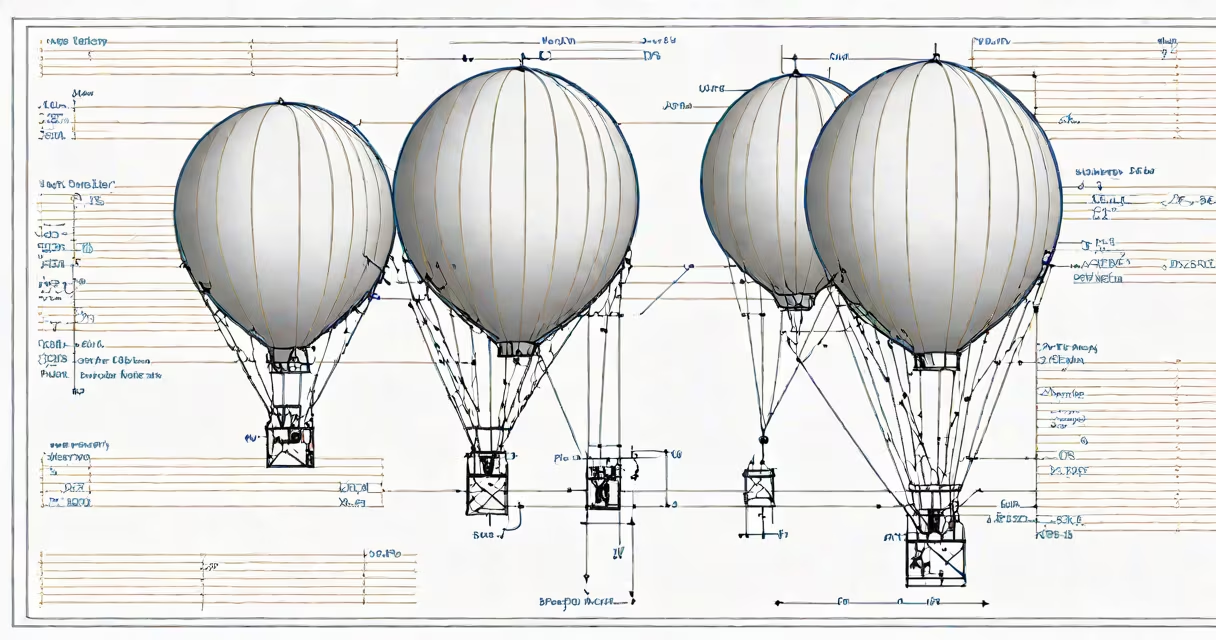
The element name for helium is helium. It is a chemical element with the atomic number 2 and the symbol He. It is a colorless, odorless, inert monatomic gas that is lighter than air.
Helium was first detected in the Sun's spectrum during a solar eclipse in 1868, leading to its name from the Greek word "helios," meaning sun. The element was later isolated on Earth in 1895 by William Ramsay, who confirmed its presence in uranium minerals.
As a noble gas, helium has a complete outer electron shell, making it chemically unreactive under normal conditions. Its low density and high thermal conductivity make it useful in applications ranging from cooling superconducting magnets to inflating airships and party balloons.
Each element is uniquely identified by its name, symbol, and atomic number. For helium, the name "helium" is standardized by the International Union of Pure and Applied Chemistry (IUPAC). The symbol "He" appears on the periodic table, and the atomic number 2 indicates it has two protons in its nucleus.
When scientists analyze a sample, they use mass spectrometry or spectroscopy to detect helium's distinct spectral lines. These lines appear in the ultraviolet and visible ranges, especially in stellar atmospheres. The 587.6 nm line, known as the D3 line, is a key identifier in astronomical observations.
Despite its abundance in the universe-making up about 24% of elemental mass in the cosmos-helium is rare on Earth. Most terrestrial helium is extracted from natural gas deposits, particularly in the United States, where Texas and Kansas hold significant reserves.
Helium exists in two stable isotopes: helium-4 (⁴He), which makes up 99.9998% of naturally occurring helium, and helium-3 (³He), which is extremely rare. Helium-4 is produced through alpha decay of heavier elements, while helium-3 forms in trace amounts via nuclear reactions in the atmosphere and in fusion processes.
| Isotope | Abundance | Formation Source | Use Case |
|---|---|---|---|
| Helium-4 | 99.9998% | Alpha decay of uranium and thorium | Cryogenics, welding, breathing mixtures |
| Helium-3 | ~0.0002% | Atmospheric spallation, fusion reactions | Neutron detection, quantum computing research |
Helium-3 is valuable in neutron detectors because it absorbs slow neutrons efficiently. Its scarcity makes it expensive-around $10,000 per liter in specialized labs. This contrasts sharply with helium-4, which costs roughly $100 per cubic meter in industrial quantities.
Many people assume helium is a fuel or a source of energy. It is not combustible and cannot be used as a propellant in engines. Its role in lifting airships comes from buoyancy, not combustion. The misconception arises because helium is often associated with balloons and blimps, which float due to displacement of air, not chemical reaction.
Another error is equating helium with hydrogen. While both are light gases, hydrogen is flammable and reactive. Helium is inert. Mixing them in a sealed container can create explosive mixtures if ignited, but helium itself poses no fire risk.
A lesser-known fact: helium does not form compounds under standard conditions. Unlike neon or argon, which have a few known clathrates or ionized species under extreme pressure, helium remains entirely unreactive in bulk. Only in laboratory settings at ultra-low temperatures and high pressures have researchers observed transient helium-containing molecules, such as HHe⁺ and HeH⁺, but these do not persist in nature.
Magnetic Resonance Imaging (MRI) machines rely on superconducting magnets cooled to near absolute zero. Liquid helium, at 4.2 K (-268.95°C), provides the necessary cooling environment. A typical MRI scanner uses about 1,500 liters of liquid helium to maintain superconductivity in the magnet coils.
If the helium evaporates due to a quench-a sudden loss of superconductivity-the system must be re-cooled, requiring refilling. This process takes days and costs tens of thousands of dollars. Hospitals now install helium recovery systems to reduce waste and dependency on new supply.
For example, the University of California, San Francisco Medical Center upgraded its MRI set in 2021 with a closed-loop helium recycling system. The upgrade reduced annual helium consumption by 78%, saving approximately $120,000 per year in procurement and downtime.
The name "helium" is not interchangeable with other terms. It is not "He" in speech, nor is it "helio" or "helion." The correct usage ensures clarity in scientific communication. Using "helium" in a paper, report, or label avoids ambiguity with similar-sounding terms like "helium-3" or "helium plasma."
Confusion sometimes arises in educational materials that refer to "helium gas" as simply "gas" or "light gas." This leads students to misattribute properties. For instance, a student might think all light gases rise equally-yet helium rises faster than hydrogen due to lower molecular weight and higher stability.
During a lab experiment at MIT in 2019, students were asked to identify unknown gases using flow rates through a capillary tube. One group incorrectly labeled a mixture of nitrogen and helium as "helium" based on buoyancy alone. Correct identification required mass spectrometry, confirming the presence of both elements.
Understanding the precise element name for helium prevents errors in labeling, safety protocols, and material handling. In aerospace engineering, for example, helium is used to purge fuel lines. Mistaking it for another gas could lead to contamination or explosion risks.
The element name for helium is helium. It is a fundamental building block of the universe, discovered in sunlight before being found on Earth. Its inertness, low boiling point, and unique isotopic composition define its role in science, medicine, and industry.