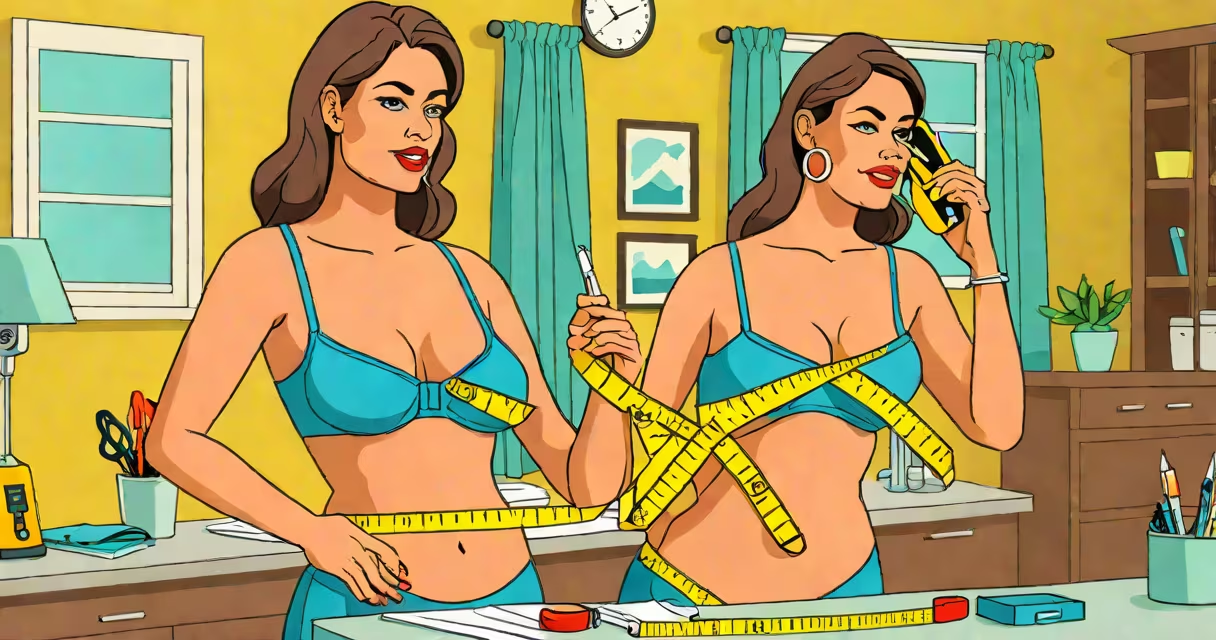
To figure your bra size, measure your ribcage just below the bust and your bust at the fullest part. Subtract the first number from the second. The difference determines your cup size, while the ribcage measurement becomes your band size. This method yields a standard US bra size like 34B.
Bra sizing follows a system where the band size reflects the ribcage measurement in inches, rounded to the nearest even number. Cup size is determined by the difference between bust and band measurements. A 1-inch gap equals an A cup, 2 inches is B, 3 inches is C, and so on. This system applies across most major brands in North America.
Many people assume bra size is based solely on cup volume, but the band size is equally critical. A poorly fitting band causes discomfort and reduces support. A 36D with a loose band provides less lift than a 34D with a snug band. Fit affects posture, comfort, and long-term breast health.
Use a flexible tape measure. Stand upright with arms relaxed at your sides. Wrap the tape around your torso just below the bust, where the band sits. Ensure it's level and not digging in. Take the measurement at the end of a normal breath.
Next, measure around the fullest part of your bust. Keep the tape parallel to the floor and avoid pulling it tight. For accuracy, wear a non-padded bra or none at all during measurement.
For example: If your band measures 32 inches and your bust measures 37 inches, subtract 32 5. That corresponds to a D cup. Your size is 32D. Always round the band measurement to the nearest even number. If you measure 33 inches, round down to 32.
Over-tightening the tape on the band leads to a smaller measurement and a larger band size. This causes the band to dig in and fail to support. Under-tightening results in a band that slips or rides up.
Measuring with a padded bra adds 1-2 inches to the bust measurement. This can result in a cup size that's too small. Always measure without padding. Even sports bras can affect results.
A frequent error is assuming that a higher cup letter always means a larger volume. A 34D and a 36D have similar cup volume but different band sizes. The band size adjusts for the wider frame. A 36D may feel looser than a 34D despite the same cup letter.
Cup sizes increase by approximately 1 inch per letter. A B cup holds about 1 inch more volume than an A, a C holds 2 inches more than an A, and so on. This is consistent across US and UK sizing systems.
Band sizes start at 32 and go up in even numbers: 32, 34, 36, 38, etc. If your ribcage measures 33 inches, round down to 32. If it measures 35, round up to 36. Never round down past the nearest even number.
| Bust Measurement | Band Measurement | Difference | Cup Size | Final Size |
|---|---|---|---|---|
| 38 inches | 34 inches | 4 inches | D | 34D |
| 40 inches | 36 inches | 4 inches | D | 36D |
| 35 inches | 33 inches | 2 inches | B | 32B |
Some brands offer extended sizes beyond 40D. For example, a 40J bra size exists and is designed for larger busts. These sizes are not standardized across all retailers, so always check brand-specific charts.
Even with accurate measurements, a bra may not fit well due to differences in construction. Some brands use wider bands, deeper cups, or different underwire shapes. A 34D from one brand may feel tighter than a 34D from another.
I measured my size using the standard method and got 34D. When I tried a 34D from Brand A, the band was too tight. Switching to Brand B's 34D gave me a better fit. The cup was deeper and the band sat flatter. This shows that size numbers don't guarantee fit.
The American Society of Plastic Surgeons notes that ill-fitting bras contribute to back pain and poor posture. A properly fitted bra supports the weight of the breasts and reduces strain on the shoulders and spine. Getting the right size improves daily comfort and long-term health.
Your bra size can change with weight fluctuations, pregnancy, or menopause. Hormonal shifts alter breast tissue volume and elasticity. A woman who gains 10 pounds may need a larger band size. Another who loses 15 pounds may need a smaller band and cup.
After childbirth, many women report needing a new size within six months. Breast tissue expands during lactation and contracts afterward. A size that fits during pregnancy may be too loose postpartum.
Regular rechecks-every 6 to 12 months-are recommended. If you notice your bra slipping, digging, or causing discomfort, remeasure. Many lingerie stores offer free fittings. Use them to confirm your size or adjust for brand variation.
Knowing how to figure your bra size prevents frustration and ensures comfort. Use real measurements, avoid padding, and verify fit across brands. A well-fitted bra enhances both function and confidence.