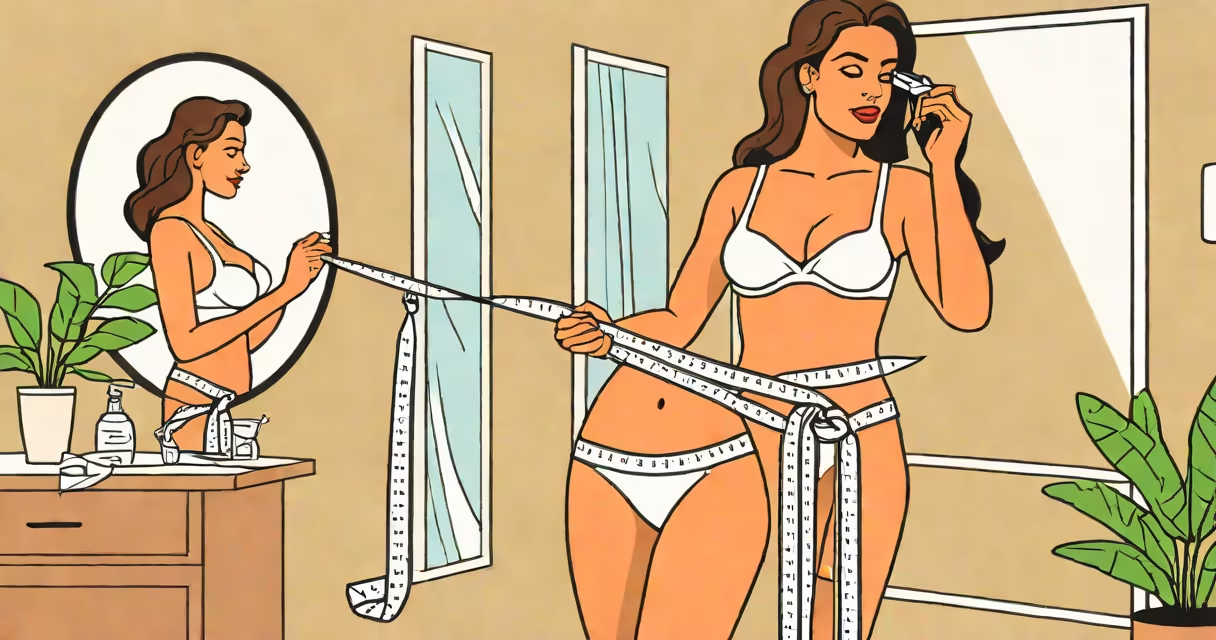
How do you get the right bra size? Measure your band size snugly around your ribcage just below the bust, then measure your bust at its fullest point. Subtract the band measurement from the bust measurement to determine your cup size. This method yields a precise bra size based on anatomy, not guesswork.
Bra sizing relies on two measurements: band size and cup size. The band size is the circumference of your ribcage, measured just under the bust. The cup size reflects the difference between your bust and band measurements. A 2-inch difference equals an A cup, 4 inches is a B, 6 inches a C, and so on. This system standardizes sizing across brands, though fit varies due to construction differences.
Most women wear the wrong bra size. A 2019 study by the American Society for Aesthetic Plastic Surgery found that 85% of women wear bras that are too small or too large. Ill-fitting bras contribute to poor posture, shoulder pain, and breast tissue discomfort. Getting the right size improves comfort, support, and long-term breast health.
To measure your band size, wrap a flexible tape measure horizontally around your torso, just beneath your breasts. Ensure the tape is level and not digging into skin. Do not suck in your stomach. The measurement in inches determines your band size. Round to the nearest even number-e.g., 33 inches becomes a 34 band size.
For bust measurement, stand upright with arms relaxed. Place the tape measure around the fullest part of your bust, keeping it parallel to the floor. Do not pull tight. Record the measurement in inches. For example, if your band measures 34 inches and your bust measures 38 inches, the difference is 4 inches.
A 4-inch difference corresponds to a B cup. Therefore, your size is 34B. Use this calculation consistently across brands. Some manufacturers adjust their sizing-e.g., a 34B from one brand may fit like a 36B in another-but the math remains the same.
There are four primary bra styles: full coverage, balconette, plunge, and sports. Each affects fit differently. Full coverage bras offer maximum support and are ideal for larger busts. Balconette styles lift and separate, enhancing cleavage. Plunge bras sit lower on the chest, suitable for low-cut tops. Sports bras prioritize compression and motion control.
Common errors include wearing a band that's too loose or too tight. A band that rides up or digs in indicates incorrect sizing. Straps that dig into shoulders suggest the band is too small. If the bra gap forms at the center front, the band is too big. Cups that stretch or show wrinkles mean the cup size is off.
One overlooked factor is breast shape. Women with wide-set or high-set breasts often need wider center panels or specialized cup shapes. Brands like Bravissimo and ThirdLove offer extended sizes and tailored designs for diverse body types. Always try on multiple styles-even within the same size-to find the best fit.
No two brands use identical patterns. A 34B from Victoria's Secret may differ from a 34B at Savage X Fierce. Differences arise from materials, underwire placement, and shaping techniques. Even within the same brand, seasonal changes affect fit due to updated fabrics or construction.
Use a size chart as a baseline, but always try on bras. Measure your current bra and compare it to the new size. If your current band measures 36 inches but feels loose, try a 34 band. If your bust measurement is 38 inches, a 34B should fit. If it doesn't, check the cup-maybe you need a 34C.
Consider a woman who measures 34 inches around her ribcage and 38 inches at her bust. The difference is 4 inches, which is a B cup. Her size is 34B. But she wants a 34C. That requires a 6-inch difference. So her bust must be 40 inches. If her actual bust is 38 inches, a 34C will be too large in the cup.
To achieve a 34C fit, she must either reduce her band size to 32 inches or increase her bust measurement to 40 inches. Since her bust hasn't changed, she should try a 32C instead. A 32C has a 6-inch difference (38 - 32 = 6). This adjustment ensures better support and prevents spillage.
Another example: a woman wears a 36B but experiences shoulder strain. Her band measures 36 inches, bust 40 inches. The 4-inch difference confirms the B cup. But the straps dig in because the band is too loose. She should try a 34B. The smaller band reduces tension on the straps while maintaining proper cup support.
Many assume that bra size correlates with clothing size. A woman who wears a size 10 in jeans may think she needs a D cup. This is false. Clothing size and bra size are unrelated. A woman with a 32-inch band and 36-inch bust is a 32B-not a D cup.
Another myth is that larger breasts require higher band sizes. Not necessarily. A woman with a 38-inch bust and 34-inch band is a 34C. Her band size is not determined by breast volume-it's based on ribcage circumference. Using the correct band size prevents slippage and ensures stability during movement.
One non-obvious fact: breast tissue shifts with weight gain or loss. A woman who loses 15 pounds may notice her bra feels looser. Re-measure every 6 months or after significant life changes. Hormonal shifts during pregnancy or menopause also alter breast size. Regular rechecks maintain optimal fit.
I once tried on 12 different bras at a specialty store. After measuring my band at 34 inches and bust at 38 inches, I expected a 34B. But the first bra I tried-the most expensive one-had a gaping center and sagging cups. I switched to a 34C and felt immediate relief. The band was snug, the cups held shape. It wasn't about price-it was about correct sizing.
| Band Measurement | Bust Measurement | Difference | Cup Size | Final Size |
|---|---|---|---|---|
| 34 inches | 38 inches | 4 inches | B | 34B |
| 36 inches | 40 inches | 4 inches | B | 36B |
| 32 inches | 38 inches | 6 inches | C | 32C |
Accurate sizing begins with consistent measurement. Use a soft tape measure, not a rigid metal one. Measure at the same time of day-morning is best, before swelling occurs. Stand tall, avoid slouching. Have someone assist if possible, especially for hard-to-reach areas.
Finally, remember that bra size is not static. It changes with age, weight, and life events. Re-measure every six months or after major changes. The goal is not perfection-it's finding a size that supports, fits, and feels comfortable. How do you get the right bra size? Measure accurately, try on multiple styles, and trust your body's feedback.