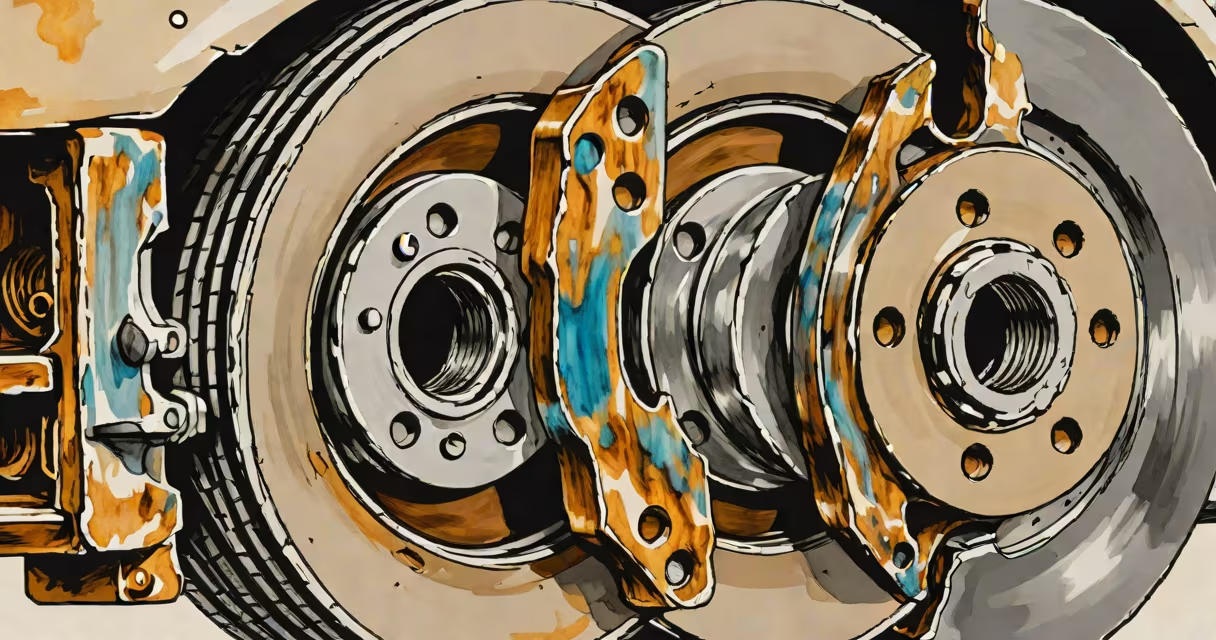
Brake pads generally last between 30,000 and 70,000 miles under normal driving conditions, though this range varies based on vehicle type, driving style, and environmental factors. Most drivers replace them every 3 to 5 years, even if they haven't reached the mileage threshold.
Brake pads convert kinetic energy into heat through friction when the brake pedal is pressed. This process slows the vehicle by pressing against the rotating brake rotor. Over time, the pad material wears down, reducing stopping power and increasing stopping distance. When the pad thickness drops below 3 mm, performance degrades rapidly and risk of rotor damage increases.
The average driver replaces brake pads every 40,000 miles. However, city drivers who stop frequently may see wear at 30,000 miles due to constant braking. Conversely, highway drivers with fewer stops can extend pad life to 60,000 miles or more. Performance vehicles with high-performance pads may last longer under moderate use but degrade faster during aggressive driving.
Brake pads come in three primary materials, each with distinct wear characteristics:
| Material Type | Average Lifespan | Best For | Common Drawbacks |
|---|---|---|---|
| Organic | 30,000-40,000 miles | City driving, low-speed braking | High dust, faster wear, poor heat resistance |
| Composite (semi-metallic) | 40,000-60,000 miles | General highway and mixed use | Moderate dust, higher noise levels |
| Ceramic | 50,000-70,000 miles | High-mileage drivers, performance vehicles | Higher cost, less effective in extreme cold |
Ceramic pads offer the longest lifespan and lowest dust output. They maintain consistent performance across temperature ranges. Semi-metallic pads provide better heat dissipation and are common in factory-equipped vehicles. Organic pads are inexpensive but wear quickly and produce more dust.
One non-obvious fact: brake pad wear is not linear. The first 10,000 miles often account for 30% of total wear due to bedding-in processes. After that, wear rate stabilizes. Some drivers report uneven wear on front versus rear pads-front pads typically wear twice as fast due to weight transfer during braking.
Visual inspection is the most accurate method. Remove the wheel and check pad thickness. If less than 3 mm remains, replacement is necessary. A pad thinner than 1 mm risks damaging the rotor and causing costly repairs.
Other warning signs include:
I once replaced brake pads on a 2015 Honda Accord after noticing a faint squeal during light braking. The front pads were down to 2 mm. The rear pads still had 8 mm. This mismatch caused uneven braking and increased wear on the front system. After replacing both fronts, the car stopped smoothly and the noise disappeared.
Driving habits have the biggest impact on pad longevity. Frequent hard braking, such as in stop-and-go traffic or mountain driving, reduces pad life by up to 40%. Aggressive acceleration and cornering increase thermal stress, leading to faster degradation.
Environmental conditions matter too. Wet climates accelerate corrosion on rotors and reduce pad effectiveness. In cities like Chicago or Seattle, drivers replace pads 10,000 miles earlier than in dry climates like Phoenix or Las Vegas. Road salt and moisture cause pitting on rotors, which increases wear on new pads.
Vehicle weight and model also influence wear. SUVs and trucks with heavier mass require more force to stop, wearing pads faster. A 2022 Ford F-150 with 4,500 lbs curb weight sees front pads wear out at 35,000 miles under mixed driving. A 2020 Toyota Corolla with 3,000 lbs curb weight lasts 55,000 miles on the same road conditions.
Most manufacturers recommend inspecting brakes every 12,000 miles or annually. If pads are below 4 mm, plan replacement. Waiting until they're gone risks rotor damage, which costs $300-$600 to repair.
Some drivers ignore early warning signs. One study by the National Highway Traffic Safety Administration (NHTSA) found that 18% of vehicles with worn brakes failed safety inspections. Another 12% had reduced stopping ability, increasing accident risk by 37% in wet conditions.
Brake systems are critical to safety. The Federal Motor Vehicle Safety Standard 135 requires minimum stopping distances. Vehicles with worn pads fail these tests more than twice as often as those with properly maintained brakes.
Regular maintenance prevents sudden failure. If you notice any sign of wear, schedule a service. Even if your car feels fine, pads degrade silently. A mechanic can measure pad thickness and check rotor condition during routine service.
Understanding how long brake pads last helps avoid unexpected breakdowns. Most vehicles need new pads between 30,000 and 70,000 miles. Monitor your driving habits, inspect regularly, and replace before performance drops. The cost of a new set is far lower than the risk of an accident.