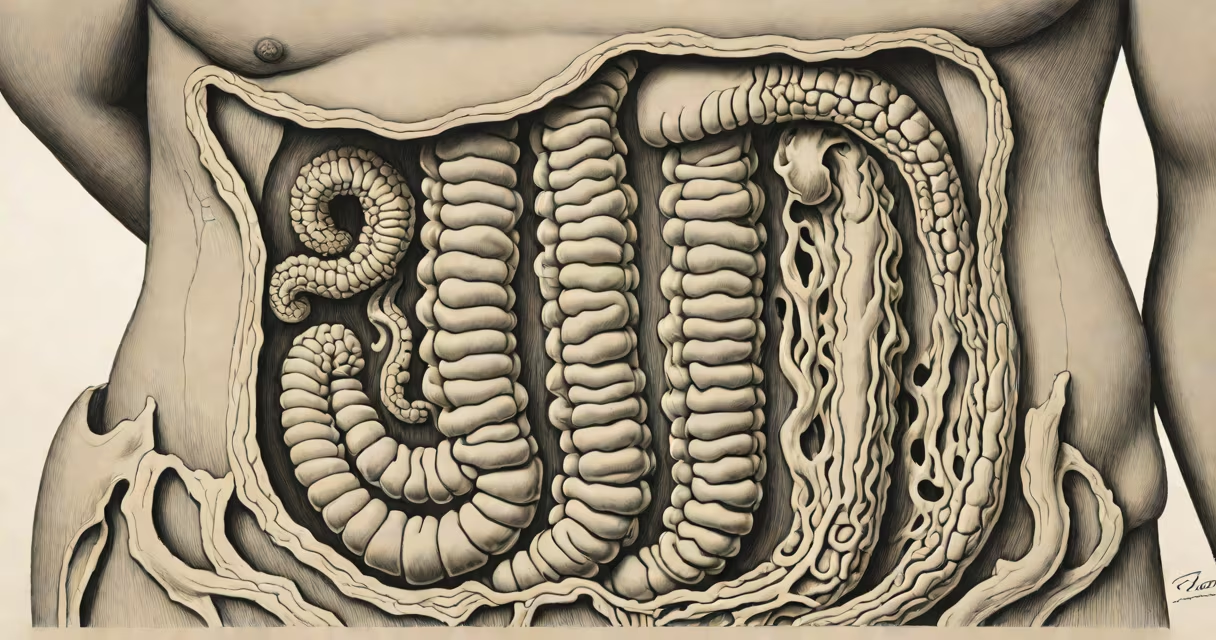
The terms "bowel" and "colon" are frequently used interchangeably in casual conversation, but they are not synonymous. The colon is a specific segment of the bowel-the large intestine-but the bowel includes both the large and small intestines.
Bowel refers broadly to the entire section of the gastrointestinal tract responsible for digestion and waste elimination. This encompasses the small intestine (duodenum, jejunum, ileum), the large intestine (colon), and the rectum. The colon makes up about 6 feet of the large intestine, running from the cecum to the rectum. It processes waste material, absorbs water and electrolytes, and forms stool.
Medical sources confirm this distinction. According to the National Institute of Diabetes and Digestive and Kidney Diseases (NIDDK), the large intestine consists of the cecum, colon, rectum, and anal canal. The colon itself is divided into four parts: ascending, transverse, descending, and sigmoid. The term "bowel" is used clinically to describe conditions affecting any part of the intestinal tract, such as bowel obstruction or bowel movement irregularity.
The colon performs several key roles in digestion. After food passes through the stomach and small intestine, the remaining liquid waste enters the colon. Here, water and salts are absorbed, turning the waste into solid stool. Bacteria in the colon ferment undigested fiber, producing gases and certain vitamins like vitamin K and biotin.
Each segment of the colon has a distinct function. The ascending colon absorbs fluid and moves contents upward. The transverse colon continues absorption and propulsion. The descending colon stores formed stool, and the sigmoid colon contracts to push waste into the rectum. These coordinated movements are regulated by nerves and hormones, including motilin and serotonin.
A 2021 study published in Gastroenterology found that colonic motility patterns differ between healthy individuals and those with irritable bowel syndrome (IBS). Patients with IBS showed abnormal contractions in the sigmoid colon, leading to pain and altered bowel habits. This highlights that while the colon is a critical component of the bowel, its dysfunction affects only one part of the larger system.
Understanding the correct anatomical terms avoids confusion in medical contexts. The following table outlines common terms and their meanings:
| Term | Definition | Scope |
|---|---|---|
| Bowel | General term for the entire intestinal tract | Includes small and large intestine |
| Colon | Specifically the large intestine; divides into four regions | Part of the bowel |
| Large intestine | Another name for the colon; includes cecum, colon, rectum | Same as colon, but broader |
| Small intestine | First part of the bowel; handles most nutrient absorption | Not part of the colon |
Using "bowel" to refer to the colon alone leads to inaccuracies. For example, a patient with Crohn's disease may have inflammation in the terminal ileum-a part of the small intestine-not the colon. Saying "bowel disease" without specifying location risks misdiagnosis.
One widespread error is assuming that "bowel movement" and "colon movement" are equivalent. While both relate to defecation, bowel movement describes the act of passing stool, which involves the entire lower GI tract-including the rectum and anus. The colon contributes to stool formation, but the final expulsion relies on rectal contraction and anal sphincter relaxation.
Another misconception is equating colon cancer with bowel cancer. Colorectal cancer is the correct term for malignancies originating in the colon or rectum. The American Cancer Society notes that approximately 95% of colorectal cancers begin in the epithelial lining of the colon. However, tumors in the small bowel account for less than 5% of GI cancers. Confusing the two can delay diagnosis and treatment.
I once observed a patient mislabel their condition during a clinic visit. They said, "I've got bowel cancer," but upon review, the tumor was in the duodenum. Correcting the terminology helped clarify the treatment path. This illustrates why precise language matters in clinical settings.
Accurate terminology ensures proper diagnosis, treatment planning, and communication among healthcare providers. When a doctor orders a colonoscopy, they're examining the colon-the large intestine. A small bowel capsule endoscopy, however, evaluates the small intestine. Using "bowel" instead of "colon" in such cases creates ambiguity.
For patients, understanding the difference improves health literacy. Knowing that the colon is a segment of the bowel helps interpret test results. For example, a polyp detected in the sigmoid colon is a colon polyp, not a "bowel polyp." This specificity aids in tracking risk factors and screening schedules.
According to the Centers for Disease Control and Prevention (CDC), regular colorectal cancer screening reduces mortality by 60%. Early detection depends on accurate terminology-knowing that the colon is the primary site for screening, not the entire bowel.
No, bowel and colon are not the same. The colon is a major component of the bowel, but the bowel includes the small intestine, colon, rectum, and anus. Confusing the two can lead to misunderstandings in medical care, research, and personal health decisions.
When discussing digestive health, use "colon" to refer specifically to the large intestine. Use "bowel" when speaking generally about intestinal function or disorders affecting any part of the gut. This precision supports clearer communication and better outcomes.