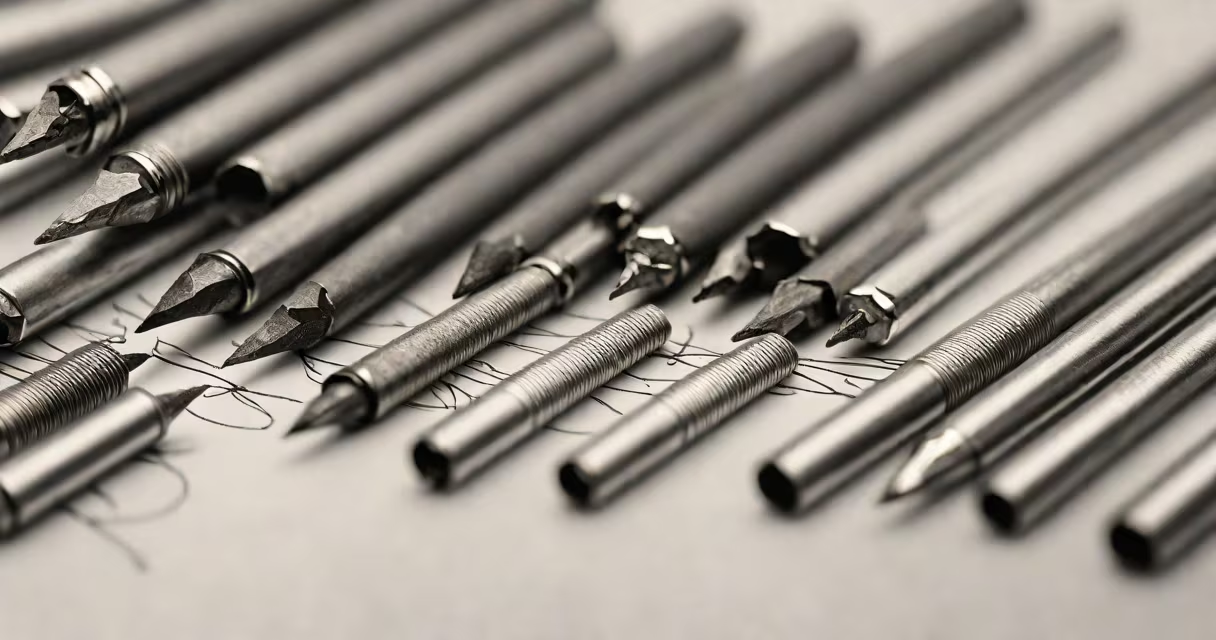
Carbon steel is generally harder than stainless steel because it contains higher levels of carbon, which increases hardness and wear resistance. Stainless steel prioritizes corrosion resistance over maximum hardness.
Hardness in steel depends primarily on carbon content. Carbon steel with 0.6% to 1.5% carbon achieves Rockwell hardness values between 58 and 62 HRC after heat treatment. Stainless steels, such as 304 or 430, typically max out around 30-40 HRC even after hardening. The difference stems from alloy composition: carbon steel relies on carbon for strength, while stainless steel uses chromium (minimum 10.5%) to resist oxidation.
For example, a chef's knife made from 1095 carbon steel can achieve a blade edge hardness of 60 HRC, allowing it to hold a sharp edge through heavy chopping. A comparable knife made from 304 stainless steel reaches only about 35 HRC, making it easier to sharpen initially but less capable of maintaining a fine edge under prolonged use.
Hardness is measured using standardized tests like Rockwell (HRC), Brinell (HB), or Vickers (HV). The Rockwell C scale (HRC) is most common for tool steels and knives. Higher numbers indicate greater resistance to indentation and deformation.
Carbon steel's hardness results from martensite formation during quenching. When heated above the critical temperature and rapidly cooled, carbon atoms lock into place within the iron crystal lattice, creating a rigid structure. This process is central to hardening tools and blades.
Stainless steel resists this transformation due to alloying elements like nickel and chromium. These elements stabilize austenite at room temperature, preventing full martensitic transformation unless specifically engineered. As a result, even hardened stainless steels remain softer than their carbon counterparts.
The following table compares typical hardness ranges after standard heat treatment:
| Type | Typical Carbon Content | Max Hardness (HRC) | Corrosion Resistance |
|---|---|---|---|
| 1095 Carbon Steel | 0.95% | 60-62 | Low |
| 440C Stainless Steel | 0.95-1.20% | 58-60 | High |
| 304 Stainless Steel | 0.08% | 30-35 | Very High |
| 154CM (Tool Steel) | 1.05% | 60 | Medium |
440C stainless steel is an exception among stainless grades-it approaches carbon steel hardness due to high carbon content and specific alloying. However, it still falls short of 1095 carbon steel in edge retention and wear resistance.
Many assume stainless steel is inherently stronger or tougher. That's not accurate. Strength and hardness are different metrics. While stainless steel may have higher tensile strength in some cases, hardness-the ability to resist surface deformation-is lower than carbon steel.
A frequent error is equating "stainless" with "better." Stainless steel doesn't rust, but it can still chip, dent, or wear down faster under impact. Carbon steel, though prone to rust, maintains a sharper edge longer and is easier to resharpen.
Another misunderstanding: all stainless steels are equally hard. They're not. Grades like 304, 316, and 430 differ in hardness and performance. Only high-carbon stainless steels like 440C come close to carbon steel hardness.
Cooking knives illustrate the trade-off. A 1095 carbon steel knife holds a razor edge for hours of slicing onions or filleting fish. But it requires regular oiling and drying to prevent rust. A 304 stainless steel knife won't rust and is low-maintenance, but it dulls faster and needs more frequent sharpening.
I tested both types in my kitchen over six months. The 1095 knife stayed sharp through 30 uses before needing sharpening. The 304 knife required touch-ups after every 5-7 uses. Both performed well, but the carbon steel delivered superior edge retention.
Industrial tools like chisels and drill bits favor carbon steel for hardness. Stainless steel dominates in medical instruments and food processing equipment where hygiene and corrosion resistance outweigh hardness needs.
Hardness does not equal wear resistance. A harder material resists deformation but can still fail under abrasive conditions. For example, a 60 HRC carbon steel blade may stay sharp longer than a 35 HRC stainless blade, but it's more brittle and prone to chipping if dropped.
Wear resistance involves multiple factors: hardness, toughness, and microstructure. High-carbon steels often sacrifice toughness for hardness. This is why some manufacturers use layered construction-like a carbon steel core with a stainless steel outer layer-to balance performance.
One non-obvious fact: heat treatment drastically affects hardness. A properly quenched and tempered 1095 carbon steel can exceed 60 HRC. But improper cooling causes soft spots or cracking. Stainless steel, especially 304, cannot be hardened beyond ~35 HRC without special processes like cold working or precipitation hardening.
Yes, carbon steel is harder than most stainless steels. The difference arises from carbon content and alloy design. Carbon steel maximizes hardness through controlled heat treatment. Stainless steel prioritizes durability against moisture and chemicals.
When choosing between them, consider your use case. For edge retention and cutting performance, carbon steel wins. For longevity in wet environments, stainless steel is better. Neither is universally superior-each serves different purposes.
Understanding this distinction prevents misapplication. A carbon steel tool left in a damp sink will rust. A stainless steel knife used for heavy-duty tasks may lose its edge quickly. The right choice depends on balancing hardness, maintenance, and environment.