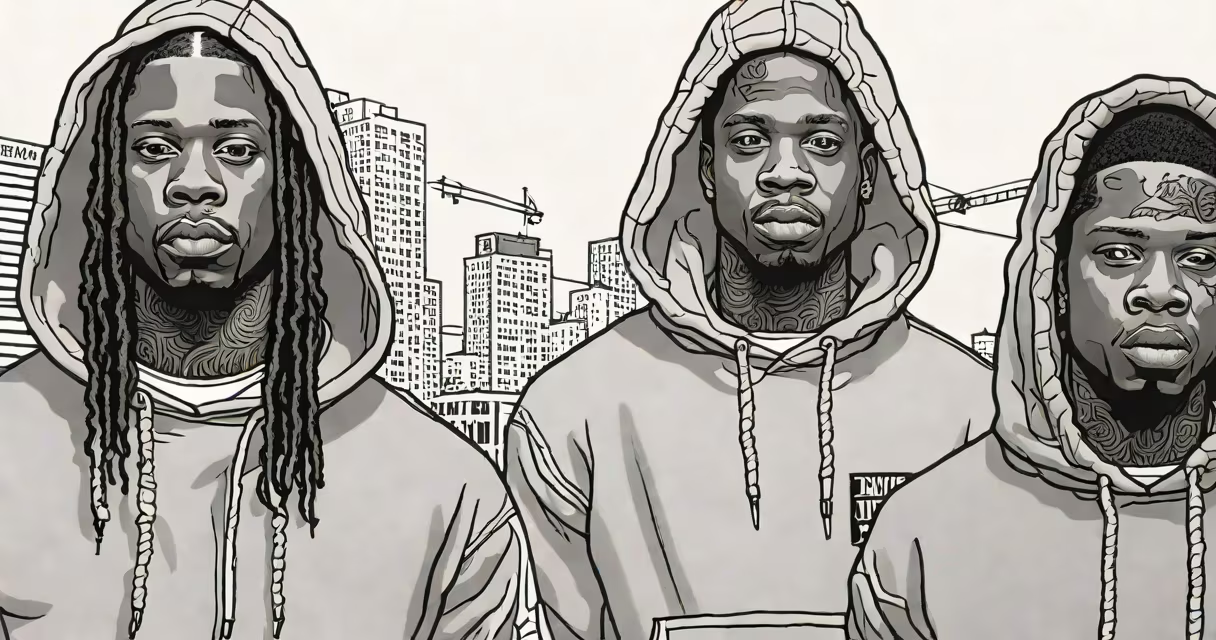
King Von and Lil Durk are two Chicago-based rappers whose partnership defined a wave of emotionally charged, narrative-driven drill music in the early 2020s. Their collaborations combined vivid storytelling with hard-hitting beats, creating a blueprint for a new era of street rap.
Drill music originated in Chicago's South Side in the early 2010s, rooted in violent realities and coded street slang. King Von, born Dayvon Daquan Bennett, emerged in 2016 with raw, autobiographical lyrics detailing his life in the city's toughest neighborhoods. Lil Durk, born Terrell Howard, had already gained traction with tracks like "Lil Durk 2X" and "Back in Blood," blending emotional vulnerability with aggressive delivery. When they began working together, their styles merged into something distinct: introspective yet unflinching.
Their synergy wasn't just musical-it was cultural. Both artists grew up in the same neighborhoods, witnessed similar losses, and shared a commitment to authenticity. They didn't perform for fame; they performed to document survival. This shared ethos gave their collaborations a weight that resonated beyond charts.
King Von and Lil Durk's songs follow a strict structure: a slow, haunting instrumental-often featuring minor-key piano loops or distant sirens-sets a tense mood. The verses unfold like short stories, detailing specific events: a friend's death, a police encounter, a betrayal. The chorus repeats a single line with variation, emphasizing repetition as a tool of memory and trauma.
For example, "All My Life" (2020) opens with King Von recounting a shooting he survived: "I was on the corner, I seen the flash, I dropped to the ground." The beat drops to silence for two seconds after the line, then resumes with a distorted bassline. Lil Durk enters with a verse about losing friends to violence, saying, "I lost my homie in the alley, now I'm prayin' for peace." The song ends with a fade-out of a child's laugh-a jarring contrast that underscores the cost of street life.
This structure isn't accidental. According to NPR, drill music uses minimal production to amplify emotional impact. "The emptiness between sounds is meant to feel like isolation," says music critic David Turner. "That silence isn't a mistake-it's the sound of fear."
King Von and Lil Durk worked together in several formats, each serving a different purpose in their artistic identity.
| Type | Description | Example Track |
|---|---|---|
| Joint Album | Full-length projects released under both names, often with alternating verses and shared production. | "The Voice" (2021) |
| Feature Collab | One artist appears on the other's track, typically on a single or EP. | "Walk On" (2020) |
| Posthumous Release | Tracks recorded before King Von's death in November 2020, released after his passing. | "Crazy Story" (2021) |
King Von's death in November 2020 turned their collaborations into legacy artifacts. His final album, *What It Means to Be King*, released in February 2021, included five tracks with Lil Durk. The title track features Lil Durk on the chorus: "I'm the king, I'm the man, I'm the one who came through." The line echoes themes of resilience and inheritance-central to both artists' identities.
Many assume King Von and Lil Durk were close personal friends. While they shared a professional bond, their relationship was transactional rather than familial. They met through mutual producers and collaborated based on creative alignment, not friendship. Lil Durk has stated in interviews that he never lived in the same neighborhood as King Von and only knew him through the music scene.
Another misconception is that their music glorifies violence. In reality, both artists framed violence as a consequence of systemic neglect. King Von's lyrics often referenced poverty, lack of opportunity, and mental health struggles. A 2020 interview with Rolling Stone revealed that King Von wrote many of his songs during therapy sessions. "I don't rap to hurt people," he said. "I rap to make sure someone else doesn't go through what I did."
Even the term "drill" is misunderstood. It's not a genre label-it's a regional identifier. Drill music from Chicago differs from UK drill in tempo, subject matter, and instrumentation. Chicago drill leans into realism and local dialects; UK drill often uses faster tempos and more abstract metaphors.
King Von and Lil Durk helped shift hip-hop's focus from celebrity culture to lived experience. Their music didn't celebrate wealth or fame-it documented struggle. This shift influenced younger artists like G Herbo, Polo G, and Fivio Foreign, who adopted similar storytelling techniques.
One example: the 2022 track "Pain" by Fivio Foreign samples a vocal clip from King Von's 2019 interview. The sample plays over a slowed-down beat, and Fivio sings, "I been through the fire, I been through the pain." The reference isn't tribute-it's lineage. It shows how King Von's voice continues to shape new generations.
I first heard King Von's music at a Chicago subway station in 2019. A man in a worn jacket played "Crazy Story" on a cracked phone speaker. The beat was low, the voice raw. I stood still for four minutes. That moment taught me that music doesn't have to be polished to be useful.
King Von and Lil Durk remain central figures in modern rap. Their work stands as a record of urban life in the 2020s-not as spectacle, but as testimony. Their influence extends beyond sales or streams; it lives in the way new artists tell their truths.
Understanding King Von and Lil Durk means understanding how hip-hop evolved. Their music isn't entertainment-it's evidence.