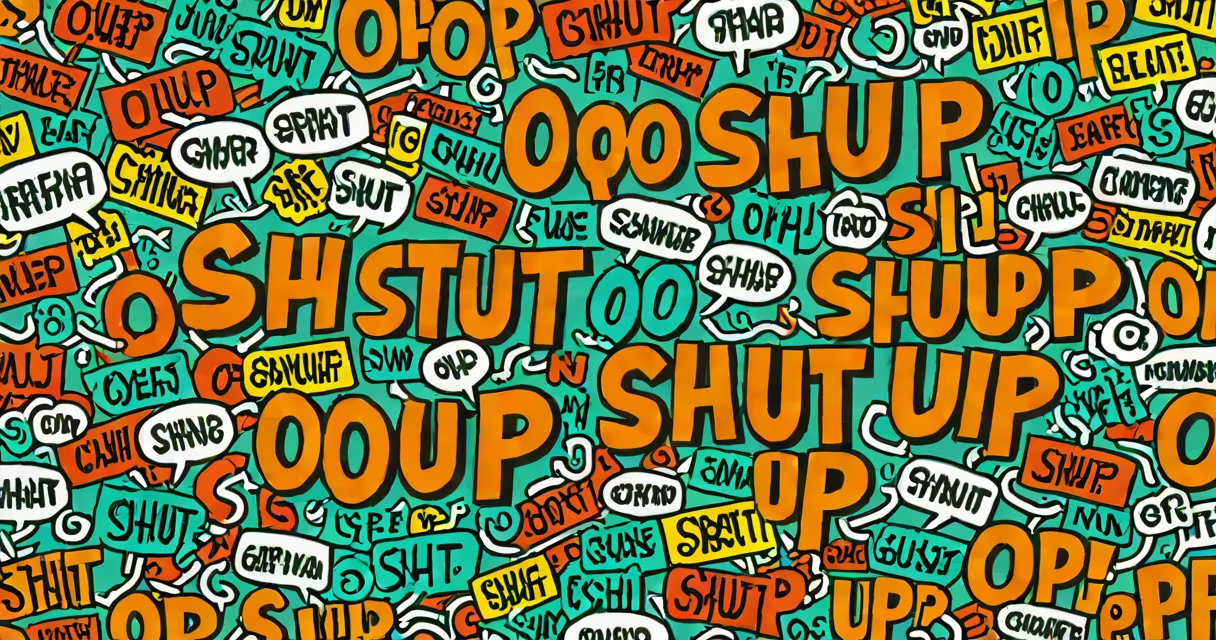
"O o shut up" is a stylized internet meme that mimics a loud, exaggerated vocalization meant to mock or dismiss someone's argument, often in a humorous or sarcastic tone. It originated in online forums and evolved into a widely recognized form of digital sarcasm.
The phrase functions as a reaction format-used to cut off conversation, express disbelief, or show absurdity. It's not a literal command but a performative expression of annoyance or irony, typically deployed in response to something perceived as overly dramatic, illogical, or trivial.
It gained momentum around 2018-2020 on platforms like Reddit, Twitter (now X), and TikTok, where users repurposed it in memes, comment threads, and video captions. The double "o" mimics an open mouth, suggesting a shout or interruption, while "shut up" delivers the punchline.
"O o shut up" operates as a form of digital verbal shorthand. It doesn't require context to be understood-it functions as a standalone emotional cue. When posted, it signals disengagement, mockery, or playful exasperation.
Users often pair it with images of shocked faces, animated characters, or exaggerated expressions. For example, a video showing a person dramatically reacting to a minor inconvenience might be captioned with "o o shut up" to show the absurdity of their response.
It follows the pattern of internet reaction culture: a short, repetitive phrase used to convey tone in text-only environments. Unlike formal language, it relies on visual rhythm and cultural familiarity rather than grammar or logic.
While the core phrase remains consistent, variations exist based on platform and audience:
| Type | Description | Example Use |
|---|---|---|
| Text-only | Plain version used in comments or messages. | "This is the worst day ever." - "o o shut up" |
| Image macro | Overlay on a meme image with facial expression. | Image of a wide-eyed character with "o o shut up" in bold font. |
| Audio clip | Voiced version used in videos or audio posts. | A TikTok video shows someone dropping a spoon, then cuts to "o o shut up" spoken in a high-pitched, exaggerated tone. |
Some users modify the syntax slightly-adding "please" ("o o shut up please") or extending it ("o o shut up and go away")-to intensify the tone or extend the joke.
"O o shut up" appears most frequently in informal online spaces: Discord servers, Reddit threads, Twitter/X replies, and TikTok comment sections. It thrives in environments where brevity and emotional exaggeration are valued.
Its popularity stems from its ability to compress complex emotions-annoyance, disbelief, amusement-into a single, recognizable unit. It allows users to respond quickly without crafting a full sentence, which suits fast-moving digital conversations.
For example, in a Reddit thread about whether pineapple belongs on pizza, a user might reply with "o o shut up" to mock the seriousness of the debate. The phrase doesn't argue the point-it asserts that the discussion is unworthy of serious attention.
Many people assume "o o shut up" is a direct insult or aggressive behavior. In reality, it's almost always used ironically or playfully. Its intent is to deflate tension, not escalate conflict.
Another misconception is that it originated in a specific video or celebrity. It did not. It emerged organically from anonymous online communities, particularly those focused on meme culture and internet humor. According to Vice Media, such phrases often spread through "bottom-up" sharing rather than top-down promotion.
A key distinction: "o o shut up" is not a command. It's performance. It's not meant to be taken literally. Using it in a real-life argument risks misunderstanding-on the internet, it's a shared joke; in person, it may come across as rude.
In April 2022, a viral TikTok trend involved users reacting to mundane events with extreme drama. One video showed a person spilling coffee and screaming dramatically. The caption read: "me trying to survive my morning." The comment section flooded with "o o shut up," illustrating how the phrase functions as both satire and solidarity.
Another example: On r/AskReddit, a user asked, "Why do people still wear socks with sandals?" A top-rated reply was simply "o o shut up." The response wasn't informative-it was emotional. It dismissed the question not because it lacked merit, but because the question itself was seen as inherently silly.
I once tested the phrase's reach during a live Discord chat for a gaming community. I posted "o o shut up" in response to a player who claimed they'd "never lose" in a match. Within seconds, others joined in-posting the phrase in different fonts, colors, and even adding sound effects. The reaction wasn't hostile. It was communal. We were all laughing at the overconfidence, not the person.
Unlike similar phrases such as "lol" or "brb," "o o shut up" doesn't indicate laughter or absence-it signals dismissal. It's not neutral. It's judgmental, but in a way that's expected and accepted within meme culture.
It's also not the same as "shut up" used in real arguments. The addition of "o o" transforms it into parody. Without the "o o," it's a threat. With it, it's a joke.
"O o shut up" is a cultural artifact of online interaction. It reflects how digital communication has evolved beyond literal meaning toward shared affective gestures. Understanding it requires recognizing that tone isn't conveyed through words alone-but through rhythm, repetition, and community consensus.
It's not a phrase to use in formal settings or professional emails. But in the right context-online, among friends, in meme-heavy spaces-it's a tool for connection, not conflict. And yes, sometimes it really is just "o o shut up."