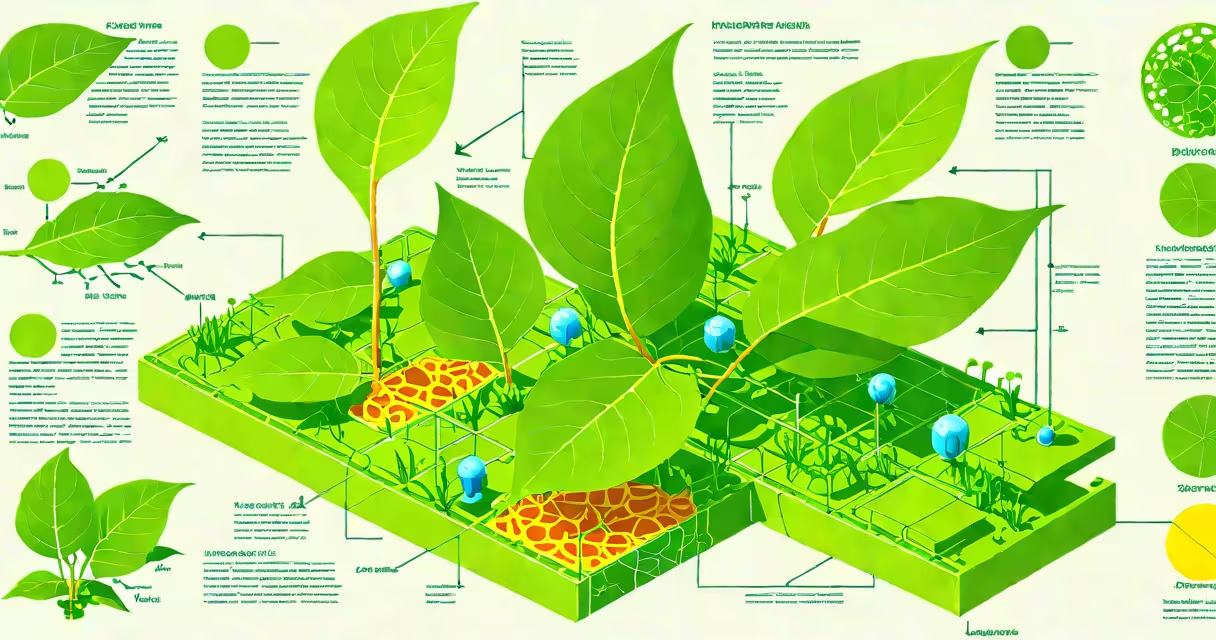
Photosynthesis energy transformation is the process by which green plants, algae, and some bacteria convert light energy from the sun into chemical energy stored in glucose molecules. This occurs primarily in chloroplasts using pigments like chlorophyll.
The process begins when sunlight strikes chlorophyll in the thylakoid membranes of chloroplasts. Photons excite electrons, initiating a chain of events that splits water into oxygen, protons, and electrons. The energy from these electrons drives ATP and NADPH production-high-energy molecules used in the next phase.
In the Calvin cycle, carbon dioxide from the air is fixed into organic molecules using ATP and NADPH. After six turns of the cycle, one molecule of glucose forms. This glucose powers plant growth and serves as the base of most food webs.
Light-dependent reactions occur in the thylakoid membrane. When photons hit chlorophyll, electrons jump to a higher energy state. These energized electrons travel through an electron transport chain, pumping protons into the thylakoid space. The resulting proton gradient drives ATP synthesis via ATP synthase.
Water is split to replace lost electrons, releasing oxygen as a byproduct. For every two water molecules split, one oxygen molecule is released. This oxygen is important for aerobic life on Earth.
The light-independent reactions (Calvin cycle) take place in the stroma. Carbon dioxide is captured by RuBisCO, an enzyme that catalyzes the first step of carbon fixation. Using ATP and NADPH from the light reactions, the cell builds sugar molecules from carbon atoms.
There are three main types of photosynthesis based on how plants handle carbon fixation under different environmental conditions:
| Type | Adaptation | Example Plants | Efficiency in Heat/Drought |
|---|---|---|---|
| C3 | Standard carbon fixation; uses RuBisCO directly | Wheat, rice, soybeans | Lowers efficiency above 30°C due to photorespiration |
| C4 | Concentrates CO₂ in bundle sheath cells to reduce photorespiration | Sorghum, maize, sugarcane | High efficiency in hot, dry climates |
| Crassulacean Acid Metabolism (CAM) | Opens stomata at night to minimize water loss | Cacti, pineapples, some succulents | Optimized for arid environments |
Each system evolved to balance energy capture with water conservation. C4 and CAM plants use additional steps to concentrate CO₂ around RuBisCO, reducing wasteful oxygen binding-a process called photorespiration.
Chloroplasts contain specialized structures: thylakoids for light reactions and stroma for carbon fixation. A single mesophyll cell in a leaf may hold 20-50 chloroplasts, each capable of processing thousands of photons per second.
Photosynthesis energy transformation sustains nearly all ecosystems. It is the foundation of primary productivity-the rate at which energy enters food chains. Without it, Earth's atmosphere would lack oxygen, and complex life could not exist.
Global photosynthesis produces approximately 115 billion metric tons of organic carbon annually, according to the Intergovernmental Panel on Climate Change (IPCC). This output supports terrestrial and marine food webs, predators.
Humans rely on photosynthesis indirectly through agriculture, forestry, and fossil fuel reserves. Coal, oil, and natural gas formed from ancient biomass buried under sediment-energy originally captured by photosynthesis millions of years ago.
Photosynthesis does not produce oxygen from carbon dioxide. Oxygen comes entirely from water splitting during the light reactions. The equation 6CO₂ + 6H₂O → C₆H₁₂O₆ + 6O₂ reflects this: the oxygen atoms in O₂ come from H₂O, not CO₂.
Many assume plants only perform photosynthesis during daylight. While light is required for the initial energy capture, some plants store starch overnight and break it down for respiration. However, photosynthesis itself halts in darkness.
A common error is equating photosynthesis with respiration. Respiration breaks down glucose to release energy for cellular work. Photosynthesis builds glucose using energy from light. They are opposite processes: one stores energy, the other releases it.
One non-obvious fact: RuBisCO, the enzyme responsible for carbon fixation, is inefficient-it binds oxygen instead of CO₂ under high temperatures. This reduces yield in C3 plants. Scientists are engineering improved versions of RuBisCO to increase crop efficiency by up to 20%, according to research published in Nature Biotechnology.
Consider a single leaf on a tomato plant on a sunny summer day. The leaf absorbs about 10% of incoming sunlight. Of that, roughly 3% is converted into chemical energy via photosynthesis.
For every 100 watts of solar energy per square meter, the leaf produces about 3 grams of glucose per hour under optimal conditions. Over a growing season, a mature tomato plant can fix over 10 kilograms of carbon dioxide, storing about 5.5 kg of carbon in its biomass.
This process requires precise coordination: chlorophyll absorbs blue and red wavelengths, reflecting green. The leaf adjusts stomatal openings to regulate CO₂ intake and water loss. Temperature, humidity, and light intensity all influence efficiency.
I once monitored a greenhouse experiment where tomato plants under LED grow lights showed 15% higher photosynthetic rates than those under natural sunlight. The controlled spectrum maximized chlorophyll absorption while minimizing heat stress-demonstrating how engineered light improves energy transformation efficiency.
Photosynthesis energy transformation is not the same as photovoltaic energy conversion. Solar panels convert sunlight directly into electricity using semiconductors. Photosynthesis converts sunlight into chemical bonds in sugars-biological energy storage.
Also, photosynthesis is not limited to green plants. Cyanobacteria perform oxygenic photosynthesis in oceans, contributing about 50% of global oxygen production. Their role in early Earth's atmosphere is well-documented in Science journal studies.
While both processes use light, they differ in mechanism, scale, and outcome. Photosynthesis is slow but sustainable; solar panels are fast but require rare materials and recycling infrastructure.
Understanding photosynthesis energy transformation reveals how life captures and stores energy. It explains why forests are carbon sinks, why algae blooms affect marine health, and why climate models depend on accurate estimates of photosynthetic activity.