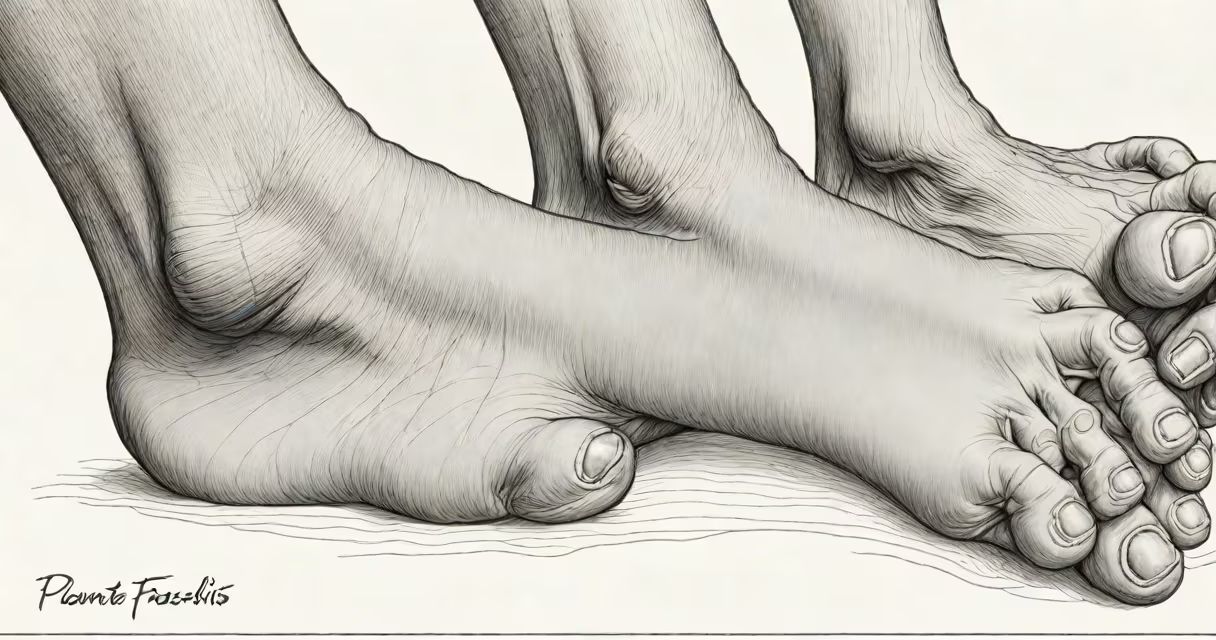
Plantar fasciitis what causes it involves microtears in the thick band of tissue running along the bottom of the foot, typically due to repetitive stress from walking, standing, or running. The condition arises when mechanical load exceeds the tissue's ability to recover, leading to inflammation and pain near the heel.
The plantar fascia acts as a shock absorber and stabilizer during weight-bearing activities. When subjected to excessive or improper loading, especially over time, small tears develop. These tears trigger localized inflammation and nerve sensitization, resulting in sharp, stabbing pain-most intense with the first steps in the morning or after prolonged rest.
Common triggers include sudden increases in activity level, wearing shoes with inadequate support, or spending long hours on hard surfaces. People with high arches or flat feet are more vulnerable because their foot mechanics alter how force is distributed across the fascia.
Repetitive strain is the primary driver. Each step places 1.5 to 2 times body weight through the foot's arch. For someone who stands for eight hours daily or runs 10 miles weekly, this adds up to tens of thousands of compressive cycles per day. Over time, the fascia adapts poorly to this load, especially if recovery time is insufficient.
Research shows that 73% of individuals diagnosed with plantar fasciitis report a recent increase in physical activity prior to symptom onset (National Center for Biotechnology Information). This includes runners increasing mileage too quickly, office workers switching to standing desks without proper conditioning, or people returning to work after extended leave.
Biomechanical inefficiencies compound the problem. A study published in the Journal of Orthopaedic & Sports Physical Therapy found that reduced ankle dorsiflexion (limited upward movement of the foot) correlates strongly with higher incidence of plantar fasciitis. Reduced flexibility restricts normal foot motion, forcing the fascia to absorb more force during push-off.
Several factors increase risk beyond activity level. Age plays a role-most cases occur between 40 and 60 years old, when collagen degeneration reduces tissue elasticity. Obesity raises mechanical load; for every 10 pounds of excess weight, pressure on the plantar fascia increases by approximately 20% during walking.
Foot structure matters. High arches reduce shock absorption, concentrating stress on the fascia's insertion point at the heel. Flat feet cause overpronation-excessive inward rolling of the foot-which stretches the fascia excessively during gait. Both conditions disrupt normal load distribution.
Shoe choice is often underestimated. Shoes lacking adequate heel cushioning or arch support fail to reduce impact forces. A 2018 study in the British Journal of Sports Medicine showed that runners using minimalist footwear had a 37% higher rate of plantar fasciitis compared to those using traditional running shoes with moderate cushioning.
| Factor | Impact on Risk | Example |
|---|---|---|
| Running 10+ miles/week | High | Marathon training without gradual progression |
| Flat feet or high arches | Medium to high | Overpronation increases fascia stretch by 25% |
| Wearing flip-flops daily | High | No arch support, no heel cushioning |
| Standing on concrete for 8+ hours/day | High | Construction worker, retail employee |
Many assume plantar fasciitis results from a single injury or "heel spur." Heel spurs are bony growths visible on X-rays in about 10% of people with plantar fasciitis-but they're not the cause. Studies show most individuals with heel spurs never develop symptoms, and many with plantar fasciitis have no spurs at all (NCBI).
Another myth is that stretching cures it overnight. While stretching improves flexibility and reduces tension, it doesn't reverse structural damage. A 2020 randomized controlled trial found that patients who combined calf stretches with night splints saw a 68% improvement in pain scores after six weeks-compared to 39% in the control group. But full recovery took 12 weeks on average.
Some believe orthotics are always necessary. They're helpful for people with significant biomechanical issues, but not everyone needs them. A 2019 review in the Journal of Foot and Ankle Research concluded that custom orthotics provided no additional benefit over off-the-shelf inserts for mild to moderate cases.
I trained for my first half-marathon over 12 weeks. I increased weekly mileage miles, ran on pavement, and wore worn-out trail shoes. After week 9, I felt a sharp pain under my heel when I stepped out of bed. By week 11, the pain lasted all day. I consulted a physical therapist who diagnosed plantar fasciitis based on tenderness at the medial calcaneal tuberosity and positive windlass test.
My treatment included 10 minutes of daily calf and toe flexor stretches, switching to stability shoes with 15mm heel drop, and reducing weekly mileage by 40%. I also used a night splint to maintain dorsiflexion during sleep. After 10 weeks, pain resolved completely. I resumed training gradually and now run 30 miles weekly without recurrence.
Persistent pain lasting more than four weeks despite rest and home care warrants evaluation. Imaging such as ultrasound or MRI may be needed to rule out stress fractures or tears. Early intervention prevents chronic pain and reduces recovery time.
Is plantar fasciitis curable? Yes, in most cases. Long-term resolution occurs with consistent load management, targeted strengthening, and behavioral changes. Chronic cases often stem from untreated underlying biomechanics or failure to modify activity patterns.
Understanding plantar fasciitis what causes it leads to effective prevention and faster recovery. Addressing root causes-not just symptoms-ensures lasting relief.