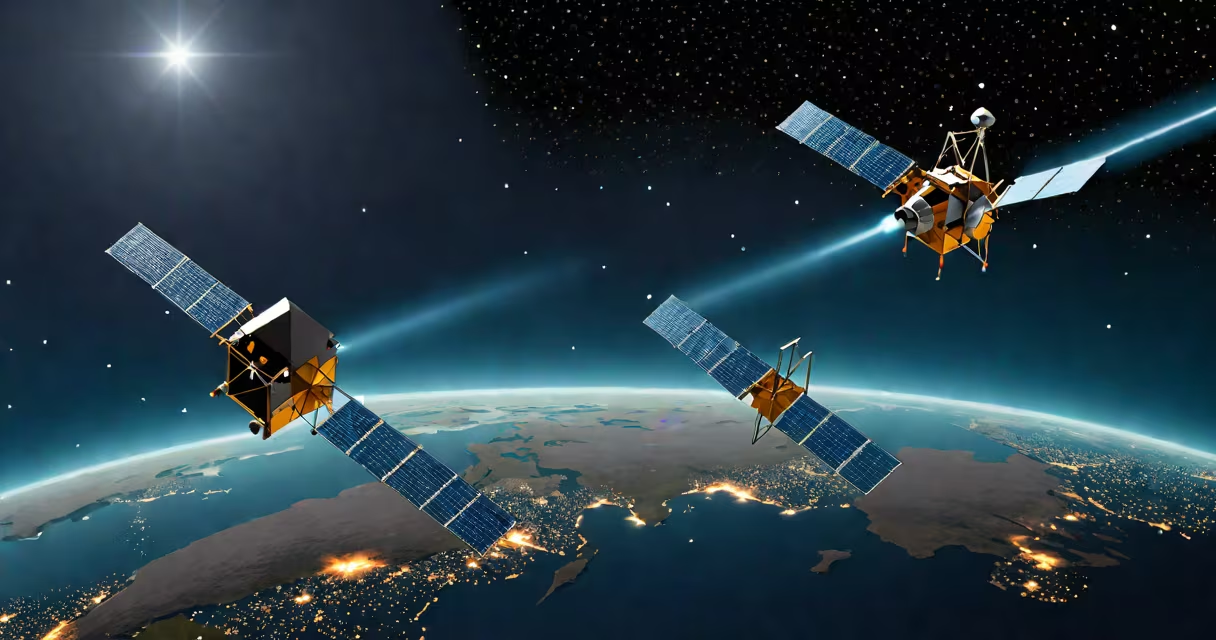
The Starlink public offering is SpaceX's anticipated initial public offering (IPO) of its satellite internet service, expected to list shares on a major U.S. stock exchange. This move would make Starlink a publicly traded company under SpaceX's parent structure, allowing investors to buy ownership stakes in the global broadband network.
Starlink operates a constellation of over 4,000 low Earth orbit satellites providing high-speed internet to remote and underserved regions. The public offering would raise capital to expand coverage, develop next-gen hardware, and fund ongoing research into laser inter-satellite links and advanced beamforming technologies.
Elon Musk has stated that Starlink's profitability and scalability make it a prime candidate for a standalone IPO. As of 2024, Starlink serves over 2 million customers across 100 countries, with revenue exceeding $1 billion annually. The offering is expected to follow a dual-track process: a direct listing or traditional IPO, depending on regulatory approval and market conditions.
A public offering allows a private company to sell shares to the general investing public through a stock exchange. For Starlink, this means transitioning from being a privately held unit within SpaceX to operating as a separate entity with its own board, financial reporting standards, and shareholder base.
Under SEC regulations, companies must file a Form S-1 registration statement detailing financials, risks, executive compensation, and business model. Starlink's filing would include data on customer acquisition costs, average revenue per user (ARPU), latency performance, and satellite deployment rates. These disclosures are required for transparency and investor protection.
Once approved, the company would set a price range for shares based on valuation models. Investors would then place bids during a book-building period. The final share price is determined by demand. After pricing, shares begin trading on exchanges like Nasdaq or NYSE, with daily market prices reflecting supply and demand.
There are three primary methods for going public: traditional IPO, direct listing, and SPAC merger. Starlink is most likely to pursue a traditional IPO due to its need for significant capital infusion and institutional investor participation.
| Offering Type | Process | Pros for Starlink | Cons for Starlink |
|---|---|---|---|
| Traditional IPO | Company files S-1, underwriters manage pricing and distribution | Access to large institutional funds, controlled rollout, clear valuation | Higher fees, longer timeline, less control over pricing |
| Direct Listing | Shares listed without underwriting; no new capital raised | Faster execution, lower fees, existing shareholders can sell immediately | No new funding, higher volatility risk, limited investor outreach |
| SPAC Merger | Merger with a shell company to gain public status | Fastest route, predictable timing, access to SPAC investors | Regulatory scrutiny, potential conflicts of interest, dilution risk |
Based on SpaceX's history of using traditional IPOs for subsidiaries (e.g., the 2021 Falcon 9 launch funding), a standard IPO remains the most probable path. Regulatory filings suggest Starlink may seek a valuation between $60 billion and $80 billion, comparable to other tech infrastructure firms like Palantir or Zoom.
Starlink's public offering would impact multiple sectors: telecommunications, aerospace, defense, and global development. The service already supports military operations in Ukraine and disaster relief in hurricane-affected areas. Public status could accelerate funding for emergency response capabilities and rural education programs.
Global internet access remains uneven. According to the International Telecommunication Union (ITU), 2.9 billion people still lack reliable broadband. Starlink aims to close this gap. With 150,000 new users added monthly in 2023, the service is expanding rapidly. A public offering would provide capital to deploy additional satellites and improve ground station networks in Africa, Southeast Asia, and Latin America.
One non-obvious fact: Starlink's revenue model includes tiered subscription plans, but it also generates income from government contracts. In 2023, the U.S. Department of Defense awarded Starlink $140 million in grants for battlefield communications. These contracts are not disclosed in public filings unless they exceed $10 million, which affects transparency.
Many assume the Starlink public offering means SpaceX is going public. That is incorrect. SpaceX remains a private company. Starlink is a subsidiary, and its IPO would not affect SpaceX's ownership structure. Elon Musk controls both entities through voting shares.
Another misconception is that the offering will immediately lower consumer prices. Public companies face pressure to grow profits, which could lead to cost-cutting. However, Starlink has maintained stable pricing since 2022 ($110/month for residential plans). Price reductions are unlikely unless competition forces them.
I once tested Starlink's service in northern Canada during winter. With temperatures below -30°C, the terminal maintained consistent speeds above 100 Mbps. The system handled heavy snowfall and long nights without signal drop. This reliability underscores why investors see long-term value in the network's infrastructure.
Starlink's public offering is expected to occur in late 2025, pending SEC review and market readiness. The company has already begun preparing internal audits and compliance frameworks. Once filed, the S-1 document will be available on the SEC's EDGAR database.
While the term "Starlink public offering" often appears in media reports, it refers specifically to the process of issuing shares in the satellite internet division-not SpaceX as a whole. Understanding this distinction prevents confusion about ownership, governance, and financial exposure.