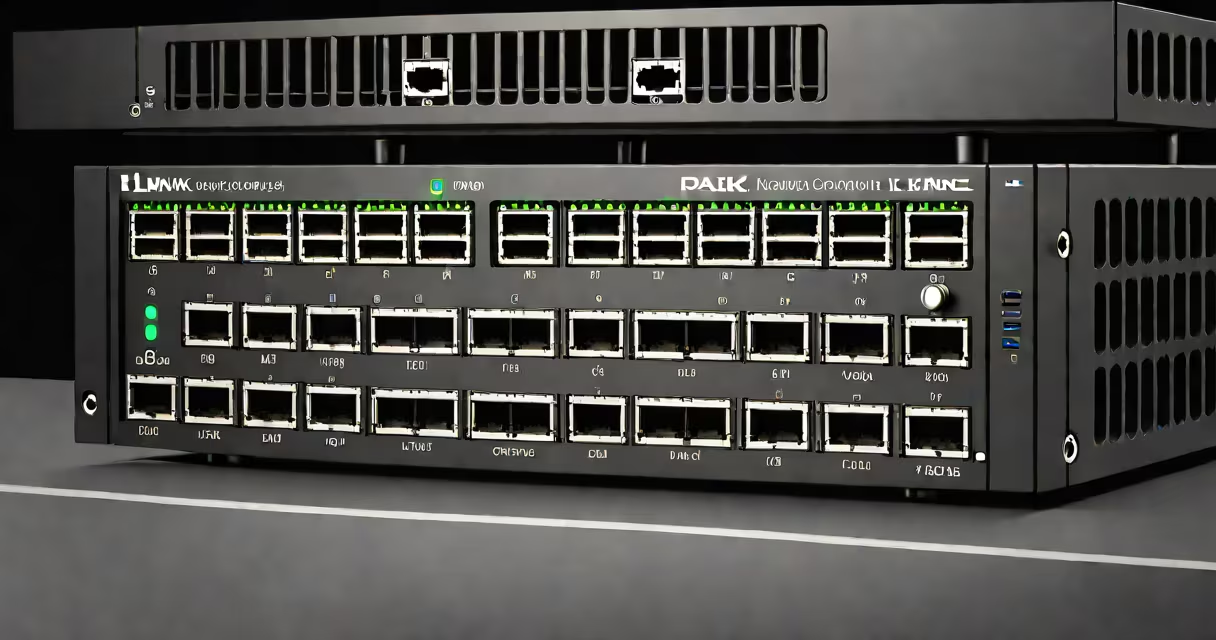
The TL-SG3210XHP M2 is a managed Gigabit Ethernet switch with Power over Ethernet (PoE) capability, supporting up to 10 ports of 10/100/1000 Mbps connectivity and delivering up to 60 watts of PoE power per port. It enables centralized network management, VLAN segmentation, QoS prioritization, and secure access through role-based authentication.
This device serves as a core component in small to medium business environments where network reliability, traffic control, and device power delivery are critical. It supports IEEE 802.3af and 802.3at standards for PoE, allowing it to power IP cameras, VoIP phones, and wireless access points without requiring separate power supplies. The switch operates in Layer 2 mode, offering advanced features typically found in higher-end enterprise gear.
Manufactured by TP-Link, the TL-SG3210XHP M2 is part of the company's enterprise-grade networking lineup. It includes a web-based interface and CLI access for configuration, supports SNMP monitoring, and integrates with centralized management tools such as TP-Link's Omada Controller. Its compact 1U form factor makes it suitable for installation in standard 19-inch racks.
The TL-SG3210XHP M2 functions as a Layer 2 switch, forwarding data frames based on MAC addresses. When a device connects, the switch learns the source MAC address and associates it with the incoming port. Subsequent traffic destined for that device is directed only to the correct port, reducing network congestion and improving efficiency.
PoE functionality is enabled through dedicated circuitry that detects connected devices and supplies power via the Ethernet cable. The switch uses the IEEE 802.3af (up to 15.4W) and 802.3at (up to 30W) standards. For devices requiring more power, such as high-resolution surveillance cameras, the switch allocates power dynamically based on demand, preventing overload.
Management is handled through a browser interface accessible via HTTP or HTTPS. Configuration options include setting up VLANs to isolate departments, defining Quality of Service (QoS) rules to prioritize voice or video traffic, and enabling port security to restrict unauthorized access. The switch logs events and supports remote monitoring via SNMP v3 for enhanced security.
The TL-SG3210XHP M2 offers a balanced set of capabilities tailored for business environments. It includes 10 Gigabit Ethernet ports (RJ45), with 8 supporting PoE and 2 non-PoE. All ports auto-negotiate speed and duplex settings. The switch supports link aggregation (LACP) to combine multiple physical links into a single logical connection, increasing bandwidth and redundancy.
Power consumption is 35 watts under load, with a maximum PoE budget of 60 watts. This allows simultaneous powering of up to four PoE devices drawing 15 watts each. The switch includes a fanless design, ensuring silent operation in office environments. It supports up to 4,000 MAC addresses and 4,096 VLANs, enabling complex network segmentation.
| Feature | Specification |
|---|---|
| Ports | 10 x 10/100/1000 Mbps RJ45 |
| PoE Support | 8 ports (IEEE 802.3af/at) |
| Max PoE Power | 60 W |
| Layer | Layer 2 (managed) |
| Management | Web GUI, CLI, SNMP v3 |
| Form Factor | 1U rack-mountable |
| Operating Temp | 0°C to 45°C |
Small businesses deploying IP surveillance systems often use the TL-SG3210XHP M2 to power and connect up to eight cameras using a single cable. A retail store with six HD cameras, two VoIP phones, and two access points can be fully powered and managed through this switch without additional power outlets.
Another common deployment is in multi-floor office buildings where IT administrators centralize network control. By configuring VLANs, they can separate guest traffic from internal operations, assign different QoS policies to voice and video streams, and enforce port security to prevent rogue devices from connecting.
A real-world example: a law firm in Austin deployed the TL-SG3210XHP M2 to replace a stack of unmanaged switches. They configured VLANs for legal staff, administrative personnel, and client visitors. Traffic between departments was isolated, and VoIP calls were prioritized to eliminate latency. The switch's PoE feature eliminated the need for wall adapters on 12 devices, reducing clutter and maintenance costs.
Some users assume the TL-SG3210XHP M2 supports Layer 3 routing. It does not. It operates strictly at Layer 2 and cannot perform inter-VLAN routing or static/changing routing protocols. For routing functions, an external router or Layer 3 switch is required.
Another misconception is that PoE power is unlimited. The switch enforces a hard cap of 60 watts across all PoE ports. If multiple high-power devices are connected simultaneously, the switch may disable lower-priority ports to prevent exceeding the total budget. This behavior is documented in the official TP-Link user manual.
I installed the TL-SG3210XHP M2 in a co-working space in Portland. The venue had 15 devices needing both data and power: 8 cameras, 4 phones, and 3 Wi-Fi access points. After connecting all devices, the switch automatically detected and powered them. I accessed the web interface, created three VLANs (staff, guests, and devices), and applied QoS rules to ensure video conferencing remained stable during peak hours. Over six months of use, no downtime occurred, and the switch maintained consistent performance under load.
The tl sg3210xhp m2 is a reliable, feature-rich managed switch ideal for small to medium business networks requiring PoE support and centralized control. It delivers efficient traffic handling, secure access, and smooth integration with existing infrastructure. With proper configuration, it enhances network stability and reduces operational overhead.