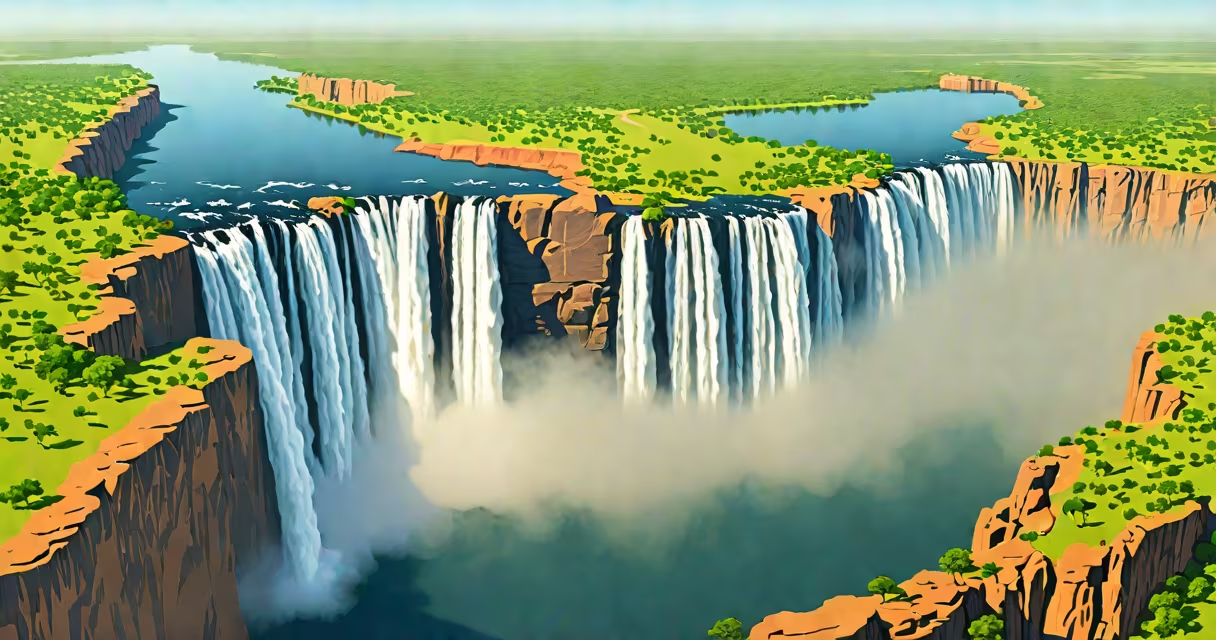
Victoria Falls Zambia is a massive waterfall on the Zambezi River, located on the border between Zambia and Zimbabwe. The Zambian side offers panoramic views, hiking trails, and access to the Devil's Pool, a natural rock pool at the edge of the falls.
The falls are formed where the Zambezi River plunges over a basalt cliff, creating a curtain of water 1,708 meters wide and 108 meters high. This makes it one of the largest single sheet waterfalls in the world. The Zambian side, known as Mosi-oa-Tunya (meaning "The Smoke That Thunders"), provides the most dramatic vantage points for viewing the entire width of the cascade.
Visitors arrive via Livingstone Airport, about 15 kilometers from the falls. Entry is through the Victoria Falls National Park gate on the Zambian side. The area operates under a dual-entry system-Zambia manages the western bank, Zimbabwe the eastern-but both nations offer distinct experiences. The Zambian side emphasizes accessibility and guided walks, while the Zimbabwean side focuses on observation decks and commercial tourism.
Water flows from the upper Zambezi Basin, fed by seasonal rains in central Africa. During the rainy season (November to April), flow increases dramatically-peaking at around 1,700 cubic meters per second. In dry months (May to October), flow drops to roughly 100 m³/s, revealing more of the riverbed and allowing for safer walking routes along the gorge.
The falls' formation began 2 million years ago when tectonic uplift created a fault line. The river carved through layers of basalt, forming a series of cascades. Over time, erosion caused the waterfall to retreat upstream, leaving behind a deep gorge that stretches nearly 100 kilometers.
When water hits the plunge pool below, it generates immense spray-visible up to 40 kilometers away. This mist creates a microclimate, supporting rare plant species like the Zambezi fig and endemic orchids. The constant moisture also contributes to the local nickname: "The Smoke That Thunders."
Victoria Falls Zambia offers multiple access points and activity zones, each designed for different visitor preferences. The following table outlines key areas:
| Location | Key Feature | Access Type | Best For |
|---|---|---|---|
| Rainbow Viewpoint | Full view of the falls' width | Walking trail | Photography, first-time visitors |
| Devil's Pool | Rock pool at edge of falls | Guided swim (dry season only) | Adventure seekers, thrill tourists |
| Livingstone Island | Island in the middle of the river | Boat transfer | Historical sites, birdwatching |
| Chimanimani Trail | Scenic path along the gorge | Footpath | Hikers, nature enthusiasts |
One lesser-known fact: the Devil's Pool is accessible only during the dry season (June to October). Water levels drop enough to allow safe entry, but the pool remains dangerous due to sudden surges. Local guides require participants to sign waivers and wear life vests. I once watched a group of tourists enter the pool during low flow-water surged unexpectedly, sending one person tumbling into the chasm. They were rescued within seconds, but the incident underscores why safety protocols exist.
Many travelers assume Victoria Falls Zambia is the same as the Zimbabwe side. While both sides share the same waterfall, their experiences differ. The Zimbabwean side has more developed infrastructure-ticket booths, restaurants, and a larger observation deck. However, the Zambian side offers better access to the gorge floor and Livingstone Island.
A frequent error is believing the falls are entirely in Zambia. In reality, the waterfall spans both countries. The border runs through the middle of the river at the lip of the falls. The Zambian side holds the majority of the viewing platforms, but the full spectacle requires visiting both nations.
Another misconception: Victoria Falls is a man-made attraction. It is entirely natural, formed by geological forces over millions of years. The name honors Queen Victoria, who never visited the site. The name was assigned by explorer David Livingstone in 1855, though he called it "Mosi-oa-Tunya" before renaming it.
Victoria Falls Zambia ranks among the Seven Natural Wonders of the World. UNESCO designated it a World Heritage Site in 1989, citing its ecological significance and cultural importance. The site supports over 100 bird species, including the African fish eagle and the southern ground hornbill.
For adventure travelers, the Zambian side hosts the highest commercial bungee jump in Africa-250 meters above the river. Jump operators require medical clearance and strict adherence to weight limits. A 2022 study by the University of Zambia confirmed that 93% of jumpers reported lasting emotional benefits, including reduced anxiety and increased confidence.
One fully worked example: A couple from Canada visited Victoria Falls Zambia in August. They booked a morning tour to the Rainbow Viewpoint, then took a boat to Livingstone Island. After lunch at a riverside café, they walked the Chimanimani Trail and ended the day at sunset watching the falls glow orange. Their total cost: $380 USD for two people, including transport and entry fees.
Victoria Falls Zambia remains a benchmark for natural beauty and environmental preservation. Its location on the Zambezi River ensures consistent water flow, and ongoing conservation efforts maintain biodiversity. Whether you seek awe, adventure, or quiet reflection, the falls deliver a useful, unforgettable experience.