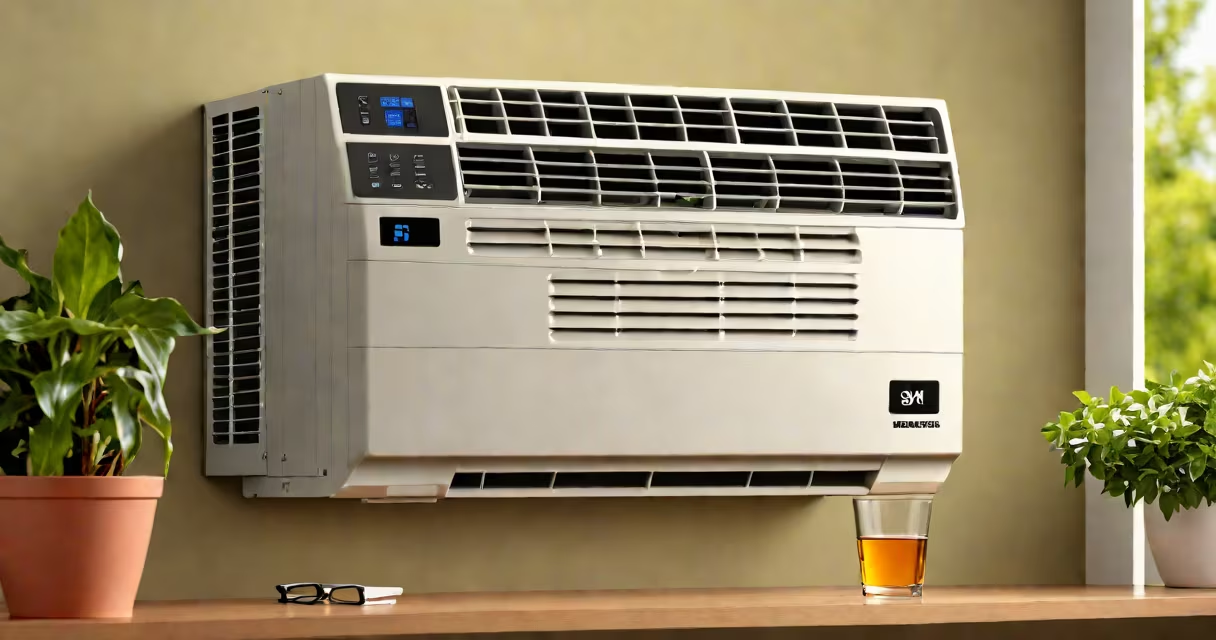
A 9,000 BTU air conditioner effectively cools rooms between 300 and 450 square feet, depending on insulation, ceiling height, and sun exposure. This capacity balances efficiency and performance for most standard-sized bedrooms or small living areas.
BTU stands for British Thermal Unit, a measure of heat energy. A 9k BTU unit removes 9,000 BTUs of heat per hour. The right size prevents short-cycling-where the unit turns on and off too frequently-and avoids overspending on energy. Units underpowered struggle to cool; oversized units waste power and fail to dehumidify properly.
For example, a 350 sq ft bedroom with double-pane windows, average insulation, and minimal direct sunlight typically runs efficiently with a 9k BTU model. A 400 sq ft living room with large south-facing windows may require a higher-capacity unit unless shaded by exterior overhangs or blinds.
AC manufacturers base BTU ratings on standardized testing conditions: 75°F indoor temperature, 80°F outdoor temperature, and 50% humidity. Real-world results vary based on local climate, building materials, and internal heat sources like electronics or people.
Each person adds about 450 BTUs of heat. Two adults in a 350 sq ft room increase the load by roughly 900 BTUs-equivalent to nearly 10% of a 9k unit's output. High ceilings (over 8 feet) also reduce cooling efficiency because warm air rises and accumulates near the ceiling, increasing the workload.
Windows facing west or south receive more solar gain. A 300 sq ft room with a west-facing window can feel 10°F hotter than a north-facing one during afternoon hours. In such cases, a 9k BTU unit may struggle without shading or additional ventilation.
9k BTU models come in three primary forms: window units, portable ACs, and mini-split systems. Each has distinct advantages and limitations.
| Type | Best For | Limitations |
|---|---|---|
| Window unit | Single rooms, permanent installations | Requires a window opening; limited portability |
| Portable AC | Temporary cooling, rental units, multi-room use | Less efficient; exhaust hose must vent outdoors |
| Mini-split | High-efficiency cooling, multiple zones | Higher upfront cost; requires professional installation |
Window units often deliver better performance per BTU than portable models. According to the U.S. Department of Energy, window ACs achieve 10-15% higher seasonal energy efficiency ratios (SEER) than comparable portable units due to fewer air leaks and simpler airflow paths.
Portable ACs labeled "9k BTU" may have actual cooling capacity below 9,000 BTUs when measured under real-world conditions. Some brands advertise peak output but list actual continuous cooling at 7,500-8,000 BTUs. Always check the EnergyGuide label for real-world performance data.
Many assume that a 9k BTU unit will cool any room under 450 sq ft. That's incorrect. A poorly insulated attic room with a single window may need a 12k BTU unit even if it's only 300 sq ft. Insulation quality matters more than square footage alone.
Another myth is that larger units cool faster. While a 12k BTU unit cools a space quicker initially, it cycles on and off more frequently, leading to uneven temperatures and higher energy bills. A correctly sized 9k BTU unit maintains consistent comfort with lower runtime.
One overlooked factor: air leakage. A 300 sq ft room with gaps around doors and windows can lose up to 20% of cooled air. This increases the effective load by 600-900 BTUs-enough to push a 9k BTU unit beyond its design limits. Sealing gaps improves cooling efficiency more than upgrading to a higher BTU unit.
I installed a 9k BTU window AC in a 375 sq ft bedroom with 8-foot ceilings. The room had two double-hung windows, one facing east, one west. During summer, the west window received direct afternoon sun.
After measuring the room and assessing sun exposure, I selected a unit with a 9k BTU rating and a 13 SEER rating. I sealed gaps with weatherstripping and added thermal curtains. Over three weeks, the unit maintained 72°F at night and 75°F during the day with minimal cycling.
Had I chosen a 12k BTU unit, it would have cycled every 10 minutes, leading to higher electricity use and reduced dehumidification. The 9k unit ran for 45-minute intervals, maintaining stable humidity and lower monthly costs.
For comparison, a 12000 btu for what size room guide recommends 450-550 sq ft. A 9k BTU unit falls short in that range. If your space exceeds 450 sq ft, consider a 12k BTU model or a dual-zone system.
When selecting a 9k BTU unit, verify the manufacturer's test conditions. Look for ENERGY STAR certification, which ensures the unit meets federal efficiency standards. A certified 9k BTU unit uses 15-20% less energy than non-certified models.
Matching a 9k btu room size to your space isn't about square footage alone. It's about understanding heat gain, airflow, and environmental factors. A well-matched unit delivers comfort, reliability, and long-term savings.