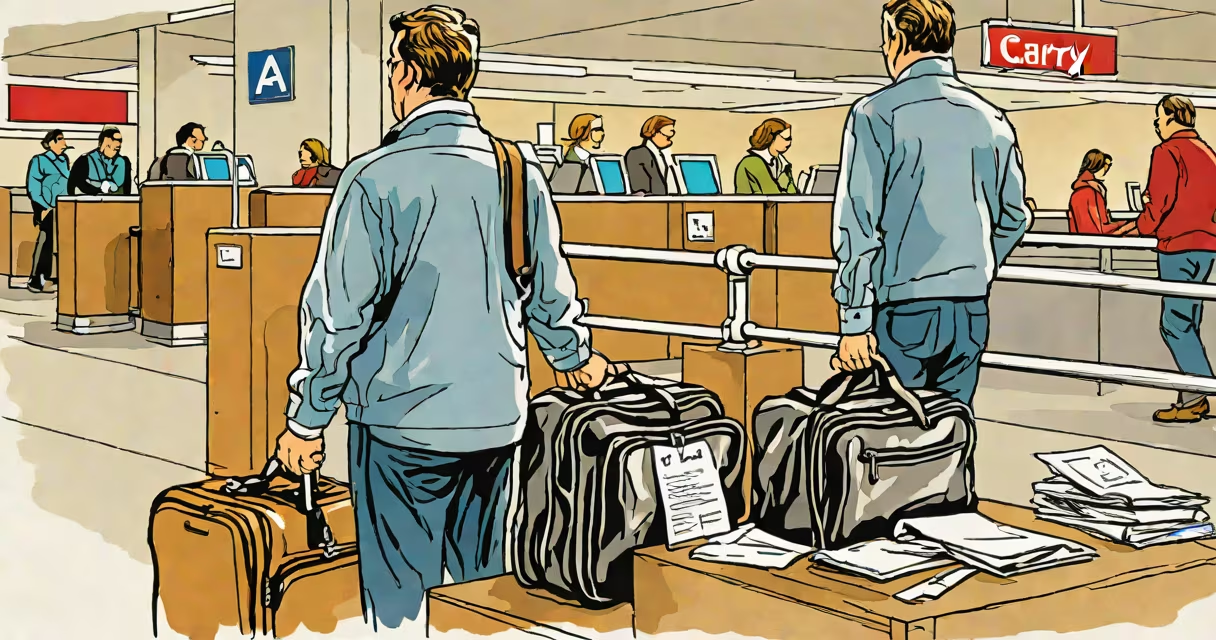
American Airlines permits one carry-on bag and one personal item per passenger, with the carry-on bag limited to 50 pounds (23 kilograms). This weight limit applies to both domestic and international flights unless otherwise specified.
The carry-on bag must fit in the overhead bin or under the seat in front of you. Bags exceeding the size or weight limits may be subject to gate checking or require a fee if they cannot be accommodated. The 50-pound limit is enforced at the gate and during boarding, not at check-in counters.
Passengers who exceed the weight limit may be asked to pay a fee to check the bag at the gate. The fee varies based on route and fare class. For most domestic routes, the fee ranges from $35 to $65. International flights may have higher fees depending on destination and ticket type.
American Airlines defines the carry-on bag as a single piece of luggage that fits in the overhead bin or under the seat. The standard dimensions are 22 x 14 x 9 inches (56 x 36 x 23 cm). Exceeding either the size or weight limit triggers enforcement.
At the gate, staff use a scale to weigh bags. If a bag exceeds 50 pounds, the passenger is informed and given the option to pay a fee to check it. Refusing to pay results in the bag being checked at no charge, but it will not be available until arrival.
For passengers traveling with multiple bags, only one carry-on is permitted. Any additional bags must be checked. The airline does not allow splitting a single bag between two passengers to bypass the limit.
Not all carry-ons are treated the same. American Airlines distinguishes between standard carry-ons and those that qualify as premium or business class options.
| Bag Type | Size Limit | Weight Limit | Eligibility |
|---|---|---|---|
| Standard Carry-On | 22 x 14 x 9 in (56 x 36 x 23 cm) | 50 lbs (23 kg) | All passengers |
| Premium Carry-On | 24 x 16 x 10 in (61 x 41 x 25 cm) | 50 lbs (23 kg) | Elite members, business class, and select fare classes |
| Personal Item | 18 x 14 x 8 in (46 x 36 x 20 cm) | 15 lbs (7 kg) | All passengers |
Only passengers with elite status (AAdvantage Platinum, Gold, or Executive Platinum) or those flying business class are eligible for the larger premium carry-on. These bags are still subject to the 50-pound weight limit.
Personal items such as backpacks, laptop bags, or small purses must fit under the seat. They are not counted toward the carry-on allowance but are subject to size and weight checks.
Many travelers assume that the 50-pound limit is flexible or that airlines won't enforce it. This is incorrect. According to American Airlines' official policy, enforcement begins at the gate.
In 2022, a passenger flying Angeles attempted to bring a 54-pound carry-on. The bag was weighed at the gate and refused boarding. The passenger paid a $55 gate-check fee to have the bag transported. The cost was higher than expected because the flight was booked at a basic economy rate.
Another common mistake is assuming that a smaller bag automatically qualifies as carry-on. A 20-inch suitcase may look small but still exceed the 22-inch height limit. One traveler reported that their 20-inch rolling bag was denied because it extended beyond the height restriction when packed with clothing and electronics.
Even with proper sizing, weight matters. A 48-pound bag filled with winter gear and electronics may seem within limits but can fail the scale test due to uneven distribution or improper packing.
If your carry-on exceeds 50 pounds, you'll be asked to pay a fee to check it at the gate. The fee is determined by your ticket type, route, and internationally.
For domestic flights, the fee ranges from $35 to $65. International flights may charge up to $100, especially on long-haul routes. Passengers with basic economy tickets are charged more than those with full-fare or premium tickets.
Refusing to pay results in the bag being checked at no charge. However, this means the bag will not be available until arrival. Lost or delayed bags are rare but possible, especially on connecting flights.
As a frequent flyer, I once had my carry-on rejected at the gate due to weight. I was flying with a 52-pound bag containing a camera kit and a laptop. The agent confirmed the weight and offered a $45 fee to check it. I declined and accepted the free check. My bag arrived late, but I avoided the fee. The delay caused me to miss a meeting, which taught me to weigh bags at home.
American Airlines' 50-pound carry-on limit is consistent with major U.S. carriers. However, differences exist in enforcement and exceptions.
| Airline | Carry-On Size | Weight Limit | Enforcement Point |
|---|---|---|---|
| American Airlines | 22 x 14 x 9 in | 50 lbs (23 kg) | Gate |
| Southwest Airlines | 24 x 16 x 10 in | 50 lbs (23 kg) | Gate |
| United Airlines | 22 x 14 x 9 in | 50 lbs (23 kg) | Gate |
| Delta Airlines | 22 x 14 x 9 in | 50 lbs (23 kg) | Gate |
While all major U.S. airlines enforce a 50-pound limit, Southwest allows slightly larger bags. United and Delta use the same dimensions as American Airlines.
Use a portable luggage scale before arriving at the airport. These devices cost less than $20 and provide accurate readings. Weigh your bag at home or at a local store.
Pack efficiently. Place heavier items at the bottom and distribute weight evenly. Avoid overpacking with non-essential items like extra chargers or toiletries.
Check your bag early if you're unsure. Most airports offer self-service kiosks where you can weigh and check your bag before reaching the gate. This avoids last-minute delays.
Review your ticket type. Basic economy fares often have stricter enforcement and higher fees. Upgrading to a higher fare class may reduce or eliminate gate-check fees.
Understanding the aa carry on bag weight limit prevents delays, avoids surprise fees, and ensures a smoother travel experience. The 50-pound rule is clear, enforced at the gate, and applies to all passengers regardless of fare class.