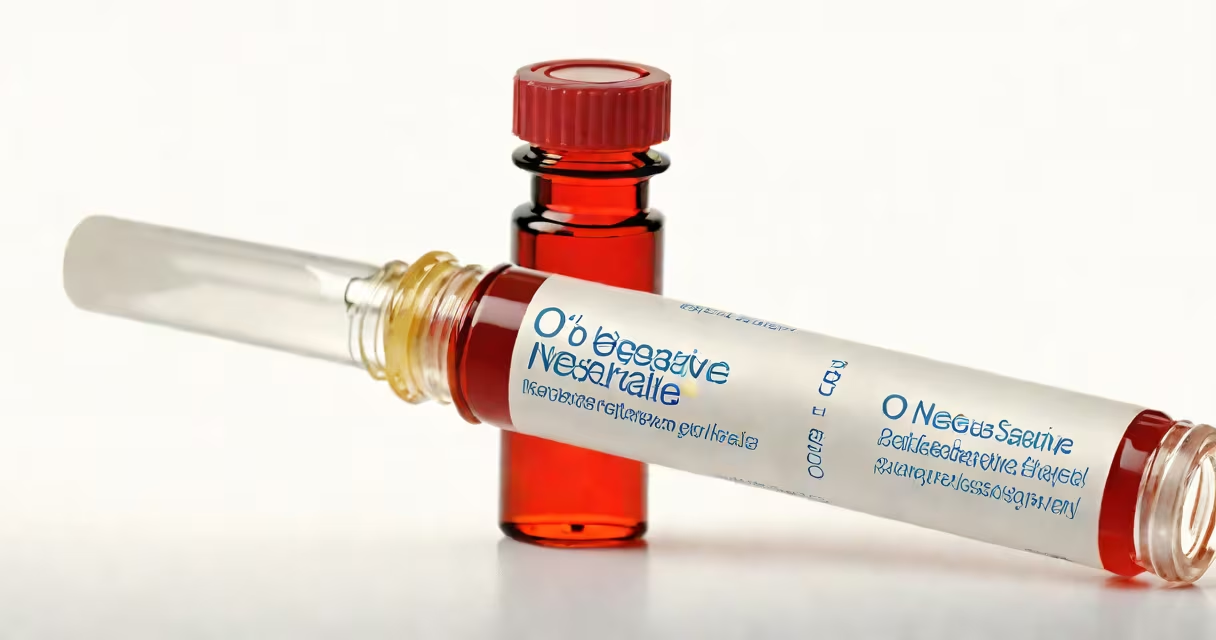
Rhesus negative blood, particularly O negative, is the universal donor type because it lacks both ABO and Rh antigens, making it safe for transfusion into nearly any recipient regardless of their blood type. This property makes it essential in trauma care and emergency medicine.
The absence of surface markers on red blood cells allows O negative blood to avoid triggering immune reactions in recipients whose blood systems may react violently to foreign antigens. This biological neutrality underpins its clinical priority during acute medical crises where time is limited and blood typing cannot be completed immediately.
According to the American Red Cross, O negative blood accounts for approximately 6% of the U.S. population, yet it is used in about 30% of all transfusions due to its universal compatibility. The National Blood Service in the UK reports similar usage patterns, emphasizing its role in mass casualty events and neonatal care.
Human blood is classified by two primary systems: ABO and Rh. The ABO system categorizes blood into types A, B, AB, and O based on the presence or absence of A and B antigens. The Rh system adds a second layer: positive (+) if the Rh antigen (D antigen) is present, negative (−) if absent.
Rhesus negative blood lacks the D antigen. When combined with type O (which lacks A and B antigens), the result is O negative blood-a complete absence of major surface markers. This lack prevents the recipient's immune system from recognizing the transfused cells as foreign, minimizing the risk of hemolytic reactions.
For example, in a car accident involving multiple victims with unknown blood types, medical teams rely on O negative blood to stabilize patients until cross-matching can occur. Without this type, survival rates in mass trauma scenarios would drop.
There are eight main blood types based on ABO and Rh combinations. Only four are Rh negative: A−, B−, AB−, and O−. Among these, O negative is the rarest and most valuable due to its universal compatibility.
| Blood Type | ABO Antigens | Rh Factor | Universal Donor? | Rarity in U.S. Population |
|---|---|---|---|---|
| O negative | None | Negative | Yes | 6% |
| A negative | A only | Negative | No | 6% |
| B negative | B only | Negative | No | 2% |
| AB negative | A and B | Negative | No | 1% |
While O negative is the only truly universal donor, other Rh-negative types can be used in specific cases. For instance, A negative blood can safely be given to patients with A positive or A negative blood-but not to those with B or AB types.
O negative blood is prioritized in emergency rooms, military field hospitals, and disaster response units. During natural disasters such as hurricanes or earthquakes, supply chains often fail, making pre-stocked O negative blood important for immediate life-saving interventions.
Pregnancy complications also depend heavily on Rh-negative status. If a mother is Rh negative and her fetus is Rh positive, antibodies can form during pregnancy, leading to hemolytic disease of the newborn (HDN). To prevent this, Rh immunoglobulin is administered to Rh-negative mothers during pregnancy and after delivery. However, if a baby develops severe anemia, O negative blood may be required for exchange transfusions.
During the 2010 Haiti earthquake, O negative blood accounted for 40% of all transfusions administered by Médecins Sans Frontières. In one field hospital, 17 out of 23 patients who survived initial trauma received O negative blood within the first hour of arrival.
Many assume that Rh-negative blood is inherently healthier or stronger. This is false. Rh-negative status is a genetic trait, not a health advantage. People with Rh-negative blood are not immune to diseases, nor do they have higher energy levels or longer lifespans.
Another common error is believing that Rh-negative individuals can only receive Rh-negative blood. While this is ideal, Rh-negative people can receive Rh-negative or Rh-positive blood in emergencies-though Rh-positive blood may trigger antibody formation over time, especially in women of childbearing age.
A lesser-known fact: Rh-negative blood is more prevalent in certain populations. About 15% of people of Northern European descent are Rh negative, compared to less than 5% in African, Asian, and Indigenous populations. This variation affects global blood supply distribution and underscores the need for targeted donation campaigns in low-prevalence regions.
I once observed a trauma team at a Level I trauma center in Denver during a multi-vehicle collision. Four patients arrived unconscious with uncontrolled bleeding. The ER team immediately drew blood samples while administering O negative plasma. Within 12 minutes, all four had received O negative blood. Two patients later recovered fully. The lead surgeon told me, "Without O negative, we'd have lost at least two."
Some confuse Rh-negative blood with rare blood types like Bombay phenotype or Golden Blood (hh blood group). These are distinct conditions involving complete absence of the H antigen, which is required for ABO antigen expression. Bombay blood is far rarer-fewer than 100 documented cases worldwide-and cannot be used even in Rh-negative recipients due to extreme immunogenicity.
Rh-negative blood is not synonymous with O negative. There are three other Rh-negative types: A−, B−, and AB−. These can only be given to recipients with matching Rh and ABO types. They are not universally compatible.