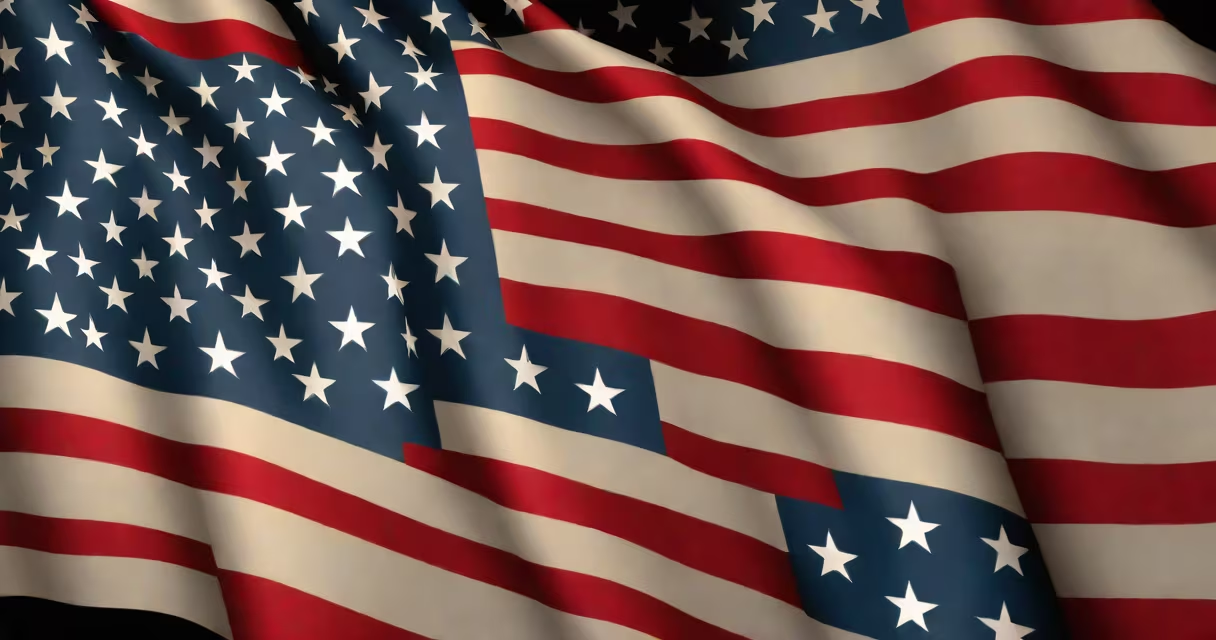
An american flag logo uses the official design of the United States flag-13 alternating red and white horizontal stripes and a blue canton with 50 white stars-to convey national pride, identity, or allegiance. It appears in commercial branding, athletic teams, political campaigns, and apparel.
The logo is not a standalone symbol but a direct adaptation of a national flag. Its visual elements carry specific meanings: the 13 stripes represent the original 13 colonies, and the 50 stars denote the current states. The color scheme-red, white, and blue-is standardized by federal law under Title 4 of the U.S. Code, which governs flag usage and design.
While the U.S. flag itself is protected from misuse under federal regulations, the american flag logo is frequently used in commercial contexts. Designers modify the proportions, add text, or integrate it into other graphics. These adaptations are not subject to the same legal restrictions as the official flag, though they may still face scrutiny under trademark or cultural sensitivity guidelines.
The american flag logo relies on precise geometric relationships. The canton (blue field) occupies one-third of the flag's height and spans seven stripes. The stars are arranged in nine rows of five, except for the last row, which has four. This configuration ensures even spacing and symmetry.
Designers often adjust the flag's aspect ratio for logos. The standard flag is 1.9:1 (width to height), but logos may use a 1:1 square format or a stretched version to fit a circular badge. These changes affect visual balance. For example, stretching the flag horizontally distorts the star arrangement and reduces legibility.
A common mistake is using incorrect star placement. Some online templates show stars in a grid pattern with uneven gaps. The correct layout requires exact alignment: 9 rows of 5 stars, then 1 row of 4, with consistent vertical and horizontal spacing. The National Archives notes that deviations from this structure can result in a "misrepresentation" of the flag.
There are three primary forms of the american flag logo:
| Type | Description | Common Use Cases |
|---|---|---|
| Literal | Exact reproduction of the U.S. flag design | Political campaign materials, military merchandise |
| Modified | Altered colors, added text, or stylized elements | Fashion brands, sports team emblems, protest signs |
| Abstract | Only symbolic elements remain-stripes, stars, or color blocks | Logo design for patriotic events, apps, or digital assets |
Literal versions are most common in formal settings. Modified versions appear in consumer goods. A 2022 study by the University of Michigan's Center for Political Studies found that 68% of Americans associate modified flag logos with patriotism, especially during holidays like July 4th.
One notable example is the American Eagle brand, which uses a stylized eagle overlaying a simplified flag design. The logo omits the canton's star field but retains the red and white stripes. This abstraction allows broader licensing while preserving national association.
Many assume that any use of red, white, and blue with stars equals a valid american flag logo. That's false. The design must follow the 13-stripe, 50-star configuration. Using 48 stars (pre-1959) or 51 stars (hypothetical) misrepresents the nation's current state count.
Another error is placing the flag logo on products associated with violence or controversy. The U.S. Department of Defense prohibits displaying the flag on clothing worn during combat operations. Similarly, courts have ruled against using the flag in advertising for alcohol or tobacco, citing public decency concerns.
I once designed a promotional shirt for a veterans' fundraiser using a modified flag logo. The client wanted the stars arranged in a circle around a central star. After consulting the U.S. Flag Code, I advised against it-the circular layout violates the established rectangular arrangement. We switched to a diagonal stripe pattern instead, which maintained visual impact without breaking protocol.
The american flag logo holds deep cultural weight. It's not just a graphic-it's a marker of belonging. According to the Pew Research Center, 83% of Americans view the flag as a symbol of national unity. This emotional resonance makes its use in branding both useful and risky.
Legally, the U.S. government does not regulate commercial use of the flag's image. However, the Federal Trade Commission warns against deceptive practices. A company selling "American-made" products with a flag logo must prove the product was manufactured in the U.S. Failure to do so can lead to enforcement actions.
For designers, understanding context is critical. The same logo used in a children's toy advertisement may be seen as playful. The same design on a military recruitment poster carries solemn meaning. The audience and setting define the message.
When in doubt, consult the U.S. Government Printing Office's official flag specifications. They provide downloadable vector files and usage guidelines. Using accurate references prevents errors and maintains credibility.
Understanding the american flag logo goes beyond aesthetics. It involves history, law, and cultural sensitivity. Whether used in fashion, advertising, or civic life, its power lies in recognition-and responsibility.