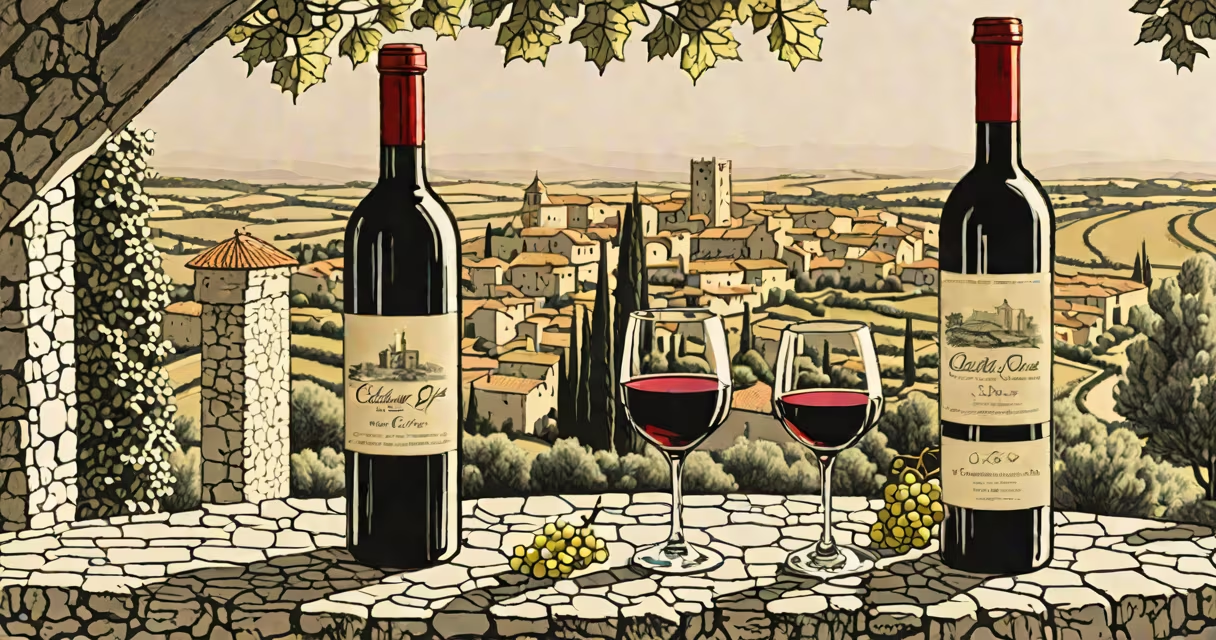
Châteauneuf-du-Pape red wine is a full-bodied, high-alcohol French wine produced in the southern Rhône Valley, primarily from Grenache, Syrah, and Mourvèdre grapes. It is aged in oak barrels or large vats and often develops notes of dark fruit, dried herbs, leather, and spice with time. The appellation's strict regulations govern grape composition, yields, and winemaking methods.
Wines labeled Châteauneuf-du-Pape must come from a defined region in southeastern France, centered around the town of Châteauneuf-du-Pape. The area spans approximately 3,200 hectares, with vineyards planted on a mix of clay-limestone soils and galets roulés-large, sun-warmed river stones that retain heat and regulate soil temperature. These stones influence ripening, helping Grenache achieve high sugar levels and low acidity, contributing to the wine's structure and richness.
The appellation allows up to 13 permitted grape varieties, though Grenache (minimum 50%) dominates. Syrah adds color and tannin, Mourvèdre contributes structure and earthy complexity, and smaller amounts of Cinsault, Vaccarèse, and others bring aromatic nuance. Wines may be bottled unfiltered and often show a distinct rustic character due to minimal intervention.
Winemakers begin with hand-harvested grapes, typically picked in late September or early October when sugars peak and acid levels remain balanced. Fermentation occurs in stainless steel or concrete tanks, sometimes with extended maceration to extract color and tannin. After fermentation, the wine is transferred to oak barrels-often large foudres or older barriques-for aging between 12 and 24 months.
Blending is critical. A typical blend might be 60% Grenache, 20% Syrah, 10% Mourvèdre, and 10% other permitted varieties. The proportions vary by producer and vintage. Some estates, like Domaine de la Janasse, emphasize purity of Grenache, while others, such as Château de Beaucastel, craft highly structured blends with long aging potential.
After aging, the wine is often filtered lightly or left unfiltered to preserve texture. Bottling takes place in spring or summer, and many producers release wines after 18-24 months of aging. The alcohol level averages 14-15%, sometimes reaching 16% in hot vintages.
Châteauneuf-du-Pape red wine falls into three broad stylistic categories based on winemaking philosophy and aging:
| Style | Characteristics | Examples |
|---|---|---|
| Traditional | Long maceration, extended aging in large oak, earthy, tannic, high aging potential | Château de Beaucastel, Domaine des Sénéchaux |
| Modern | Shorter maceration, new oak, earlier drinkability, richer fruit profile | Domaine du Vieux Télégraphe, Domaine Rostaing |
| Organic/Biodynamic | Low-intervention, natural yeasts, no added sulfites, earth-driven flavor | Domaine de la Mordorée, Domaine Tempier |
Not all producers follow the same path. For example, Domaine Tempier, a pioneer of biodynamic farming in the region, avoids synthetic inputs entirely. Their 2018 vintage showed wild strawberry, black pepper, and dried thyme notes, with a firm spine of tannin and a finish lasting over 40 seconds.
Châteauneuf-du-Pape red wine is consumed both young and aged. Most bottles are ready to drink after 5 years, but top-tier examples-especially from vintages like 2007, 2010, and 2015-can evolve for 20 to 30 years. The 2007 vintage, marked by intense heat and drought, produced wines with concentrated dark fruit and high alcohol (15.5% average), now showing secondary notes of tobacco, dried fig, and cedar.
It pairs well with grilled meats, game, stews, and hard cheeses. Its high alcohol and tannin structure cut through fatty textures. A 2016 Châteauneuf-du-Pape from Domaine de la Janasse, served with lamb shoulder braised in red wine and herbs, enhanced the dish's umami depth and balanced the fat.
Geographically, the wine is sold worldwide. Major markets include the United States, Japan, China, and Germany. In the U.S., it accounts for about 1.2% of all imported wine volume, with prices ranging from $25 to over $200 per bottle. Top wines from Château de Beaucastel regularly sell for $300-$500 in auction.
Many assume Châteauneuf-du-Pape is always sweet or overly alcoholic. This is incorrect. The appellation requires dryness and prohibits residual sugar. Alcohol levels are high due to climate, not winemaking choice. The average ABV is 14.5%, but some 2009 vintages reached 16.2%-still within legal limits.
Another myth is that all Châteauneuf-du-Pape is made in the same way. In reality, production varies widely. Some producers use whole-cluster fermentation; others rely on carbonic maceration. The 2018 vintage saw 42% of producers using at least 10% whole clusters, a rise from 20% in 2010.
A lesser-known fact: the name "Châteauneuf-du-Pape" originated in 1309 when Pope Clement V moved the papal court to Avignon. He built a castle near the village, which became known as "Château du Pape." The name evolved over centuries to denote the entire appellation. The original castle no longer exists, but the name remains.
In 2019, I tasted six Châteauneuf-du-Pape red wines side-by-side during a visit to the Rhône Valley. The most memorable was a 2015 from Domaine de la Janasse, aged 4 years. It had a deep garnet core, aromas of black cherry, licorice, and smoked meat, with a mouth-coating texture and a finish that lingered past 60 seconds. The wine demonstrated how climate, soil, and blending combine to create layered complexity.