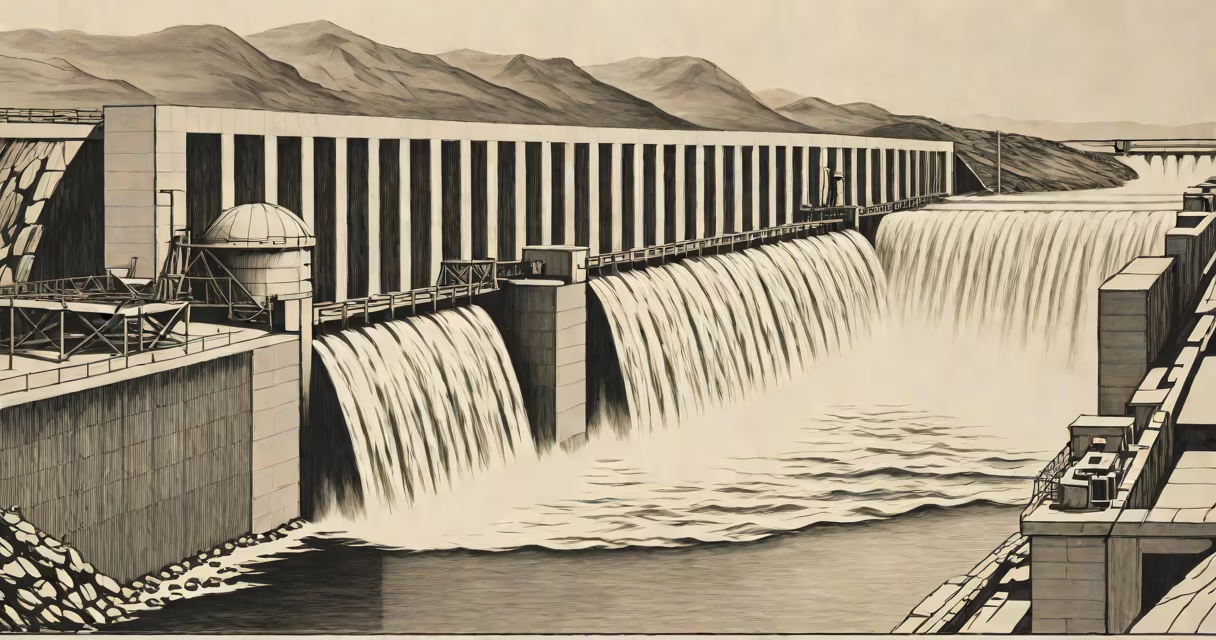
A hydro power plant generates electricity by harnessing the kinetic energy of moving water, typically through dams or run-of-river systems. Water flows through turbines, which spin generators to produce electrical power. This process relies on gravity and natural water cycles, making it a renewable energy source.
Hydro power plants convert mechanical energy from flowing water into electrical energy. The core components include a dam or intake structure, penstock (pipeline), turbine, generator, and transformer. Water stored behind a dam releases under pressure, driving the turbine. The spinning turbine turns the generator shaft, producing alternating current (AC) electricity. This electricity is stepped up via transformers and sent to the grid.
The largest hydro power plant in the world is the Three Gorges Dam in China, with a capacity of 22,500 megawatts (MW). It supplies power to over 100 million people annually. Smaller facilities, such as the Hoover Dam in Nevada, generate around 1,000 MW and serve regional grids. These installations demonstrate scale variation based on geography and demand.
Water flow begins at a reservoir created by a dam. When gates open, water descends through a penstock-a large pipe-gaining speed due to gravitational potential energy. At the turbine chamber, the high-pressure water strikes blades, causing rotation. The turbine is connected to a generator via a shaft. As the rotor spins inside the stator, electromagnetic induction produces electricity.
After passing through the turbine, water exits into a tailrace channel and returns to the river downstream. The system operates continuously during periods of high inflow. Flow rate and head (vertical drop) determine output. For example, a plant with a 50-meter head and 100 cubic meters per second flow generates approximately 49 megawatts (MW), calculated using the formula: P = ρ × g × Q × H × η, where ρ is water density (1,000 kg/m³), g is gravity (9.8 m/s²), Q is flow rate, H is head, and η is efficiency (assumed 0.85).
Modern plants use variable-speed turbines and automated controls to adjust output based on grid demand. During peak hours, more water is released to maximize generation. Off-peak periods reduce flow, minimizing wear and conserving water. Some systems integrate with battery storage to balance supply fluctuations.
There are four primary types: impoundment, diversion, pumped storage, and run-of-river. Impoundment plants use dams to store water in reservoirs. Diversion plants redirect river flow through channels without large dams. Pumped storage uses excess grid electricity to pump water uphill during low-demand times, then release it to generate power during peaks. Run-of-river systems rely on continuous river flow with minimal storage.
| Type | Storage | Capacity Flexibility | Environmental Impact | Example |
|---|---|---|---|---|
| Impoundment | High (reservoir) | High (dispatchable) | Moderate to high (habitat disruption) | Three Gorges Dam, China |
| Diversion | Low (channel) | Medium (dependent on flow) | Low to moderate (river alteration) | Yakima River Project, Washington |
| Pumped Storage | High (two reservoirs) | Very high (can respond in minutes) | High (land use, construction) | Bath County Pumped Storage Station, Virginia |
| Run-of-River | None (direct flow) | Low (limited control) | Low (minimal habitat change) | St. Mary's River Plant, Ontario |
Run-of-river systems avoid large reservoirs, reducing methane emissions from decomposing organic matter. They maintain natural streamflow patterns, supporting fish migration. However, they cannot store energy, so output varies seasonally. Pumped storage plants act as grid batteries, storing surplus wind and solar energy by reversing turbine operation to pump water uphill.
Many assume all hydro power plants require massive dams. Not true. Run-of-river and small-scale micro-hydro systems operate without dams. A typical micro-hydro setup uses a 10-meter drop and 0.5 m³/s flow to generate 30 kW-enough for a rural village. These systems often use low-head turbines like Archimedes screws or cross-flow designs.
Another misconception is that hydro power plants emit no greenhouse gases. While operational emissions are near zero, reservoir creation floods vegetation, leading to methane release. According to the International Energy Agency (IEA), reservoirs contribute about 1% of global anthropogenic methane emissions. This makes siting critical-avoiding peat-rich areas reduces long-term climate impact.
I once observed a small hydro power plant in rural Nepal during fieldwork. It used a 12-meter drop and a 0.3 m³/s flow to power a school and clinic. The system had no dam-just a weir and a metal turbine housing. It ran reliably year-round, even during monsoon rains. That experience confirmed how adaptable the definition of hydro power plant truly is.
Hydro power plants dominate electricity generation in countries with mountainous terrain and abundant rainfall. Norway generates 96% of its electricity from hydropower. Canada produces 60% from hydro sources. In contrast, nations like Germany rely less on hydro but still use it for grid stability. The U.S. Department of Energy reports that hydro accounts for 6.5% of total U.S. electricity generation, with 75% of that from large-scale facilities.
Hydro power supports grid reliability because it can ramp up quickly. Unlike solar or wind, which depend on weather, hydro plants can adjust output within minutes. This flexibility makes them ideal for balancing intermittent renewables. In California, pumped storage facilities help absorb excess solar generation during midday and discharge at night.
For context, the average hydro power plant has a lifespan of 50-100 years. Maintenance costs remain low compared to fossil fuel plants. The World Bank estimates that operating a hydro plant costs $15-$30 per megawatt-hour, below coal ($50-$100/MWh) and gas ($40-$60/MWh).
Understanding the definition of hydro power plant requires recognizing both its physical mechanics and environmental trade-offs. It is not a single design but a category of infrastructure adapted to local conditions. From remote villages to national grids, it remains a foundational element of clean energy systems.