A keystone species in biology is a species that has a disproportionately large effect on its environment relative to its abundance. Its presence maintains the structure of an ecological community, influencing many other organisms and shaping system processes.
Keystone species often play critical roles such as predation, habitat modification, or mutualism. Their loss can lead to dramatic changes in system composition, including declines in biodiversity and shifts in dominant species. The concept was first introduced by ecologist Robert T. Paine in the 1960s through experiments on intertidal zones.
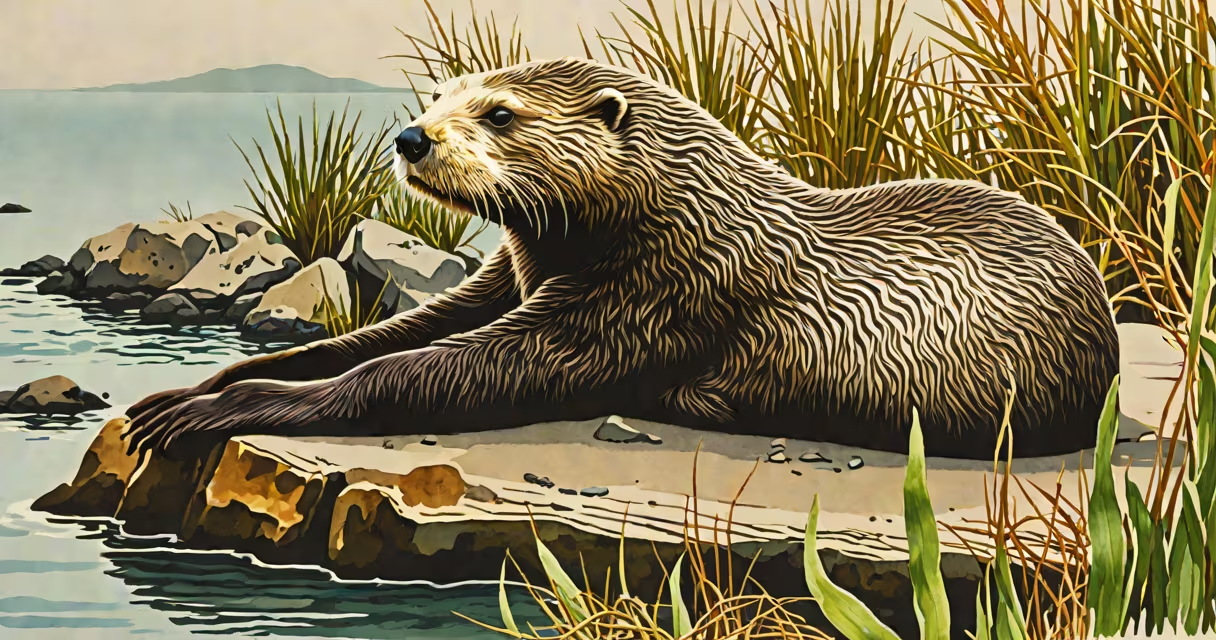
For example, sea otters in kelp forests along the Pacific coast control sea urchin populations. Without otters, urchins overgraze kelp, destroying the forest and eliminating habitat for fish and invertebrates. This cascade illustrates how a single species can sustain entire communities.
Keystone species do not necessarily dominate in biomass or numbers. Instead, their influence stems from specific interactions. They regulate food web dynamics, prevent competitive exclusion, and stabilize community structure.
Predators like wolves in Yellowstone National Park exemplify this. After wolves were reintroduced in 1995, they reduced elk populations, allowing willow and aspen regeneration. This led to increased beaver activity, improved stream health, and greater bird diversity-known as a trophic cascade.
Other keystone roles include system engineers (e.g., beavers building dams), pollinators (e.g., certain bees for plant reproduction), and mutualists (e.g., fig wasps and fig trees). These interactions maintain functional stability even under environmental stress.
Keystone species fall into several functional categories based on their ecological role:
| Type | Role | Example |
|---|---|---|
| Predator | Controls prey populations | Sea otter (preys on sea urchins) |
| System Engineer | Modifies physical environment | Beaver (builds dams) |
| Mutualist | Provides essential services | Fig wasp (pollinates fig trees) |
| Prey Specialist | Supports higher trophic levels | Clownfish (protects anemones) |
These roles are not mutually exclusive. A species may act as both a predator and engineer. For instance, African elephants shape savanna landscapes by uprooting trees, creating open spaces that support grassland species.
Many assume keystone species are always apex predators. This is incorrect. While wolves and sharks are well-known examples, keystone roles exist across taxa and trophic levels. A small insect or fungus can have outsized effects.
Another misconception is that keystone species are rare. In reality, they can be abundant but still exert disproportionate influence due to their interaction patterns. The key factor is functional impact, not population size.
The keystone label is context-dependent. A species may be keystone in one system but not in another. For example, sea otters are keystone in kelp forests but not in sandy-bottom habitats.
Understanding keystone species guides conservation priorities. Protecting them can preserve entire ecosystems more efficiently than targeting multiple species individually.
When sea otters were nearly exterminated in the 18th and 19th centuries for fur, kelp forests collapsed across much of their range. Recovery efforts since the 1970s have restored these systems, demonstrating the practical value of identifying keystone roles.
Similarly, the decline of coral reef fish that graze on algae has contributed to algal overgrowth and reef degradation. Reintroducing herbivorous fish has helped restore balance in some areas.
During fieldwork in Washington State, I observed a single beaver dam alter a stream's flow, temperature, and sediment load within months. The resulting wetland supported over 50 bird species and increased amphibian breeding success-proof that a single species can reshape an entire habitat.
Keystone species differ from foundation species, which form the physical basis of ecosystems (e.g., corals in reefs or trees in forests). Foundation species are often abundant and provide structural habitat, whereas keystone species are defined by their functional role, regardless of abundance.
They also differ from umbrella species-those whose protection indirectly safeguards others. Umbrella species are chosen for conservation planning based on wide-ranging habitat needs, not ecological function.