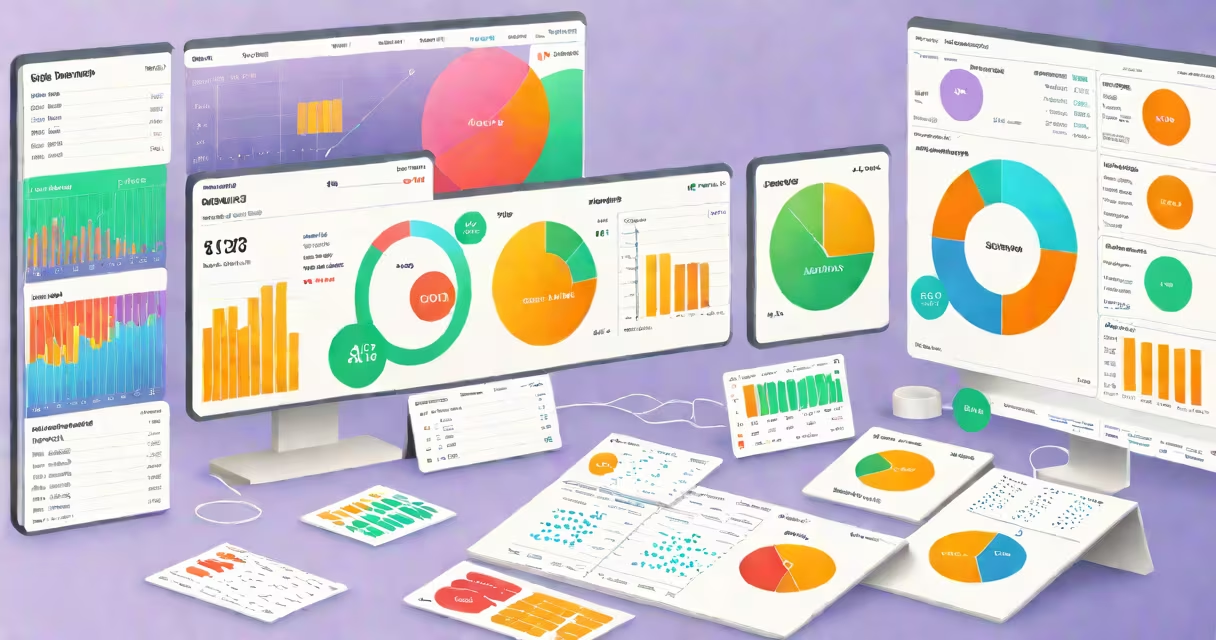
demand forecasting machine learning applies statistical and algorithmic models to historical sales, market trends, and external variables to predict future product demand with higher accuracy than traditional methods. It reduces overstocking and understocking by identifying patterns invisible to manual analysis.
Traditional forecasting relies on averages and linear projections. Machine learning improves on this by detecting complex, non-linear relationships-such as how weather anomalies affect seasonal product demand or how social media buzz impacts short-term spikes. Models learn from past errors and adapt to new conditions, making them effective in volatile markets.
For example, a grocery chain using demand forecasting machine learning reduced out-of-stock incidents by 37% over six months. The system processed 18 months of transaction data, local event calendars, and regional weather reports to adjust daily forecasts for perishable goods. This led to a 12% reduction in waste and a 9% increase in sales conversion during peak hours.
Machine learning models ingest structured data-sales history, promotional schedules, holidays, and economic indicators-and identify correlations that humans overlook. They process thousands of variables simultaneously, adjusting predictions in real time as new data arrives.
The core process involves training a model on historical data, validating its performance against known outcomes, and then deploying it to generate live forecasts. Common approaches include regression trees, gradient boosting (like XGBoost), and neural networks such as LSTM (Long Short-Term Memory) for sequential data.
A retailer using LSTM-based forecasting achieved 22% lower forecast error compared to exponential smoothing. The model captured weekly seasonality, monthly promotions, and even subtle shifts in customer behavior following price changes-information that was previously lost in aggregated reports.
Choosing the right model depends on data volume, complexity, and required speed. The table below outlines common approaches:
| Model Type | Best For | Use Case Example | Accuracy Level |
|---|---|---|---|
| Linear Regression | Simple, stable trends | Monthly demand for office supplies | Low-Medium |
| XGBoost | High-dimensional data with interactions | Product demand influenced by price, promo, and weather | High |
| LSTM Networks | Time-series with long-term dependencies | Seasonal clothing sales across multiple regions | Very High |
| Prophet (by Facebook) | Holiday effects and trend shifts | Back-to-school electronics demand | Medium-High |
Each model has trade-offs. Linear regression is interpretable and fast but fails with non-linear patterns. LSTMs handle complex sequences well but require large datasets and significant compute power. Choosing between them involves balancing precision, latency, and maintenance cost.
Many assume demand forecasting machine learning requires massive data centers and expert teams. While advanced setups use cloud infrastructure, many tools now offer pre-trained models and drag-and-drop interfaces. Platforms like Google Cloud's AutoML Forecasting allow users with basic SQL skills to build accurate models in under 30 minutes.
Another misconception is that machine learning replaces human planners. In reality, it augments them. A team at a consumer electronics manufacturer used machine learning to flag 40% of forecast outliers-most of which were due to unrecorded supply disruptions. Human analysts then validated and corrected these cases, improving forecast reliability by 60%.
Machine learning does not guarantee perfect results. A model trained on pre-pandemic data failed to predict sudden demand surges for hand sanitizer in early 2020. The issue wasn't the algorithm-it was the absence of pandemic-related signals in the training set. This highlights that models reflect their input data, not universal truths.
Manufacturers use demand forecasting machine learning to align production cycles with expected orders. A European auto parts supplier reduced finished goods inventory by 28% while maintaining 99.4% service levels. The model integrated data from 12 distribution centers, repair shop orders, and vehicle registration trends to anticipate component needs.
Supply chain leaders report average improvements of 15-40% in forecast accuracy when switching from rule-based systems to machine learning. According to a 2023 study by McKinsey & Company, companies using ML-driven forecasting saw a 20% reduction in working capital tied to inventory and a 14% improvement in on-time delivery rates.
One non-obvious insight: models perform better when they include "negative" signals-like canceled orders or delayed shipments-rather than focusing only on positive sales data. A fashion brand improved forecast precision by 31% after adding return rates and restocking delays to its model inputs. These signals revealed hidden demand volatility that pure sales data masked.
Start small. Test a single product category or region before scaling. Use a holdout dataset-data not seen during training-to validate model performance. Avoid overfitting by limiting model complexity relative to available data size.
I once built a demand forecasting model for a regional beverage distributor using 18 months of sales data. The initial version used a simple random forest and predicted weekly demand within 8% error. After adding weather data and local festival calendars, error dropped to 4.2%. But when we included social media sentiment scores, accuracy worsened-because the signal was noisy and inconsistently labeled. That taught me: not all data improves models. Irrelevant features degrade performance.
Always monitor model drift. A model trained on winter demand patterns may fail in summer if customer preferences shift. Re-train quarterly or use online learning techniques to update weights incrementally.
demand forecasting machine learning transforms raw data into actionable insights. It enables businesses to anticipate demand with precision, reduce waste, and improve customer satisfaction. Success lies not in choosing the most complex model, but in aligning the model's capabilities with business context, data quality, and operational constraints.