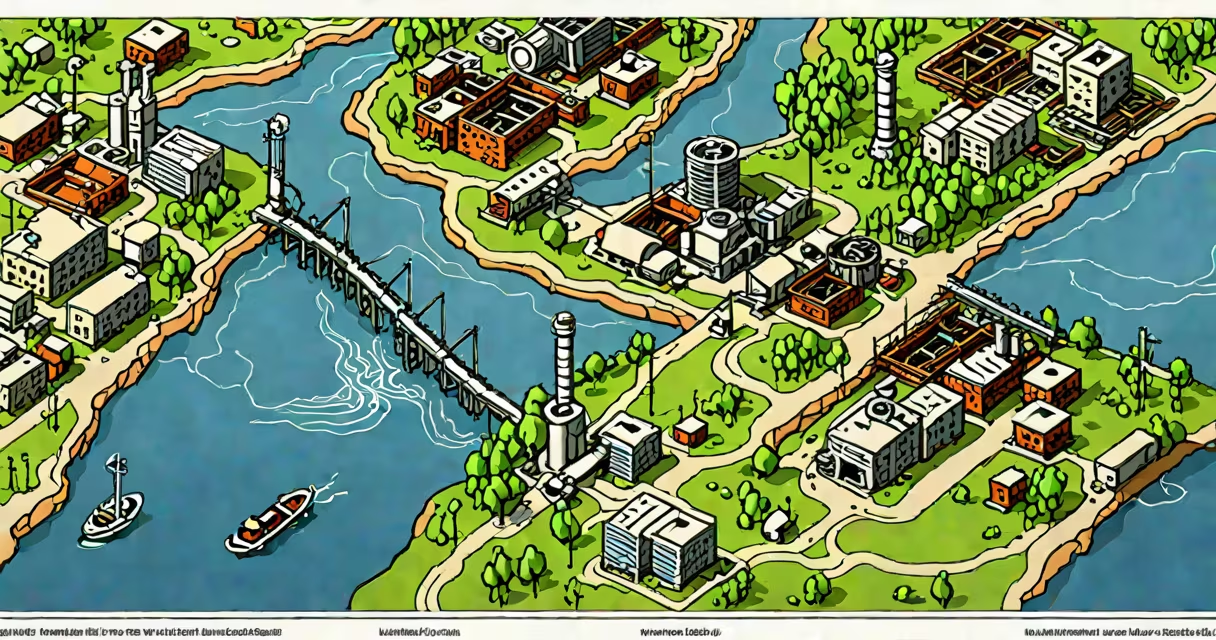
Water pollution is the contamination of water bodies-rivers, lakes, oceans, groundwater-by substances that harm living organisms, disrupt ecosystems, or make water unsafe for human use. It results from direct or indirect discharge of chemicals, waste, or pathogens into aquatic environments.
Contaminants enter water systems through runoff, sewage overflow, industrial discharges, agricultural runoff, and accidental spills. These pollutants alter water chemistry, reduce oxygen levels, and introduce toxic substances such as heavy metals, pesticides, and microplastics. The World Health Organization (WHO) identifies water pollution as a leading cause of disease and death globally, particularly in low-resource regions.
When pollutants accumulate, they impair aquatic life, reduce biodiversity, and compromise drinking water safety. For example, nitrogen runoff from fertilizers fuels algal blooms that deplete oxygen in lakes, creating dead zones where fish cannot survive. According to the United Nations Environment Programme (UNEP), over 80% of wastewater worldwide is discharged untreated into rivers and oceans.
Water pollution begins when waste enters a water system through point or non-point sources. Point sources are identifiable locations, such as factory pipes or sewage treatment plants. Non-point sources are diffuse, like rainwater washing fertilizer from farmland into nearby streams.
Once released, pollutants travel via surface runoff or infiltration into groundwater. Chemicals such as lead, mercury, and polychlorinated biphenyls (PCBs) persist in water and sediments for years. They bioaccumulate in food chains-small fish ingest toxins, larger predators consume many small fish, and concentrations increase up the food web.
A real-world example is the Cuyahoga River in Ohio. In 1969, it caught fire due to oil and chemical waste from factories. This event helped spur the U.S. Clean Water Act of 1972, which set national standards for pollutant discharge and funded infrastructure upgrades to treat wastewater.
Water pollution stems from several categories of contaminants, each with distinct origins and impacts:
| Pollutant Type | Common Sources | Environmental & Health Effects |
|---|---|---|
| Organic waste | Sewage, food processing, animal manure | Depletes oxygen, kills fish; spreads diseases like cholera |
| Heavy metals | Industrial runoff, mining, battery disposal | Neurotoxic; accumulates in fish and humans; linked to developmental delays |
| Nutrients (nitrogen, phosphorus) | Fertilizers, detergents, sewage | Causes eutrophication; leads to algal blooms and hypoxia |
| Plastics and microplastics | Single-use packaging, synthetic textiles, tire wear | Enters food chain; leaches additives like BPA; blocks digestive tracts in marine animals |
| Pathogens | Untreated sewage, animal waste | Spreads typhoid, hepatitis A, giardiasis; especially dangerous in tropical climates |
One often overlooked source is atmospheric deposition-pollutants carried by rain from air emissions. Sulfur dioxide and nitrogen oxides from vehicles and power plants form acid rain, which lowers pH in lakes and damages fish gills and plant roots.
Water pollution affects all continents, but impacts are most severe in regions with weak regulation and aging infrastructure. In India, the Ganges River receives over 1 billion liters of untreated sewage daily, despite being sacred to millions. A 2022 study by the Indian Institute of Technology found coliform bacteria levels in parts of the river exceeded safe limits by 100 times.
Groundwater contamination is especially insidious because it's invisible and slow to recover. In California's Central Valley, decades of pesticide use have seeped into aquifers. The U.S. Geological Survey detected nitrates above EPA safety thresholds in 40% of monitored wells in the region.
Water pollution doesn't stop at ecological damage-it undermines public health, economic productivity, and social equity. Communities near industrial zones often face higher rates of cancer and birth defects. The WHO estimates that 1.8 million deaths annually stem from unsafe water, poor sanitation, and hygiene.
Many assume that "clean" water-clear, odorless, and still-is safe. But toxicity can exist without visual cues. Microscopic pollutants like perfluoroalkyl substances (PFAS), known as "forever chemicals," are undetectable by sight or smell but resist degradation and accumulate in human bloodstreams.
Another misconception is that pollution only happens in developing nations. Industrialized countries also struggle. In 2021, the U.S. Environmental Protection Agency reported that 40% of assessed river miles in the U.S. failed to meet water quality standards under the Clean Water Act.
Finally, people often confuse water pollution with water scarcity. While both are crises, they differ: scarcity is about insufficient supply; pollution is about degraded quality. A region can have abundant water but still suffer from unsafe drinking water due to contamination.
In 2019, I visited a tributary of the Mississippi River near St. Louis. The water was murky, with a sheen of oil and floating plastic fragments. Local residents reported skin rashes after swimming. Testing by a university team revealed high levels of atrazine, a herbicide banned in the EU but still used in U.S. agriculture. The stream flowed into a reservoir used for drinking water, highlighting how pollution bypasses natural filters.