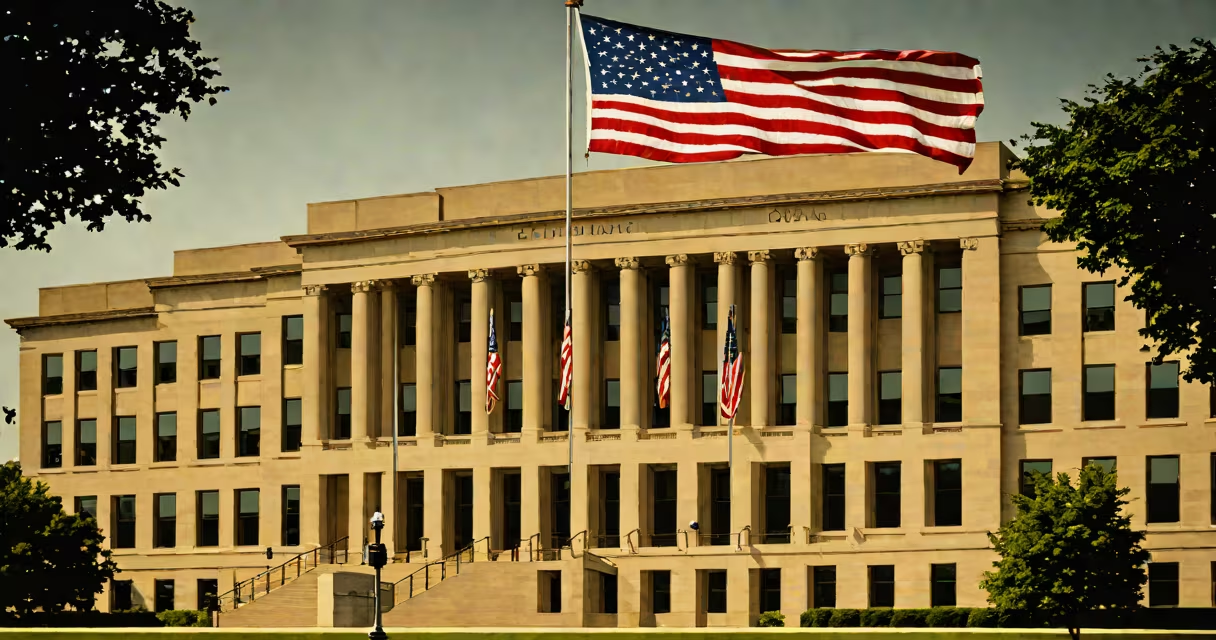
The Department of Army is the executive branch of the U.S. military responsible for organizing, training, equipping, and sustaining the active, reserve, and National Guard components of the U.S. Army. It operates under the authority of the Secretary of the Army and reports to the Secretary of Defense through the Office of the Secretary of Defense.
As part of the Department of Defense, the Department of Army manages all aspects of Army life beyond combat operations. This includes personnel administration, logistics, budgeting, procurement, and policy development. The department does not command troops in the field-those responsibilities fall to the unified combatant commands-but it ensures the Army is ready to deploy when called upon.
Headquartered at the Pentagon in Arlington, Virginia, the Department of Army oversees approximately 1.3 million soldiers, including active-duty, reserve, and National Guard units. It maintains 1,600 installations worldwide and allocates over $200 billion annually in defense funding. The department's leadership structure includes the Secretary of the Army, the Chief of Staff of the Army, and the Vice Chief of Staff.
The Department of Army is organized into three primary components: the Office of the Secretary of the Army, the Army Staff, and the Army Service Component Commands. The Office of the Secretary handles civilian oversight, budgeting, and policy. The Army Staff supports the Chief of Staff in planning and executing missions. Service Component Commands manage specific functional areas such as logistics, intelligence, and cyber operations.
Commanders at the operational level-such as the Commanding General of the U.S. Army Training and Doctrine Command (TRADOC)-report to the Army Staff. TRADOC develops doctrine, designs training programs, and shapes soldier readiness. For example, in 2023, TRADOC launched the Army Futures Command's Integrated Training Environment, which uses live-virtual constructive simulations to prepare units for high-intensity conflict scenarios.
Leadership roles are filled by career military officers and civilian appointees. The Secretary of the Army is a civilian position confirmed by the Senate. The current Secretary, Christine Wormuth, was sworn in in 2021 and oversees all Army programs, including force structure and modernization priorities. The Chief of Staff of the Army, General James McConville, leads the Army's strategic direction and advises the Joint Chiefs of Staff.
The Department of Army manages recruitment, pay, benefits, medical care, housing, and legal services for soldiers. It administers the Army's personnel system, including promotions, assignments, and performance evaluations. It also oversees the Army's health care system, which serves over 9 million beneficiaries through 138 military treatment facilities.
Procurement is another core function. The Department of Army controls the acquisition of weapons, vehicles, uniforms, and information systems. In fiscal year 2023, it awarded $14.2 billion in contracts for the Next Generation Combat Vehicle program. These contracts went to companies like General Dynamics and BAE Systems to develop prototypes for future armored platforms.
Logistics and sustainment operations ensure that deployed forces have fuel, food, spare parts, and medical supplies. The U.S. Army Materiel Command (AMC) manages supply chains and maintenance networks. During Operation Inherent Resolve in Iraq and Syria, AMC delivered over 1.2 million tons of cargo to forward operating bases using air, land, and sea transport.
The Department of Army is often confused with the U.S. Army itself. The Army is a fighting force composed of soldiers and units. The Department of Army is the administrative and logistical arm that supports those units. Think of the Army as the team on the field, and the Department of Army as the coaching staff, equipment managers, and front office.
Another misconception is that the Department of Army controls battlefield decisions. It does not. Operational command rests with the Unified Combatant Commands-such as U.S. Central Command or U.S. Indo-Pacific Command-under the direction of the President and Secretary of Defense. The Department of Army provides the trained soldiers, weapons, and support necessary for mission success.
A lesser-known fact: the Department of Army is responsible for maintaining the Army's historical records, including service files, unit histories, and battle honors. The U.S. Army Center of Military History, located at Fort Lesley J. McNair, preserves over 100 million documents related to Army operations since 1775. These archives are used by historians, veterans, and researchers.
Understanding the difference between the Army, the Department of Army, and the Department of Defense is essential.
| Entity | Role | Reporting To | Example |
|---|---|---|---|
| U.S. Army | Combat force; executes missions in theater | Joint Forces Command, Combatant Command | 1st Armored Division in Germany conducts training exercises with NATO allies |
| Department of Army | Manages personnel, budgets, logistics, and infrastructure | Secretary of Defense via Office of the Secretary of Defense | Army Personnel Command processes 200,000 soldier transfers annually |
| Department of Defense | Oversight of all military branches | President of the United States | DoD approves the 2024 National Defense Strategy |
When I served as a logistics officer in the 82nd Airborne Division, I witnessed firsthand how the Department of Army's supply chain kept our unit resupplied during a deployment to Afghanistan. A single missing part in a Humvee's engine could delay a mission. The Department of Army's automated logistics system ensured we received replacements within 48 hours, even in remote locations.
Information about Army programs, policies, and organizational changes is published through official channels like the Army.mil website and the Federal Register. The Army's annual report to Congress details spending, force structure, and readiness metrics. In 2023, the report showed that 94% of active-duty units met their readiness standards, up from 87% in 2020.
The Department of Army is not a combatant command. It is a supporting entity within the larger structure of national defense. Its role is to enable the Army to fight effectively-not to fight itself. Without this administrative and logistical foundation, the U.S. Army could not maintain global presence, respond to crises, or sustain long-term operations.
Understanding the Department of Army clarifies how the U.S. military functions as a coordinated system. It is not a single entity but a network of offices, commands, and processes designed to deliver combat power when needed. The department helps soldiers have the tools, training, and support they require to serve with excellence.