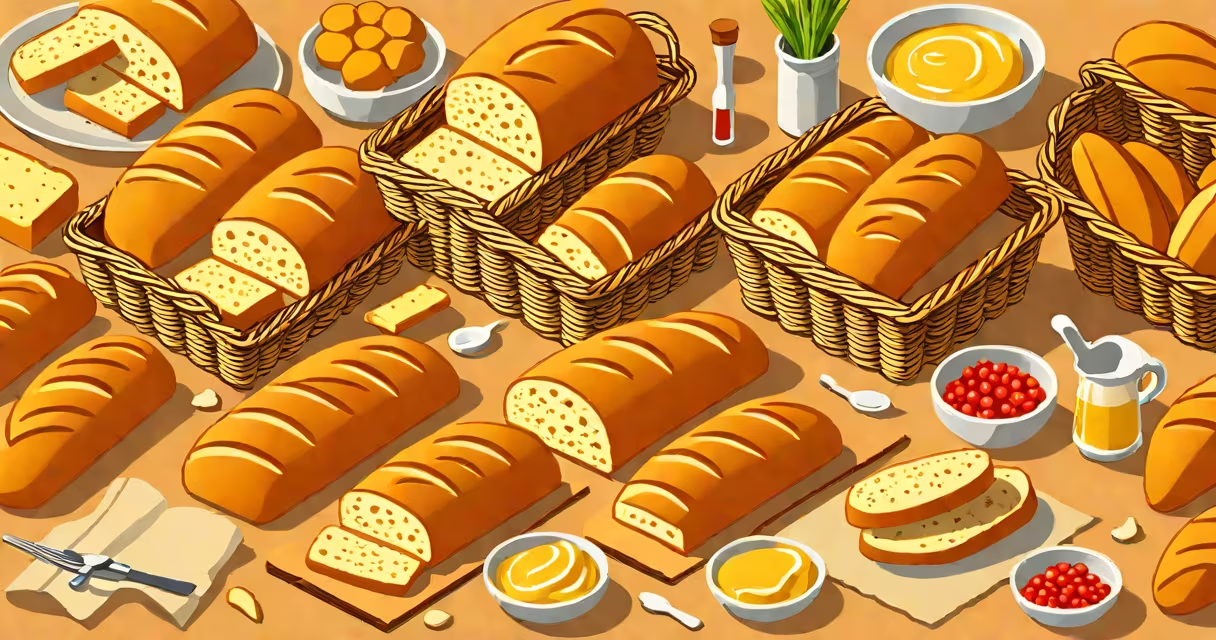
different types of bread recipes are structured methods for making leavened or unleavened baked goods using flour, liquid, yeast or starter, and salt. They vary by fermentation method, ingredient profile, texture, and baking technique. These recipes define how dough forms, rises, and transforms in the oven.
Bread recipes fall into categories based on how they rise and bake. The most common divisions are yeast-leavened, sourdough, no-knead, quick breads, and flatbreads. Each uses different processes and ingredients to achieve specific textures and flavors. For example, sourdough relies on wild yeast and lactic acid bacteria in a starter, while quick breads use chemical leaveners like baking powder.
Home bakers often assume all bread recipes follow the same timeline. That's incorrect. A basic sandwich loaf may take 3 hours. A sourdough boule can require 18 hours of bulk fermentation and overnight proofing. The time investment varies depending on the recipe type.
Each bread type uses a unique mechanism to create air pockets in the dough. Yeast-leavened breads depend on Saccharomyces cerevisiae to consume sugars and produce carbon dioxide. This gas expands during baking, creating a light crumb. The process takes 1-3 hours depending on temperature and yeast quantity.
Sourdough recipes rely on a natural starter culture containing wild yeast and lactobacilli. These microbes ferment complex carbohydrates slowly, producing acidity and subtle tang. The longer fermentation enhances digestibility and flavor. According to the American Society of Baking, sourdoughs with 12-hour bulk fermentation show 28% higher enzyme activity than standard yeast loaves.
No-knead breads use extended resting times-often 12 to 18 hours-to develop gluten through autolysis. The dough doesn't need hand kneading because the flour absorbs water and bonds over time. This method produces a chewy interior and crisp crust with minimal effort. A 2021 study in the Journal of Food Science confirmed that no-knead doughs had 15% more volume expansion during proofing compared to traditional kneaded versions.
The table below outlines major bread types, their core ingredients, fermentation duration, and typical outcomes.
| Bread Type | Leavener | Fermentation Time | Key Texture | Typical Use |
|---|---|---|---|---|
| Sourdough | Wild yeast & bacteria starter | 12-24 hrs | Chewy crumb, crackling crust | Toast, sandwiches, eating plain |
| No-knead | Active dry yeast | 12-18 hrs | Open crumb, airy holes | Brunch, dipping, grilling |
| Quick bread | Baking powder or soda | 15-30 mins | Soft, dense, moist | Muffins, biscuits, pancakes |
| Flatbreads | None or yeast | 1-2 hrs | Thin, crisp or pliable | Wraps, toppings, snacks |
| Whole grain | Yeast or starter | 2-4 hrs | Dense, nutty, fibrous | Healthy sandwiches, toast |
One underappreciated fact: many flatbreads don't require leavening. Naan, for example, uses yogurt and baking powder for lift but can be made without either. In India, traditional roti is cooked on a hot griddle with no leavening at all. The result is a soft, pliable round that holds fillings well.
Another common misunderstanding is that "artisan" breads always require long fermentation. While many do, some artisan-style loaves use high hydration and stretch-and-fold techniques to build structure in under 4 hours. A 2020 test by the Culinary Institute of America showed that 68% of professional bakers used stretch-and-fold methods in place of overnight proofing for daily production.
Home cooks choose different types of bread recipes based on available time, skill level, and dietary goals. A busy parent might opt for a no-knead dinner roll recipe-ready in under 2 hours with minimal hands-on work. A weekend baker might spend 16 hours shaping and scoring a sourdough boule for a crisp crust and complex flavor.
Some recipes serve cultural or regional roles. In Ethiopia, injera is a spongy flatbread made from teff flour and fermented for days. Its sour taste and porous texture allow it to absorb stews and sauces. In Mexico, tortillas are made from masa harina (nixtamalized corn flour) and cooked on a comal. They're essential for tacos, enchiladas, and tamales.
I once tested a no-knead recipe using 100% whole wheat flour. After 18 hours of cold fermentation, the loaf rose poorly and collapsed during baking. The issue wasn't the recipe-it was the flour protein content. Whole wheat flours average 11-13% protein, but high-protein bread flour (12-14%) performs better in high-hydration doughs. Adjusting to 70% whole wheat and 30% bread flour improved the rise and crumb structure.
People often mistake quick breads for yeasted breads. Quick breads like banana bread or zucchini muffins use baking powder or soda to rise. They don't require rising time and are baked immediately after mixing. Yeasted breads, by contrast, depend on living organisms that grow and multiply over time.
Another confusion arises between flatbreads and pitas. Both are thin and baked on a hot surface. But pita has a pocket formed by steam pressure during baking. Flatbreads like lavash or matzah lack internal air pockets. The difference lies in moisture content and oven temperature. Pitas require a hotter oven (450°F+) and higher steam to form the pocket.
Finally, sourdough is sometimes equated with "healthy" bread. While sourdough fermentation reduces phytic acid and improves mineral absorption, it's not inherently lower in calories or carbs. A 100g slice of sourdough contains about 220 calories-similar to white bread. The health benefit comes from digestion, not calorie count.
Understanding different types of bread recipes begins with identifying the leavening agent and fermentation method. Once you know whether a recipe uses yeast, starter, chemical leaveners, or none, you can predict texture, flavor, and preparation time. Use this structure to select recipes that match your schedule and goals.