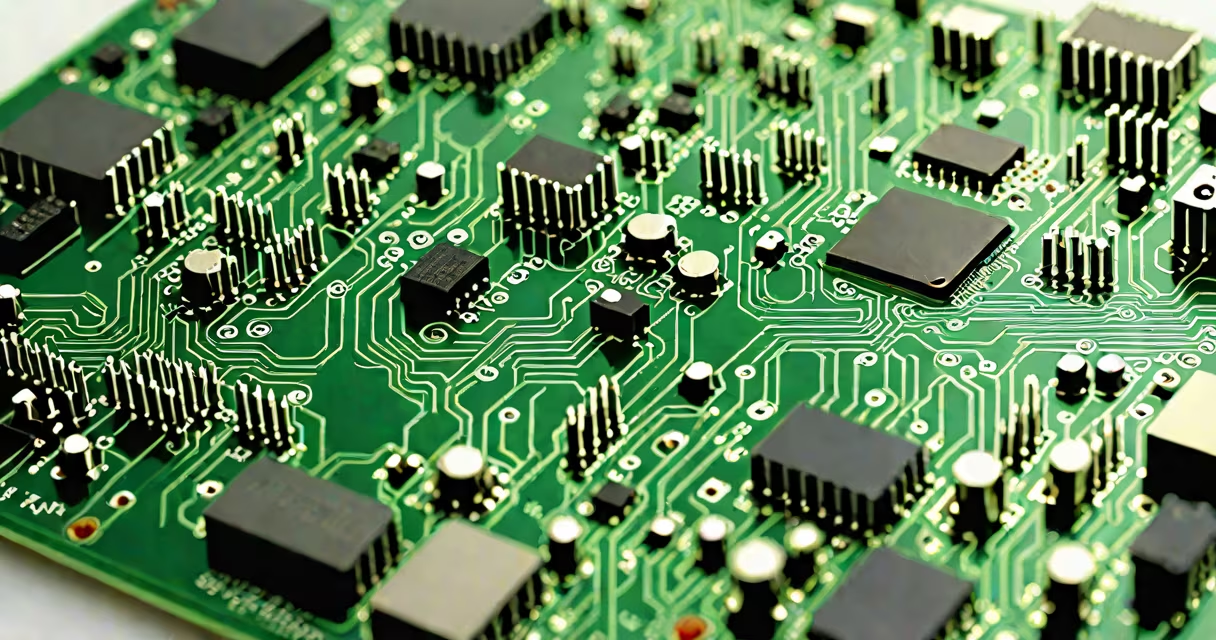
An embedded system OS is a lightweight, specialized operating system designed to run on microcontrollers and other resource-constrained hardware in dedicated devices such as industrial controllers, automotive sensors, and medical equipment. It prioritizes deterministic behavior, low latency, and efficient memory usage over broad application support.
These systems execute specific tasks continuously-monitoring temperature, controlling motors, or managing communication protocols-without user interaction. Unlike desktop or mobile operating systems, they rarely support multitasking between unrelated applications. Instead, they schedule time-critical operations with predictable timing, often within microseconds.
Embedded system OSes are typically written in C or C++ and compiled directly into firmware. They manage interrupts, task scheduling, memory allocation, and peripheral access. The most common types are real-time operating systems (RTOS), which guarantee response times under strict deadlines. Examples include FreeRTOS, Zephyr, and VxWorks.
The core function of an embedded system OS is to mediate between hardware and application code. When a sensor detects a temperature spike, the OS routes the event to a designated task responsible for triggering a cooling fan. This handoff happens through interrupt-driven execution, ensuring minimal delay.
Each task runs in a predefined priority level. High-priority tasks-like emergency brake activation in a vehicle-preempt lower ones. The OS uses a scheduler to determine which task runs next based on urgency and timing constraints. For example, a heart rate monitor may require a reading every 10 milliseconds. The OS ensures this interval is met consistently, even under load.
Memory management is minimal. Most embedded systems use static memory allocation, where variables are assigned space at compile time. Changing allocation (heap) is avoided due to fragmentation risks and unpredictable delays. This design reduces runtime overhead and increases reliability.
Embedded system OSes fall into two categories: real-time and non-real-time. Real-time systems enforce strict timing guarantees. Non-real-time systems prioritize simplicity and power efficiency over predictability.
| Type | Use Case | Example | Key Feature |
|---|---|---|---|
| Hard Real-Time | Aircraft control, pacemakers | INTEGRITY by Green Hills Software | Guarantees response within deadline; failure is catastrophic |
| Soft Real-Time | Video streaming, audio processing | FreeRTOS | Minimizes delay; occasional misses acceptable |
| Non-Real-Time | Smart light bulbs, thermostats | ESP-IDF (for ESP32) | Simple task handling; no hard timing requirements |
FreeRTOS is widely adopted in consumer electronics. It supports up to 10,000 tasks and includes built-in networking and file system modules. It runs on ARM Cortex-M processors and is used in over 1 billion devices annually, according to Amazon Web Services' 2023 IoT report.
Zephyr, developed by the Linux Foundation, targets edge devices with secure boot and over-the-air update capabilities. It supports 15+ architectures including x86, RISC-V, and ARM. Its modular design allows developers to include only necessary components, reducing binary size.
Embedded system OSes power nearly every modern electronic device that operates autonomously. They are essential in medical devices like insulin pumps, where a delayed response could cause harm. A 2022 FDA report found that 94% of implantable cardiac devices use a real-time OS to ensure timely delivery of electrical pulses.
In automotive systems, they manage anti-lock braking, airbag deployment, and engine control units. A single missed deadline during a collision could result in failure to deploy safety features. The ISO 26262 standard mandates formal verification of timing behavior in safety-critical systems, making embedded OS selection critical.
Industrial automation relies on them for PLCs (programmable logic controllers). These systems must respond to sensor inputs within 1 millisecond to prevent machine collisions or production errors. Without a properly synchronized OS, a robotic arm might move too late and damage parts.
Many assume that embedded system OSes are "simple" because they lack graphical interfaces. In reality, their complexity lies in timing precision and fault tolerance. A single race condition in interrupt handling can cause system crashes that are difficult to reproduce.
Another misconception is that all embedded systems use RTOS. Many do not. A basic thermostat may run bare-metal code-no OS at all-directly on the microcontroller. This approach saves memory and reduces startup time. However, it requires manual management of concurrency and hardware registers.
There is also confusion between embedded system OS and general-purpose OS. While macOS and Windows can run on some embedded hardware (e.g., Raspberry Pi), they are unsuitable for real-time applications. A Mac OS system may take 100 milliseconds to respond to a USB interrupt, which is unacceptable in a surgical robot.
For example, a smart door lock using a 32-bit microcontroller with 256 KB flash memory cannot run Android or Linux. The required RAM (at least 256 MB) exceeds available resources. Instead, it uses a minimal RTOS like FreeRTOS to handle biometric authentication and network updates-all while consuming less than 10 KB of RAM.
I once debugged a home security camera that froze intermittently. The device ran FreeRTOS on an STM32 processor. After reviewing logs, I found a mutex was held longer than expected during video encoding. The root cause was a task not releasing the lock after completing frame compression. The OS had no timeout mechanism, leading to indefinite blocking. Adding a 500ms timeout resolved the issue-a fix that would have been impossible without understanding the OS's scheduling model.
One non-obvious difference is that embedded system OSes don't rely on virtual memory. General-purpose systems use paging and swapping to manage memory. Embedded systems operate in physical address space only. This eliminates page faults and improves determinism but limits scalability.
Another key point: embedded system OSes are not always open source. While FreeRTOS and Zephyr are freely available, proprietary options like QNX and VxWorks are used in aerospace and defense. These require licensing fees and provide certification for safety standards such as DO-178C.
Even when open source, the build process is highly customized. Developers must configure the kernel for specific hardware, disable unused drivers, and strip debugging symbols to reduce binary size. A misconfigured build can result in a 40% larger footprint, impacting performance and battery life.
Understanding embedded system os is important for anyone designing connected devices. It's not about choosing the most useful OS-it's about selecting one that fits the hardware, meets timing requirements, and survives in harsh environments. The right choice prevents failures that cost lives, money, or both.