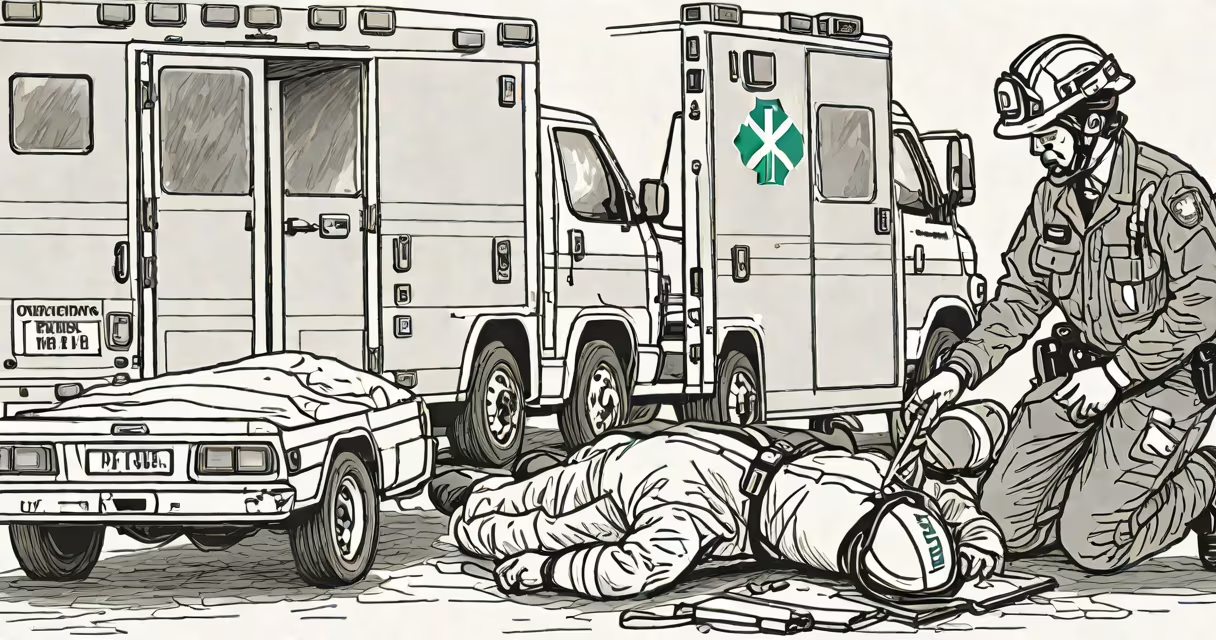
An emergency medical responder is a certified individual trained to deliver immediate life-saving care at the scene of an injury, illness, or medical emergency before advanced medical personnel arrive. These responders assess patients, manage airways, control bleeding, administer basic medications, and stabilize conditions during transport.
Emergency medical responders operate under protocols established by regional emergency medical services (EMS) systems. They respond to 911 calls, often arriving first on scene, and work alongside police, firefighters, and other emergency personnel. Their training focuses on rapid assessment, decision-making under pressure, and delivering time-critical interventions such as CPR, oxygen administration, and hemorrhage control.
The term covers multiple levels of certification, including Emergency Medical Technician (EMT), Advanced EMT (AEMT), and Paramedic. While all are trained in prehospital care, their scopes of practice differ in depth and complexity. The lowest level-emergency medical responder-is designed for individuals who may be first on scene but lack full EMT certification.
When a 911 call is placed, dispatchers send the closest available emergency medical responder based on location and availability. Upon arrival, the responder performs a primary survey: checking airway, breathing, circulation, disability, and exposure (ABCDE). This rapid evaluation determines whether immediate action is needed to prevent death or permanent harm.
If a patient is unresponsive and not breathing normally, the responder begins cardiopulmonary resuscitation (CPR) immediately. For trauma cases, they apply direct pressure to stop severe bleeding, immobilize suspected spinal injuries, and use tourniquets when necessary. They may also assist with automated external defibrillator (AED) use, especially in cardiac arrest scenarios.
Each intervention follows standardized protocols approved by state EMS offices. For example, the National Registry of Emergency Medical Technicians (NREMT) sets national standards for EMT curricula, ensuring consistency across states. Responders must pass written and psychomotor exams to maintain certification.
Emergency medical responders are categorized by training level and scope of practice. The following table outlines the key differences:
| Type | Training Hours | Scope of Practice | Common Roles |
|---|---|---|---|
| Emergency Medical Responder (EMR) | 120-150 hours | Basic life support, bleeding control, CPR, AED use | First responder at accidents, school or workplace teams |
| Emergency Medical Technician (EMT) | 150-200 hours | Advanced airway management, IV fluids, medication administration | First responder in ambulance services, fire departments |
| Paramedic | 1,200-1,800 hours | Intubation, cardiac monitoring, advanced drug therapy | Lead ambulance crew, critical care transport |
While EMRs are trained to handle emergencies in remote or resource-limited settings, they do not perform invasive procedures like intubation or intravenous therapy. EMTs can initiate IV lines and give certain medications, such as epinephrine for anaphylaxis. Paramedics have the most extensive training and can interpret ECGs, administer sedatives, and manage complex trauma cases.
A common misconception is that all emergency medical responders are paramedics. In reality, many individuals serve as EMRs in community volunteer programs, schools, or industrial sites. These roles are important in areas with long EMS response times, where minutes matter.
Emergency medical responders are deployed in urban centers, rural communities, and remote locations. In cities, they often arrive within 6-10 minutes of a 911 call. In rural areas, response times can exceed 20 minutes, making early intervention by trained laypersons even more critical.
For example, in a 2021 study published by the Journal of the American Heart Association, survival rates for out-of-hospital cardiac arrest increased by 37% when bystanders performed CPR before EMS arrival. Many of these bystanders were trained emergency medical responders, not professional EMTs. This highlights the impact of early, basic care.
Fire departments frequently employ emergency medical responders as part of their standard staffing. In the U.S., over 80% of fire departments provide emergency medical services. These responders are trained to handle both structural fires and medical emergencies, allowing them to respond quickly to multiple types of incidents.
Another key use case is mass casualty events. During natural disasters or large-scale accidents, emergency medical responders form the initial triage network. They categorize patients by urgency using the START (Simple Triage and Rapid Treatment) method, which assigns color-coded tags: red (immediate), yellow (delayed), green (minor), black (deceased).
One widespread error is equating emergency medical responder with "first aid" volunteer. While both provide care, emergency medical responders undergo formal certification and adhere to legal standards. First aid training typically lasts 4-8 hours and covers basic wound care, choking relief, and shock management. Emergency medical responder training spans months and includes clinical rotations and field experience.
Another myth is that emergency medical responders can independently diagnose conditions. They do not make medical diagnoses. Instead, they gather data-important signs, history, physical exam findings-and relay it to physicians or paramedics for interpretation. Their role is stabilization, not treatment.
There's also confusion between emergency medical responders and medical assistants. Medical assistants work in clinics and hospitals, handling administrative tasks and assisting doctors. Emergency medical responders work in the field, often in unpredictable environments, and are trained to act autonomously under stress.
In January 2023, a single-vehicle crash occurred on Highway 200 near Choteau, Montana. A driver lost control on ice and struck a tree. The vehicle was partially submerged in a frozen creek. Local deputies arrived within seven minutes, but the nearest ambulance was 45 minutes away.
Two members of the Choteau Volunteer Fire Department responded. Both were certified emergency medical responders. One stabilized the driver's neck using a rigid collar, while the other applied a tourniquet to a femoral laceration. They maintained spinal precautions, monitored vitals, and administered oxygen via a non-rebreather mask.
After 38 minutes, the patient was transferred to a helicopter medevac team. The emergency medical responders' actions prevented further spinal injury and controlled blood loss. According to the Montana Department of Public Health, the patient survived with minimal neurological damage-a result attributed directly to timely, correct interventions.
This incident illustrates how emergency medical responders function as the first line of defense in low-resource areas. Their training enables them to act decisively despite limited equipment and high-stress conditions.
I once assisted in training a group of high school students for a local emergency medical responder program. One student asked, "Can I really do this?" I paused. The answer wasn't about strength or speed-it was about mindset. Emergency medical responders aren't chosen for physical prowess. They're selected for calmness under pressure, attention to detail, and emotional resilience.
If you've ever helped someone who collapsed, called 911, or applied pressure to a cut, you've already demonstrated foundational skills. But becoming a certified emergency medical responder requires structured learning. You'll need to complete a course accredited by the National Highway Traffic Safety Administration (NHTSA), pass a state exam, and maintain continuing education credits.
Emergency medical responder is not a title reserved for professionals. It's a responsibility shared by anyone willing to learn, train, and act when lives hang in the balance.