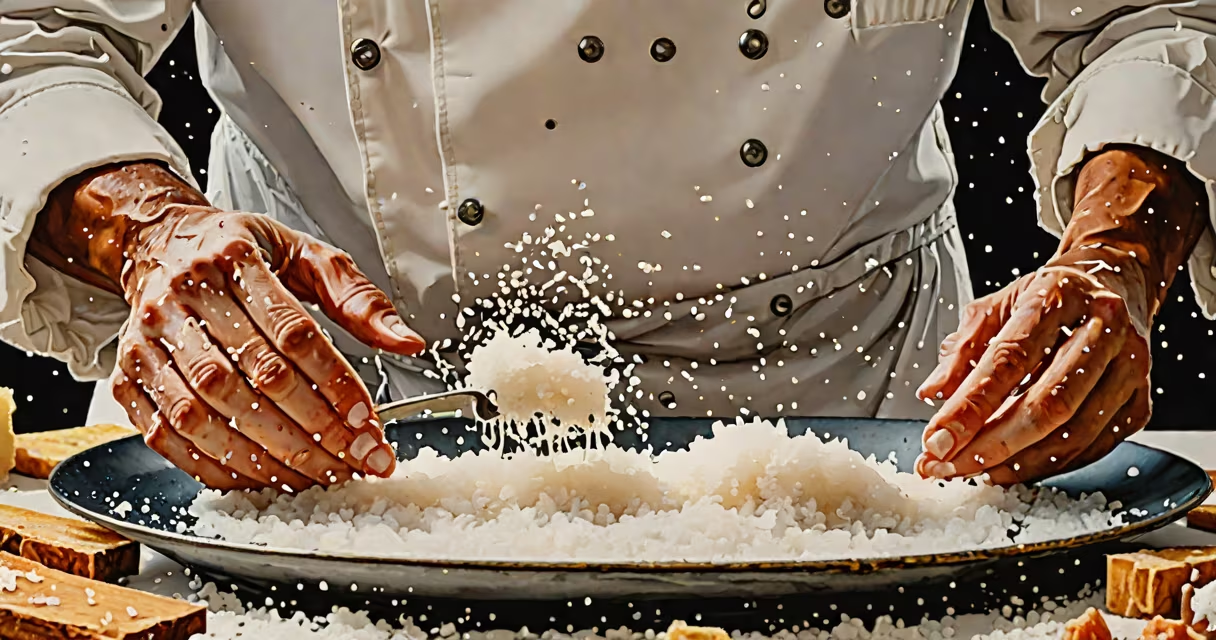
Esprit de sel is the French culinary principle of using salt not just to season, but to reveal and amplify a dish's inherent flavors through precise timing, texture, and placement. It treats salt as a deliberate ingredient, not a default additive.
This concept is rooted in the idea that salt doesn't merely make food taste salty-it activates taste receptors, balances acidity and sweetness, and draws out the natural depth of ingredients. A well-placed pinch of salt can turn a bland stew into a layered, resonant meal.
Unlike generic "add salt to taste," esprit de sel demands intentionality. It's about knowing when to salt during cooking, when to finish with salt, and which type of salt enhances specific textures and flavors. The goal is flavor harmony, not saltiness.
Salt alters perception by modulating taste signals. Sodium ions disrupt the surface tension of water molecules around taste buds, allowing sweet, sour, bitter, and umami compounds to register more. This is why a pinch of salt makes fruit taste sweeter or reduces bitterness in greens.
Chefs apply esprit de sel at multiple stages. During cooking, salt helps extract moisture and break down fibers in vegetables or meat. But adding salt too early can draw out too much liquid and toughen proteins. Finishing with salt-especially flaky or coarse varieties-adds texture and immediate flavor impact.
For example, a pan-seared salmon fillet benefits from a light sprinkle of Maldon salt just before serving. The crystals dissolve quickly on the tongue, delivering a burst of flavor that complements the fish's richness without overwhelming it. Salt applied at this stage doesn't cook the surface-it enhances the mouthfeel and taste.
Different salts serve distinct purposes based on grain size, mineral content, and solubility. Choosing the right one is central to the principle.
| Salt Type | Grain Size | Best Use | Why It Works |
|---|---|---|---|
| Flaky sea salt (e.g., Maldon) | Large, flat flakes | Finishing salt on meats, fish, salads | High surface area dissolves quickly on the tongue, delivering intense flavor with minimal sodium |
| Fine table salt | Small, uniform grains | Seasoning during cooking | Even distribution; dissolves rapidly in liquids and sauces |
| Coarse kosher salt | Medium to large irregular crystals | Salting meat before searing, curing | Creates a protective crust; draws out moisture slowly for better browning |
| Black or gray sea salt (e.g., Fleur de Sel) | Delicate, porous flakes | Finishing delicate dishes like oysters or roasted vegetables | Mineral complexity adds subtle earthy notes; dissolves gently |
Using the wrong salt at the wrong time undermines esprit de sel. For instance, adding fine salt to a raw tomato salad dilutes flavor because it spreads unevenly and overwhelms the fruit's natural acidity. Flaky salt, applied just before eating, delivers a clean, bright burst.
Many assume esprit de sel means "less salt." That's incorrect. It's about smarter salt use. A dish can contain significant sodium but still reflect esprit de sel if the salt is applied with purpose.
Another misconception is that esprit de sel applies only to high-end cuisine. In reality, home cooks use it instinctively-adding a pinch of salt to a simmering pot of beans to deepen flavor, or salting a ripe avocado just before serving to heighten its creaminess.
A key distinction: esprit de sel is not the same as "salt to taste." The latter is subjective and often leads to over-salting. Esprit de sel is objective in intent-each salt addition serves a functional role. As chef Jacques Pépin noted in his book La Cuisine: The Art of Cooking, "Salt is not a seasoning. It is a conductor of flavor."
Consider a classic tomato soup. Without esprit de sel, it may taste flat or overly acidic. With it, the result is rich and harmonious.
Without the finishing salt, the soup lacks dimension. The cream dulls the tomato's brightness. The flaky salt cuts through both, creating contrast and clarity.
I tested this recipe during a weekend dinner for friends. One guest asked, "Is this really just tomato soup?" The answer was yes-but with a subtle shift in perception. The salt wasn't noticeable as salt. It was part of the flavor story.
Food scientists confirm that humans detect salt at lower concentrations when paired with umami-rich ingredients. A study published in Chemical Senses (2021) found that salt enhances the perception of glutamate-the compound behind umami-by up to 30%. This supports esprit de sel's core idea: salt isn't just about taste-it's about synergy.
Restaurants like Eleven Madison Park and Le Bernardin integrate esprit de sel into training. Chefs learn to adjust salt based on ingredient ripeness, cooking method, and even ambient temperature. A cold salad requires less salt than a hot stew due to reduced taste sensitivity at lower temperatures.
Home cooks can adopt the principle by asking: "Does this salt add something? Or just make it salty?" When you ask that question, you're practicing esprit de sel-even if you don't know the French term.
Understanding esprit de sel transforms how we think about seasoning. It shifts salt from a passive ingredient to an active partner in flavor development. The next time you reach for the shaker, pause. Ask: Is this salt serving the dish-or just filling space?
Esprit de sel is not a trend. It's a discipline. And it's available to anyone who wants to cook with more intention.
See how German culinary terms compare