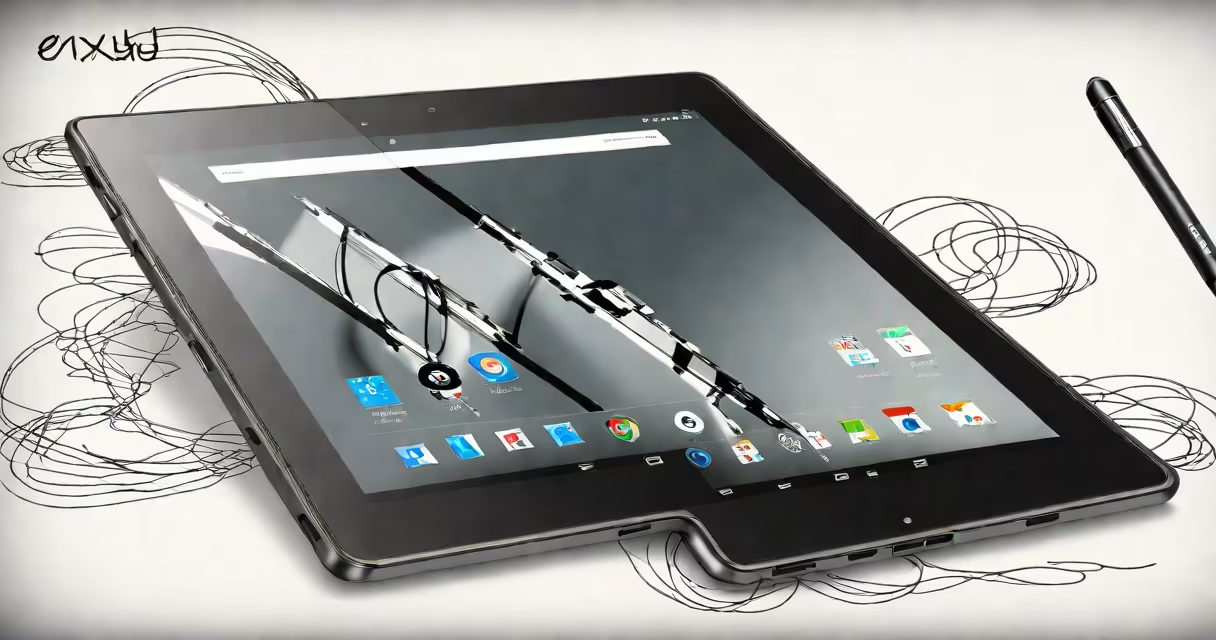
The Google Nexus 7 2013 LTE is a 7-inch Android tablet with built-in LTE connectivity, released in October 2013. It runs stock Android, features a 1920×1200 pixel display, and supports mobile data through AT&T's LTE network. This model was the first Nexus tablet to offer LTE, making it ideal for users who need internet access without Wi-Fi.
Unlike the Wi-Fi-only version, the LTE variant includes a cellular radio and SIM card slot. It uses a micro-SIM and connects to AT&T's 4G LTE network, providing download speeds up to 100 Mbps in supported areas. The device pairs this with a quad-core NVIDIA Tegra 3 processor, 2 GB of RAM, and 16 GB of internal storage. It also includes a 1.2-megapixel front-facing camera and a 5-megapixel rear camera.
Google designed the Nexus 7 2013 LTE to serve as a reference device for Android. It shipped with Android 4.3 Jelly Bean and received updates to Android 5.0 Lollipop. The hardware was manufactured by Asus under Google's specifications. Its compact size-just 7.8 inches wide and 0.3 inches thick-makes it easy to carry in a bag or pocket.
The Google Nexus 7 2013 LTE connects to mobile networks via a built-in LTE modem. When powered on and paired with a valid AT&T LTE plan, it establishes a data connection automatically. Users can browse the web, stream video, or use apps like Gmail and Maps without needing a Wi-Fi hotspot.
Network switching occurs smoothly between LTE and Wi-Fi when both are available. The system prioritizes Wi-Fi for battery conservation and lower data usage. Users can manually disable LTE in settings to avoid unexpected charges, especially when roaming.
For security, the device uses full-disk encryption by default. It supports Google's Find My Device feature, allowing remote location tracking and wiping if lost or stolen. The tablet also integrates with Google Play Services, enabling push notifications, app sync, and secure authentication.
The tablet's core components include:
Software-wise, the Nexus 7 2013 LTE runs stock Android. It receives updates directly from Google, bypassing carrier or manufacturer delays. This ensures timely access to new features and security patches. The device supports Android 4.3 through 5.0, with no official update beyond that.
Despite its age, the tablet remains functional for basic tasks. It handles web browsing, email, and media playback efficiently. However, performance degrades with newer apps that require Android 6.0+ or higher. Some apps now fail to install due to API level restrictions.
The Google Nexus 7 2013 LTE excels in scenarios requiring portability and mobile data access. It's well-suited for travelers, students, or anyone needing a lightweight device for reading, note-taking, or light productivity. Its small form factor fits easily in a backpack or coat pocket.
It's also effective as a secondary device. For example, a user might pair it with a laptop for multitasking-using the tablet to check messages while working on a document. The high-resolution screen delivers sharp text and vivid colors, enhancing readability.
However, the device has limitations. LTE coverage varies by region. In rural areas, signal strength drops. Battery life diminishes over time-after three years, capacity often falls below 80%. Also, the lack of support for newer Android versions limits app compatibility.
| Feature | Nexus 7 2013 LTE | Wi-Fi-Only Version |
|---|---|---|
| Display Resolution | 1920×1200 | 1920×1200 |
| Cellular Support | AT&T LTE (Band 4) | None |
| Price at Launch | $349 (16 GB) | $229 (16 GB) |
| Weight | 340 grams | 340 grams |
| Android Update Path | 4.3 → 5.0 | 4.3 → 5.0 |
A common misconception is that the Nexus 7 2013 LTE supports multiple carriers. It does not. The LTE band is locked to AT&T's network. Attempting to use it with another carrier results in no service. This differs from later Nexus devices, which were designed for multi-carrier support.
Another misunderstanding is that the device supports USB OTG (On-The-Go). While the hardware pinout allows it, the stock Android build does not enable USB OTG by default. Enabling it requires root access or custom firmware-a process that voids the warranty.
People often confuse the Nexus 7 2013 LTE with the Nexus 7 2012 model. The 2012 version lacks LTE entirely and uses a single-core Tegra 3 chip. The 2013 LTE model has a faster quad-core processor and improved graphics performance. The 2013 version also includes a more refined design with rounded edges and a matte finish.
Some assume the device supports 4G LTE in all countries. It does not. The LTE band (1700/2100 MHz) is specific to North America. In Europe or Asia, the tablet cannot connect to LTE networks. Users in those regions may still use Wi-Fi and 3G, but not LTE.
One non-obvious fact: the Nexus 7 2013 LTE has a hidden diagnostic mode accessible via a specific key combination. Pressing and holding Volume Down + Power during boot triggers a test menu. This mode allows users to check sensor functionality, screen responsiveness, and audio output-useful for troubleshooting before returning the device.
In 2014, a university student in Chicago used the Google Nexus 7 2013 LTE for class notes and research. She subscribed to AT&T's $20/month LTE plan, which included unlimited data. Over a semester, she accessed academic journals, uploaded assignments, and participated in online discussions-all without relying on campus Wi-Fi.
She reported average download speeds of 25 Mbps and upload speeds of 5 Mbps. Battery lasted 7 hours under moderate use. When she traveled to a remote campus building with weak Wi-Fi, the LTE connection remained stable. She completed a group project using Google Docs in real time, syncing changes instantly across devices.
This example shows how the device functions in a practical educational setting. It demonstrates the value of cellular connectivity in environments where Wi-Fi is unreliable or unavailable.
The Google Nexus 7 2013 LTE remains a capable device for light computing tasks. Its LTE capability sets it apart from other tablets of its era. However, it is no longer supported by Google. Users should expect limited app availability and no further security updates.
For those seeking a modern alternative, consider the Google Pixel Slate or Samsung Galaxy Tab S8. These devices offer better performance, updated software, and wider network support. Still, the Nexus 7 2013 LTE holds historical significance as one of the first mass-market tablets with LTE and pure Android.
Understanding the capabilities and constraints of the Google Nexus 7 2013 LTE helps users make informed choices about device selection and longevity. Whether used for travel, education, or casual media consumption, it delivers a focused experience rooted in Google's vision for Android.