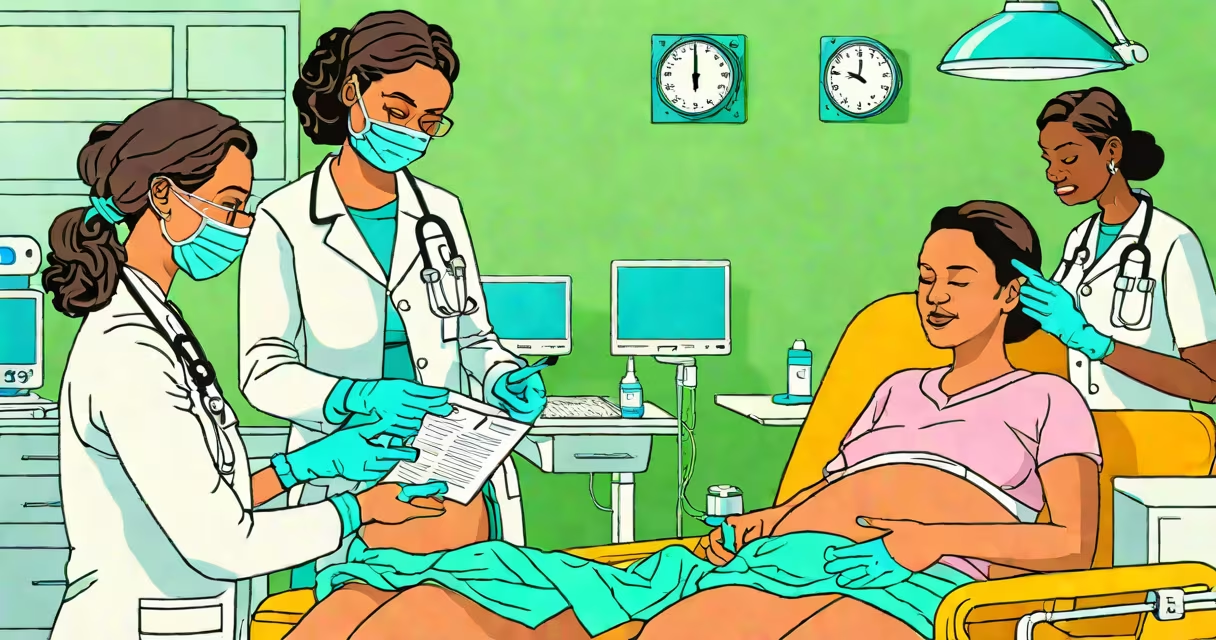
Group B strep and labor describes the presence of Streptococcus agalactiae in the birth canal during delivery and the administration of intravenous antibiotics during labor to prevent transmission to the newborn. This practice reduces the risk of early-onset neonatal sepsis by more than 80%.
Group B strep (GBS) is a bacterium commonly found in the gastrointestinal and genital tracts of healthy adults. It colonizes the rectum and vagina in about 25% of pregnant people. While harmless to the carrier, it can be passed to the baby during vaginal delivery. The primary concern is early-onset GBS disease, which occurs within the first 7 days of life and can cause pneumonia, sepsis, or meningitis.
Screening typically occurs between 35 and 37 weeks of gestation using a vaginal and rectal swab. A positive result triggers prophylactic antibiotic treatment during labor. Penicillin is the preferred agent due to efficacy and low resistance rates. Administration must begin at least four hours before delivery to achieve effective maternal blood levels and placental transfer.
During labor, the baby passes through the birth canal, potentially exposed to high concentrations of GBS. Without intervention, the risk of transmitting the bacteria to the infant is approximately 1 in 200. With appropriate intrapartum antibiotic prophylaxis (IAP), that rate drops to less than 1 in 4,000.
The mechanism relies on achieving sufficient antibiotic concentration in the amniotic fluid and fetal bloodstream. Penicillin crosses the placenta efficiently. Studies show that maternal serum penicillin levels above 0.5 µg/mL correlate with reduced vertical transmission. Continuous IV infusion during labor maintains therapeutic levels throughout delivery.
A key factor is timing. Antibiotics given less than four hours before birth fail to reach protective levels. In one study, infants born to mothers who received antibiotics less than four hours prior had a 3.6 times higher risk of GBS infection compared to those whose mothers received timely treatment.
Management strategies differ based on screening results, labor onset, and antibiotic allergies. The CDC recommends universal screening at 35-37 weeks, with IAP for all GBS-positive individuals in labor.
| Screening Result | Labor Onset | Antibiotic Protocol | Special Considerations |
|---|---|---|---|
| Positive | Spontaneous or induced | IV penicillin every 4 hours until delivery | Standard care; effective in reducing neonatal disease |
| Positive | Preterm (<37 weeks) | Same regimen; consider additional monitoring | Higher risk of complications; close surveillance advised |
| Negative | Spontaneous labor | No IAP required | Low baseline risk; no routine treatment |
| Unknown | Preterm labor or ruptured membranes | Prophylaxis initiated; treat as positive | When screening was missed, assume colonization to avoid risk |
For people with penicillin allergy, alternatives include cefazolin (first-line) or clindamycin if susceptibility testing confirms sensitivity. Clindamycin resistance is rising-up to 15% of GBS isolates show resistance in some regions. Testing for resistance is recommended when choosing alternatives.
Many assume GBS is a sexually transmitted infection or that it causes symptoms in the mother. This is incorrect. GBS colonization is asymptomatic in most carriers. It is not linked to sexual activity and cannot be prevented by hygiene alone.
Another misconception is that GBS screening is optional. In the United States, the Centers for Disease Control and Prevention (CDC) and the American College of Obstetricians and Gynecologists (ACOG) recommend routine screening for all pregnant people. Skipping it increases the risk of neonatal disease, especially in preterm births.
In 2021, a 36-week pregnant person tested positive for GBS via standard screening. She went into labor at 38 weeks with spontaneous rupture of membranes. Antibiotics were started at 3:15 PM. The baby was delivered at 5:45 PM. Blood cultures drawn at birth showed no GBS. The infant remained well at 48 hours and was discharged home uneventfully.
Without antibiotics, the estimated risk of early-onset GBS disease would have been 1 in 200. With timely IAP, the actual risk dropped below 1 in 4,000. This outcome aligns with CDC data showing a 75-80% reduction in neonatal GBS cases since the introduction of universal screening and IAP in 2002.
I once observed a labor where the team delayed antibiotic administration due to a miscommunication about the screening result. The mother had a negative screen but developed chorioamnionitis. The baby developed sepsis within 12 hours. The diagnosis was GBS, despite the negative screen. This rare event underscores that screening is not perfect-false negatives occur in 1-2% of cases-and clinical judgment remains essential.
Early-onset GBS disease affects approximately 1 in 2,000 live births in the U.S. when no prevention is used. Without IAP, mortality ranges from 5% to 10%. Survivors may face long-term neurological sequelae, including hearing loss or developmental delay.
Universal screening and IAP have reduced the incidence of early-onset GBS by over 80% since 2002. The CDC reports that among term infants, the rate dropped from 1.7 per 1,000 live births in 1990 to 0.27 per 1,000 in 2020. This decline reflects consistent implementation of guidelines.
Despite progress, disparities persist. Black and Hispanic populations have lower screening rates and higher GBS disease incidence. Barriers include lack of access to prenatal care, language differences, and systemic inequities. Addressing these gaps is critical to eliminating health disparities.
Understanding group B strep and labor is essential for informed decision-making. Pregnant people should discuss screening and treatment options with their provider. Group B strep and childbirth management is evidence-based, safe, and effective. Early detection and timely antibiotics protect newborns without increasing risks to the mother.
Every year, thousands of babies are spared serious illness thanks to this protocol. The combination of routine screening and targeted antibiotic use during labor remains one of the most successful public health interventions in obstetrics.