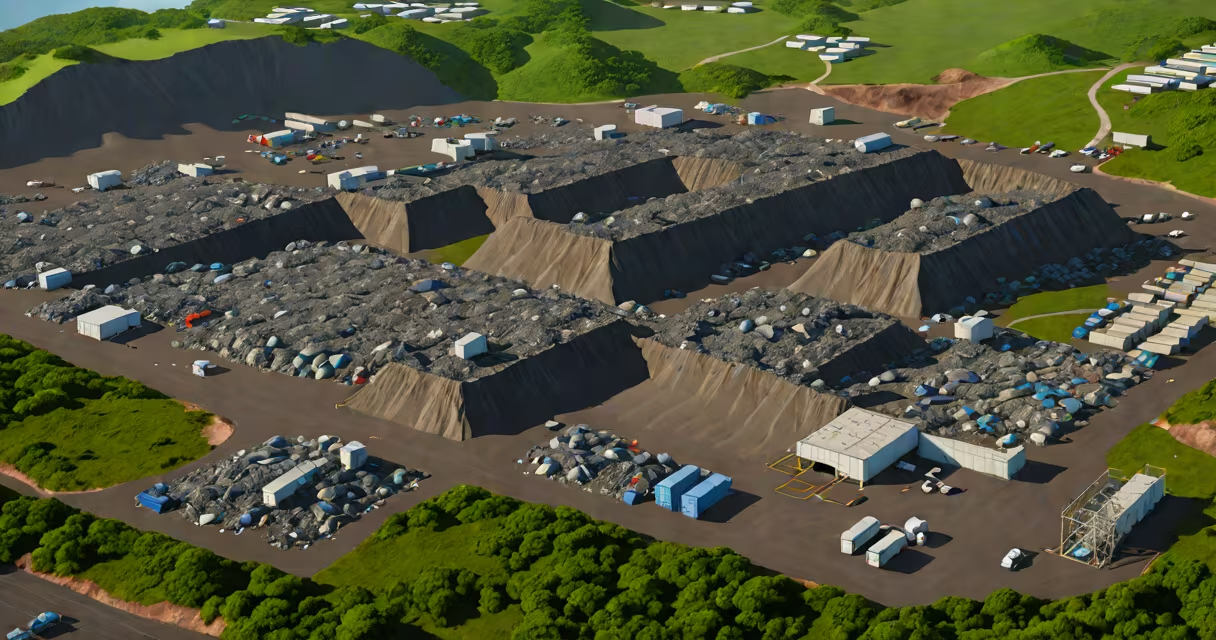
The Guam Solid Waste Authority (GSWA) is the government agency responsible for managing municipal solid waste on the U.S. territory of Guam, including trash collection, recycling, landfill operations, and environmental compliance. It operates under the authority of the Guam Legislature and federal regulations, ensuring waste disposal meets environmental standards.
Established in 1996 under Public Law 14-108, GSWA replaced earlier fragmented systems and centralized control over waste services. It oversees all aspects of solid waste handling-from curbside pickup to final disposal at the Malesso Landfill, the island's primary waste site. The agency reports to the Governor's Office and is funded through a combination of local taxes, federal grants, and user fees.
GSWA functions as both a service provider and regulatory body. It sets collection schedules, enforces anti-littering laws, runs recycling centers, and monitors landfill gas emissions. Its mandate includes reducing reliance on landfills and increasing diversion rates through education and infrastructure investment. As of 2023, GSWA reported a 32% recycling rate, below the national U.S. average of 34%, highlighting ongoing challenges in waste separation and public participation.
GSWA operates a network of 18 collection routes covering urban and rural areas across Guam. Trucks collect household waste twice weekly in most districts, with special pickups for bulky items and hazardous materials. Residents pay a monthly fee based on bin size and service frequency. Collection data is tracked via GPS-enabled vehicles and integrated into a central database for route optimization.
After pickup, waste is transported to the Malesso Landfill, located in Dededo. The facility uses a daily cover system-compacted soil or alternative material-to reduce odor, pests, and methane release. Leachate (liquid that forms as waste decomposes) is collected in lined ponds and treated before discharge. Air quality monitoring stations around the site measure volatile organic compounds and particulate matter hourly.
Recycling streams include paper, cardboard, aluminum, plastic bottles (#1 and #2), and electronics. Materials are sorted at the Central Recycling Facility in Tamuning. Non-recyclable materials go to the landfill. GSWA partners with private haulers for specialized waste, such as construction debris and medical waste, which require permits and secure disposal.
GSWA categorizes waste into four main types:
| Type | Examples | Handling Method |
|---|---|---|
| Municipal Solid Waste (MSW) | Food scraps, packaging, textiles | Landfill disposal after sorting |
| Recyclables | Aluminum cans, plastic bottles, newspapers | Processed at Central Recycling Facility |
| Hazardous Waste | Batteries, pesticides, fluorescent bulbs | Transported to licensed off-island facilities |
| Organic Waste | Yard trimmings, food waste | Composted at pilot sites; limited capacity |
One non-obvious fact: GSWA does not accept mixed waste from commercial generators. Businesses must contract separately for disposal, often using private haulers. This prevents contamination of residential streams and ensures proper documentation for regulated materials.
Despite efforts, illegal dumping remains a persistent issue. In 2022, GSWA documented 47 incidents of unauthorized dumping in forested areas, mostly involving construction debris and tires. These cases led to cleanup operations costing $120,000 and prompted new signage and surveillance near high-risk zones.
Many residents assume GSWA collects all waste and handles everything internally. In reality, GSWA contracts out key services. For example, the daily maintenance of the Malesso Landfill is managed by a private firm under a 10-year agreement with the Department of Environmental Protection. GSWA retains oversight but does not operate heavy machinery or manage landfill gas extraction directly.
Another misconception is that recycling is free and universally accepted. While GSWA provides bins and educational materials, contaminated loads are rejected. A 2023 audit found that 28% of recycled batches were rejected due to improper sorting-such as placing greasy pizza boxes in paper bins or mixing plastic bags with recyclables. This reduces processing efficiency and increases costs.
There's also confusion about jurisdiction. Some believe federal agencies like the EPA have direct control over GSWA. While the EPA sets baseline standards under the Resource Conservation and Recovery Act (RCRA), enforcement on Guam falls to the Guam Environmental Protection Agency (GEPA), which coordinates with GSWA on inspections and reporting. GSWA itself is not a federal entity.
In June 2021, heavy rainfall caused flooding at the Malesso Landfill, leading to leachate overflow into nearby drainage channels. The event exposed weaknesses in the site's stormwater management system. GSWA responded by deploying emergency pumps and diverting runoff to temporary containment basins. Over 12,000 gallons of contaminated water were captured and sent to a treatment plant in Agana Heights.
Post-incident analysis revealed that the landfill's perimeter drainage had not been maintained since 2018. GSWA initiated a $1.8 million upgrade project to reinforce dikes and install additional silt traps. The repairs were completed in March 2023. This incident underscored the importance of preventive maintenance and climate resilience planning in tropical environments.
I witnessed the aftermath firsthand during a community meeting in July 2021. Local leaders expressed frustration over delayed response times and lack of transparency. GSWA later released a detailed report and held follow-up forums to rebuild trust. Since then, it has improved public communication through social media updates and quarterly newsletters.
Effective waste management prevents groundwater contamination, reduces disease vectors, and supports sustainable development. On Guam, where land is scarce and ecosystems are fragile, poor waste handling threatens coral reefs and coastal waters. Studies by the University of Guam show that unmanaged leachate can increase nitrogen levels in nearby aquifers by up to 40%, affecting drinking water quality.
GSWA's long-term goal is to achieve a 50% waste diversion rate by 2030. To reach this, it is expanding composting programs, piloting single-stream recycling in three municipalities, and launching a "Zero Waste" education campaign targeting schools and businesses. The initiative includes training for 150 community volunteers and partnerships with NGOs focused on circular economy models.
Understanding the role of the Guam Solid Waste Authority clarifies how local governance intersects with environmental protection. It is not a passive collector but an active steward of public health and ecological integrity. The authority's success hinges on collaboration between government, contractors, and residents.