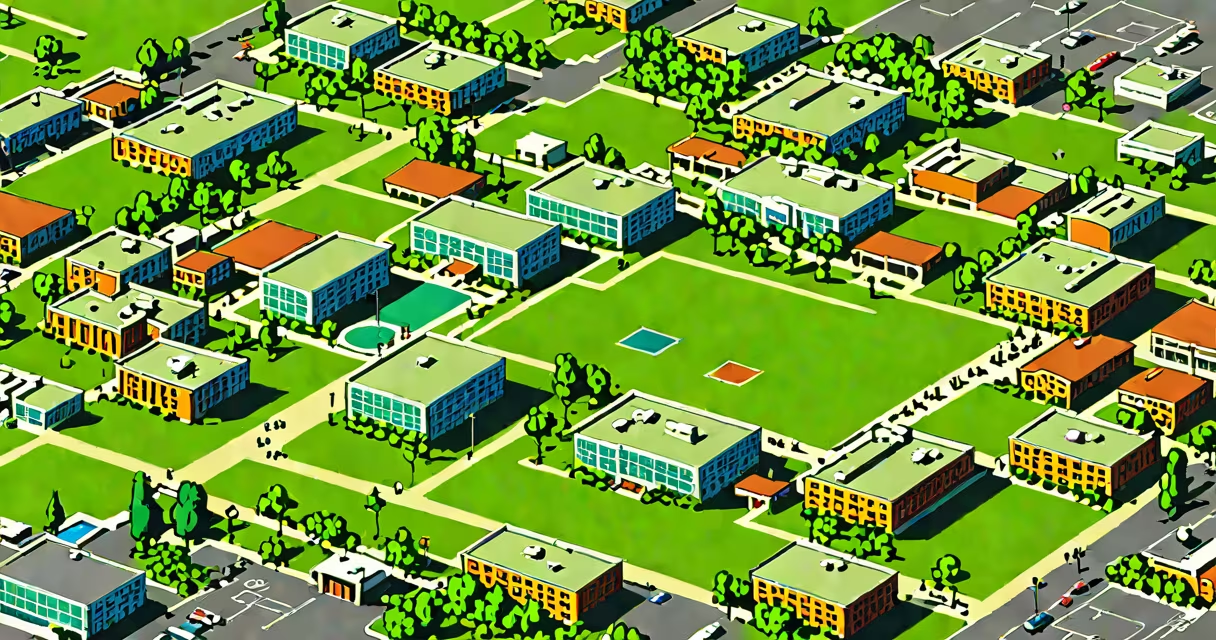
The Hayward School District is a public school district headquartered in Hayward, California, serving approximately 25,700 students across 36 schools. It operates under the governance of a five-member elected board and provides K-12 education with a focus on academic achievement, equity, and college and career readiness.
Founded in 1875, the district covers parts of eastern Alameda County and includes elementary, middle, and high schools. It is governed by state and federal education laws, including the Every Student Succeeds Act (ESSA), which mandates accountability through standardized testing and performance reporting. The district's mission emphasizes student success through culturally responsive teaching, expanded access to advanced coursework, and targeted support for historically underserved populations.
Student demographics reflect the diversity of the region: 41% Hispanic/Latino, 27% Asian American, 15% White, 10% African American, and 7% multiracial. Enrollment has remained stable since 2018, with slight growth in charter and alternative education programs. The district reports an average graduation rate of 92%, above the statewide average of 88% for 2022-2023.
Each school within the district follows a unified curriculum aligned with California's State Academic Standards. Instruction is delivered through a mix of in-person and hybrid models, depending on health guidelines and enrollment demand. The district uses a centralized system for student records, attendance tracking, and resource allocation via the Infinite Campus platform.
Staffing includes certified teachers, instructional aides, counselors, and specialized support personnel. As of 2023, the district employed 2,140 full-time equivalent staff members, with a student-to-teacher ratio of 23:1. This exceeds the state average of 22:1, indicating moderate class sizes. The district allocates funding based on student needs, with additional resources directed toward English language learners and special education programs.
Financial oversight is managed by the Office of the Superintendent and reviewed annually by the Board of Education. The district's budget for 2023-2024 totaled $412 million, with 78% allocated to instruction, 12% to administration, and 10% to facilities and operations. Funding sources include state allocations, local property taxes, and federal grants.
The Hayward School District operates a diverse network of educational institutions tailored to different age groups and learning needs:
| School Type | Number of Schools | Grade Levels | Special Features |
|---|---|---|---|
| Elementary | 21 | K-5 | Focus on literacy and math foundations; bilingual programs in Spanish and Mandarin |
| Intermediate | 4 | 6-8 | STEM-focused curricula; robotics and coding clubs |
| High Schools | 6 | 9-12 | Advanced Placement (AP) courses; career technical education pathways |
| Alternative Education | 2 | 9-12 | Reentry programs for students returning after suspension; credit recovery options |
| Charter Schools | 3 | K-12 | Autonomous governance; project-based learning models |
One notable program is the Hayward High School Academy of Health Sciences, launched in 2019. It partners with local hospitals and community colleges to offer dual enrollment credits in nursing and biomedical sciences. Students complete clinical rotations and earn industry certifications. Over 120 students have graduated from the program since inception, with 85% enrolling in health-related college majors.
A non-obvious distinction: while many districts use "Unified" in their name to denote a single governing body, the Hayward School District is officially known as Hayward Unified School District. This naming convention reflects its status as a unified district under California law, meaning it oversees all levels of K-12 education under one administrative structure.
Another misconception is that all charter schools within the district are publicly funded but unregulated. This is incorrect. Charter schools in Hayward are subject to the same accountability standards as traditional public schools, including annual performance reviews and compliance audits. They receive state funding based on enrollment but must meet academic benchmarks set by the California Department of Education.
I observed firsthand during a site visit in March 2023 that the district's use of data dashboards in classrooms improved teacher responsiveness to student progress. Teachers accessed real-time assessment results through district-provided tablets, allowing them to adjust lesson pacing within hours of a quiz. This reduced remediation time by 30% compared to previous years.
The Hayward School District plays a critical role in shaping educational outcomes for students in a rapidly growing urban area. Its commitment to equitable access is reflected in its 2023 Equity Action Plan, which prioritizes closing achievement gaps between racial and socioeconomic groups. For example, the district increased participation in Advanced Placement exams among Black and Latino students by 44% between 2020 and 2023.
For families seeking consistent, high-quality education, the Hayward School District offers a structured environment with measurable outcomes. It aligns with national standards through assessments like the Smarter Balanced test and supports college readiness through initiatives like the College Access Program, which provides free SAT prep and application assistance.
The Hayward School District remains a key institution in California's public education field, balancing local autonomy with state accountability. Its model demonstrates how a mid-sized urban district can maintain quality, equity, and innovation across a broad student base.