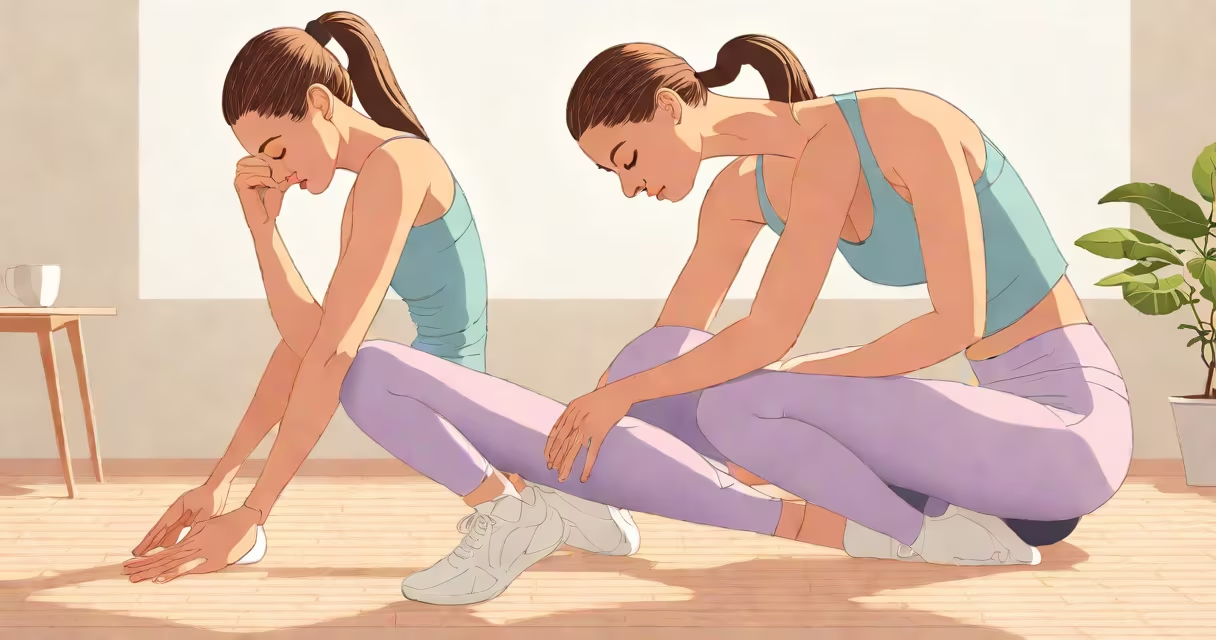
A tight hamstring results from shortened or overly tense posterior thigh muscles, often causing discomfort during movement or stretching. Effective treatment involves targeted stretching, strengthening, and activity modification to restore normal muscle length and function.
Tight hamstrings develop when the muscles at the back of the thigh shorten due to prolonged sitting, repetitive motion, or inadequate warm-up. This condition can limit hip flexion, contribute to lower back strain, and increase injury risk during athletic activities. The primary goal of treatment is to improve flexibility, reduce tension, and rebuild neuromuscular control.
According to the American Physical Therapy Association, consistent, low-intensity stretching performed daily yields better long-term outcomes than aggressive or infrequent sessions. Treatment should address both passive flexibility and active muscle control.
Hamstrings consist of three muscles-the biceps femoris, semitendinosus, and semimembranosus-that run along the back of the thigh. They stabilize the knee and assist in hip extension. When chronically tight, they resist lengthening during movement, leading to reduced range of motion.
Common symptoms include a pulling sensation behind the knee, stiffness after prolonged sitting, or pain during forward bending. A 2021 study in the Journal of Orthopaedic & Sports Physical Therapy found that individuals with chronic hamstring tightness reported higher rates of lower back pain during functional tasks like bending or lifting.
Unlike a hamstring strain, which involves tearing fibers and causes sudden sharp pain, tightness builds gradually. It's not an injury but a biomechanical imbalance that increases vulnerability to actual injuries.
The most effective treatments combine static stretching, eccentric strengthening, and neural mobilization. Static stretching holds a position for 30 seconds to allow the muscle spindle to adapt, reducing resistance to lengthening.
One proven exercise is the supine hamstring stretch: lie on your back, loop a towel around the ball of one foot, and gently pull the leg toward your chest until a mild stretch is felt behind the thigh. Hold for 30 seconds, release, and repeat three times per leg. Perform this twice daily for two weeks to see measurable improvement in flexibility.
Eccentric strengthening-focusing on controlled lowering movements-has been shown to improve muscle resilience. For example, step-downs from a 6-inch platform: stand on the edge, slowly lower one foot to the floor, then return to start. Do 3 sets of 10 reps per leg. Research from the British Journal of Sports Medicine confirms this method enhances both strength and elasticity.
Neural mobilization techniques, such as the slump test with modified neck flexion, help reduce nervous system sensitivity that contributes to perceived tightness. These are typically introduced after initial stretching shows progress.
Many people assume that pushing deeper into a stretch will speed recovery. This leads to overstretching, which activates protective reflexes and worsens tension. The body responds to excessive load by increasing muscle tone-a counterproductive cycle.
Another misconception is that foam rolling alone resolves tightness. While it may temporarily reduce soreness, a 2020 randomized trial published in Physical Therapy in Sport found no significant difference in hamstring flexibility between groups using foam rolling versus placebo. Rolling should complement, not replace, structured stretching.
Some athletes skip rest periods between workouts, believing "no pain, no gain." But fatigue impairs neuromuscular coordination, making tightness worse. The National Athletic Trainers' Association recommends 48 hours of rest between high-intensity sessions involving sprinting or jumping to prevent cumulative strain.
If tightness persists beyond four weeks despite consistent home treatment, consult a physical therapist. Persistent symptoms may indicate underlying issues such as sciatic nerve irritation or pelvic misalignment.
Signs requiring evaluation include radiating pain down the leg, numbness, or weakness in the foot. These suggest neurological involvement rather than muscular tightness alone. A physical exam can differentiate between muscle shortening and nerve compression.
I once treated a runner who reported tightness after every long run. After assessing his gait and flexibility, we discovered he was overstriding, placing excessive demand on his hamstrings. Correcting stride length and adding hip hinge drills reduced his symptoms within two weeks. This case highlights that tightness isn't always about the muscle-it's often about movement patterns.
| Method | Best For | Time to See Results | Key Risk |
|---|---|---|---|
| Static stretching (30 sec hold) | Improving baseline flexibility | 1-2 weeks | Overstretching if forced |
| Eccentric strengthening | Preventing reinjury and building endurance | 3-4 weeks | Delayed onset soreness if intensity too high |
| Foam rolling | Reducing muscle soreness post-exercise | Immediate to 24 hours | False sense of progress without structural change |
| Neural mobilization | Certain cases of nerve-related tightness | 2-3 weeks | Requires proper technique to avoid aggravation |
For most people, combining static stretching with progressive strengthening produces the best outcome. Avoid relying solely on one method. Consistency matters more than intensity.
Most individuals see noticeable improvement in flexibility within 10 to 14 days of daily stretching. Full recovery-defined as returning to pre-tightness activity levels-typically takes 3 to 6 weeks with consistent effort.
Return to sport or intense activity should follow a gradual progression. Start with light jogging, then add intervals, and finally sprint work. Rushing back increases re-injury risk. The American College of Sports Medicine advises a 2-week ramp-up period before resuming high-intensity training.
Tracking progress with a simple log-recording stretch duration, intensity, and daily symptoms-helps identify patterns and maintain motivation. Many patients report improved confidence and reduced fear of movement after two weeks of documented improvement.