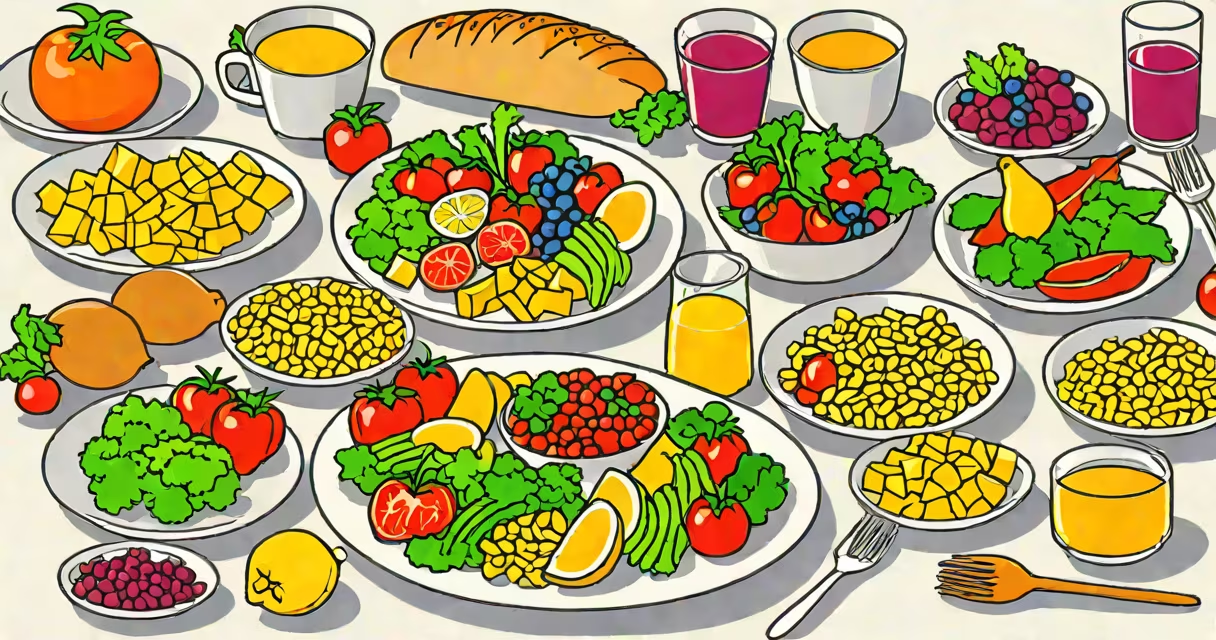
The amount of food you should eat per meal varies by age, sex, weight, activity level, and health goals, but a typical adult meal contains 400-600 calories, with protein making up about 20-30% of the total. This range supports energy balance, satiety, and metabolic health without overloading digestion.
Most adults need between 1,600 and 2,400 calories per day depending on physical activity. Dividing this across three meals averages 530-800 calories per meal. However, individual needs differ. A sedentary office worker may require only 1,600 calories, while an endurance athlete training six days a week may need 3,000 or more.
For most people, a standard meal includes roughly 1 cup of cooked vegetables, 3-4 ounces of protein, ½-1 cup of whole grains, and a small portion of healthy fat. These proportions align with recommendations from the Harvard T.H. Chan School of Public Health and the U.S. Department of Agriculture's MyPlate guidelines.
Calorie requirements depend on basal metabolic rate (BMR), physical activity, and thermic effect of food. The National Institutes of Health (NIH) states that BMR accounts for 60-75% of daily energy expenditure, meaning even at rest, your body burns significant fuel.
A 35-year-old woman who walks 4,000 steps daily and maintains a normal BMI typically needs around 1,800 calories per day. Splitting this into three meals gives her about 600 calories per meal. A 25-year-old man who lifts weights four times a week and runs 5 miles twice weekly may need 2,800 calories daily-averaging 930 per meal.
Using a single meal as a reference point: a 700-calorie meal might include 4 ounces of grilled salmon (230 calories), 1 cup of quinoa (220 calories), 2 cups of steamed broccoli (90 calories), and 1 tablespoon of olive oil (120 calories). This combination provides protein, complex carbs, fiber, and heart-healthy fats.
Meals fall into categories based on purpose: maintenance, weight loss, muscle gain, or medical management. Portion sizes adjust accordingly.
| Meal Type | Typical Calories per Meal | Protein (oz) | Carbs (cup cooked) | Fat (tbsp) | Vegetables (cup) |
|---|---|---|---|---|---|
| Maintenance (average adult) | 500-650 | 3-4 | ½-1 | 1-2 | 1-2 |
| Weight loss (calorie deficit) | 400-500 | 3 | ½ | 1 | 2 |
| High-performance (athletes) | 700-900 | 5-6 | 1-1.5 | 2-3 | 2 |
Some people adopt a one-meal-a-day pattern for time efficiency or intermittent fasting. While this can work for certain individuals, research from the National Library of Medicine shows that skipping meals regularly disrupts insulin sensitivity and increases risk of binge eating. A single 2,000-calorie meal may lead to blood sugar spikes and digestive discomfort.
Many assume that "eating less" always leads to better health. But under-eating can slow metabolism, trigger cravings, and impair hormone regulation. The American Council on Exercise notes that consuming fewer than 1,200 calories per day without medical supervision risks nutrient deficiencies and muscle loss.
Another error is equating portion size with food quality. A large plate of processed pasta with cheese sauce may contain 800 calories-well above a recommended meal-but still feel "light." Conversely, a modest-sized bowl of lentil stew with kale and brown rice can deliver 450 calories and meet or exceed daily fiber and protein needs.
I once observed a client who ate only one meal a day-typically a large sandwich and soda-believing this saved time. After three weeks, she reported fatigue, brain fog, and irritability. Blood tests showed low iron and vitamin D levels. Switching to three balanced meals restored her energy and stabilized her mood.
Use visual cues to estimate portions: a palm-sized piece of meat, a fistful of vegetables, a cupped hand for grains, and a thumb for fats. These approximations are consistent with guidelines from the USDA and the Academy of Nutrition and Dietetics.
For example, a balanced dinner for a moderately active adult might include:
This meal totals approximately 580 calories, with 35 grams of protein, 60 grams of carbohydrates, and 20 grams of fat-within recommended ranges for a single meal.
Adjust portions based on hunger cues and energy needs. If you're consistently hungry within two hours of eating, increase protein or fiber. If you feel sluggish, consider reducing refined carbs and increasing movement.
Understanding how much food you should eat per meal isn't about rigid rules-it's about matching intake to your body's signals and long-term goals. For personalized plans, consult a registered dietitian or use tools like the USDA's SuperTracker to track intake and adjust over time.