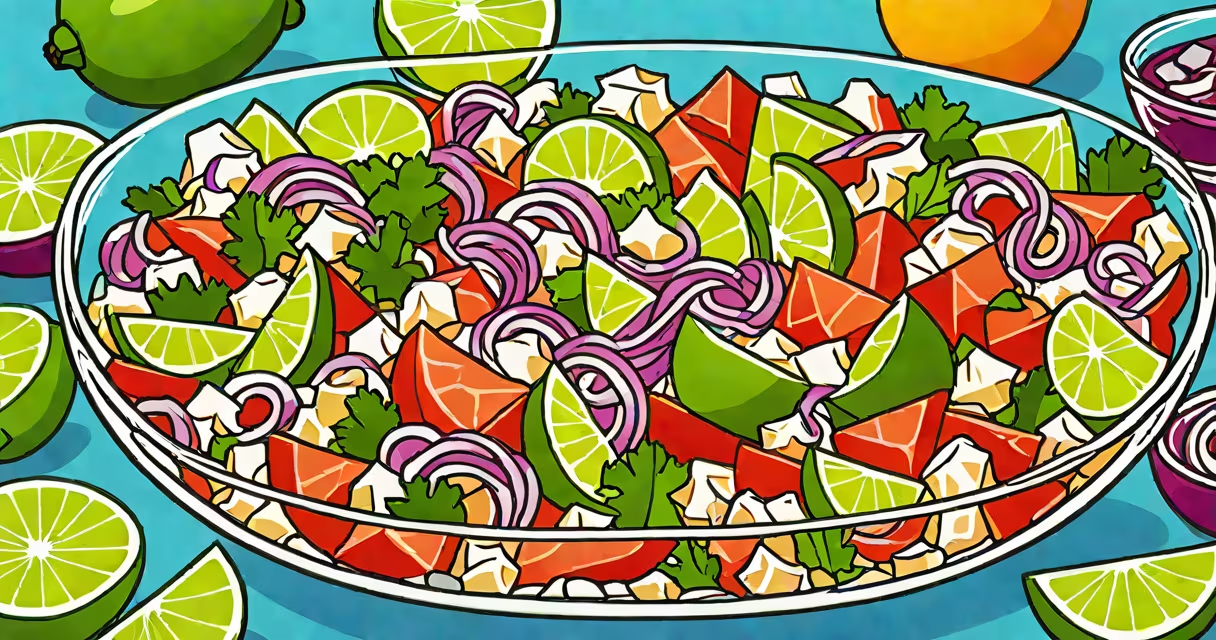
Ceviche is a dish of raw fish marinated in citrus juice, typically lime, with onions, cilantro, and chili peppers. It originates from coastal regions of Latin America, especially Peru and Ecuador, and is widely recognized in English-speaking countries as a staple of Latin American cuisine.
The word "ceviche" is borrowed directly from Spanish and remains unchanged in English. It is not translated or adapted-it is used as-is in menus, recipes, and conversations. Pronunciation in English follows the original Spanish stress: seh-VEE-chee, with the accent on the second syllable.
Despite being a foreign term, ceviche appears frequently in American restaurants, food blogs, and grocery store labels. It is often described using English modifiers such as "fresh," "spicy," or "tangy" to convey texture and flavor, but the core name stays consistent across contexts.
Ceviche is prepared by soaking fresh, high-quality fish-commonly sea bass, snapper, or halibut-in freshly squeezed lime juice for 15 to 30 minutes. The acid in the citrus denatures the proteins, effectively "cooking" the fish without heat. This process gives the flesh a firm, opaque texture and a bright, tangy flavor.
After marinating, the dish is mixed with diced red onion, chopped cilantro, sliced avocado, and a touch of chili pepper for heat. Some versions include sweet potato, corn, or plantain chips for added texture. The result is a cold, refreshing appetizer or light meal.
A typical serving size is 6 to 8 ounces per person. Restaurants often serve ceviche in chilled martini glasses or small ceramic bowls to preserve temperature and presentation.
Many people assume ceviche contains cooked fish because of its firm texture. However, the cooking is purely chemical-citric acid alters protein structure, not temperature. Cooking with heat would ruin the delicate texture and alter the flavor profile.
Another frequent error is confusing ceviche with sushi. While both feature raw fish and citrus elements, sushi uses vinegared rice and often includes seaweed. Ceviche relies solely on citrus and vegetables. The two dishes differ in origin, ingredients, and preparation method.
Some English speakers attempt to translate "ceviche" into descriptive phrases like "citrus-marinated fish salad." These descriptions may help explain the dish to newcomers, but they are not standard usage. In culinary and retail settings, "ceviche" remains the preferred term.
Peruvian ceviche is known for its bright acidity and minimal seasoning. It often features ají amarillo (yellow chili), which adds mild heat and a fruity note. Mexican ceviche tends to be spicier and includes tomatoes and sometimes shrimp or octopus.
In the United States, ceviche is commonly found in coastal cities like Miami, San Diego, and Seattle. Chains such as Chipotle and Panera have offered limited-time ceviche bowls, introducing the dish to wider audiences. These versions often include black beans, corn, and sour cream-elements not traditional in Latin American versions.
When ordering in English, people refer to "ceviche" without translation. A menu might list "Shrimp Ceviche" or "Tuna Ceviche with Mango," but the base term remains unaltered. The dish's name is treated as a proper noun, similar to "sushi" or "taco."
| Dish | Origin | Pronunciation in English | Common Additions |
|---|---|---|---|
| Ceviche | Peru/Ecuador | seh-VEE-chee | Lime, red onion, cilantro, chili |
| Sushi | Japan | soo-see | Rice, seaweed, raw fish |
| Tacos | Mexico | tah-kohs | Beef, chicken, lettuce, cheese |
One non-obvious fact: despite its popularity, ceviche is not always safe to eat raw. The U.S. Food and Drug Administration (FDA) advises that fish used in ceviche must be previously frozen to kill parasites. This step is critical for food safety and is required in commercial kitchens.
I once ordered ceviche at a beachside restaurant in Cancún. The fish arrived translucent and firm, but the server confirmed it had been frozen prior to preparation. That detail mattered-raw fish from local waters can carry anisakid worms, which cause gastrointestinal illness if ingested.
For those learning how to say ceviche in English, the term is used identically across dialects. Whether spoken in New York, London, or Sydney, "ceviche" retains its spelling and pronunciation. The only variation is regional accent, not vocabulary.
Understanding how to say ceviche in English requires knowing that it is a loanword-borrowed from Spanish and retained without translation. Its meaning, pronunciation, and cultural significance remain stable across English-language contexts.