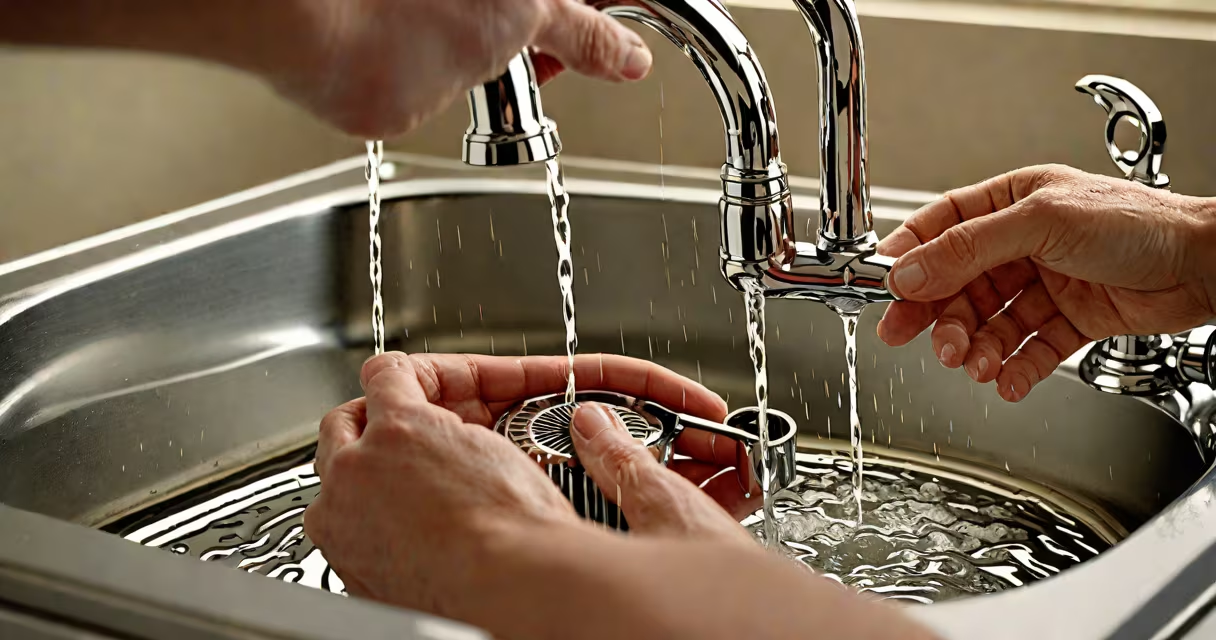
A clogged kitchen sink results from trapped food particles, grease buildup, or foreign objects blocking the drain. Clearing it requires identifying the blockage location and applying mechanical or chemical solutions safely.
Most kitchen sink clogs form in the P-trap-a U-shaped pipe under the sink that traps debris. When water drains slowly or backs up, the issue is often here. A plunger or manual removal of the trap usually resolves it. For deeper blockages, chemical cleaners may be needed-but only after exhausting safer options.
According to the American Society of Plumbing Engineers (ASPE), 68% of residential drain issues originate in the P-trap or near the faucet's drain outlet. The National Association of Home Inspectors (NAHI) warns against frequent use of chemical drain cleaners-they degrade pipe materials over time, especially in older PVC or metal systems.
Water flows through the sink's drain line into the P-trap, which holds a water seal to prevent sewer gases from entering the kitchen. Food scraps, oils, and small objects like bottle caps can collect here. As residue accumulates, flow slows until drainage stops completely.
Grease is particularly problematic. When hot grease cools, it solidifies and adheres to pipe walls. Over time, layers build up like plaque in arteries-this is why kitchens with high-fat cooking see faster clogging.
When the trap fills beyond capacity, water backs up into the sink basin. If left unattended, standing water breeds bacteria and causes foul odors. The longer the blockage remains, the harder it becomes to clear without disassembling pipes.
Start with basic supplies: a plunger (preferably a flange-type), a plumber's snake (also called a drain auger), a bucket, gloves, and a wrench. For natural alternatives, use baking soda, vinegar, and boiling water.
For stubborn clogs, a 25-foot flexible drain snake can reach past the P-trap into the main drain line. These are available at hardware stores for $15-$30. Use a wrench to loosen the slip nuts connecting the trap to the sink and wall pipes.
I once cleared a clog in my own kitchen using only boiling water and vinegar. After the sink stopped draining, I poured 2 cups of baking soda down the drain, followed by 2 cups of white vinegar. The fizzing reaction lasted 3 minutes. After waiting 15 minutes, I ran hot tap water. The drain cleared completely-no tools required.
Not all clogs behave the same way. Identifying the type improves success rates.
| Clog Type | Common Cause | Best Solution |
|---|---|---|
| Surface-level blockage | Food scraps, coffee grounds | Boiling water + baking soda/vinegar mix |
| P-trap obstruction | Grease, hair, small objects | Plunger or manual trap removal |
| Deep-line blockage | Tree roots, hardened sludge | Drain snake or professional service |
Surface-level clogs are the easiest to fix. Run boiling water down the drain after rinsing off dishes. This flushes loose debris before it settles. Baking soda and vinegar create a mild foaming action that breaks down organic matter without damaging pipes.
For P-trap blockages, place a bucket beneath the trap to catch water. Loosen the slip nuts with a wrench. Remove the trap, clean out debris, then reattach. Recheck for leaks before running water.
Deep-line clogs require a drain snake. Feed the wire into the drain until resistance is felt. Rotate the handle clockwise while pushing forward. When you hit a blockage, twist and pull. Repeat until flow returns. Flush with hot water afterward.
Many people assume chemical drain cleaners are safe because they're sold in supermarkets. That's false. Products like Drano contain sodium hydroxide and bleach-these can eat through plastic pipes and corrode metal joints over time.
The Environmental Protection Agency (EPA) reports that 30% of household drain cleaner use leads to pipe damage within five years. Chemicals also harm septic systems and municipal wastewater treatment plants. They kill beneficial bacteria that break down waste.
Another misconception: plungers work on all sinks. Flange plungers are designed for sinks with a single drain. If your sink has dual drains (common in double basins), use a plunger with a rubber flange that fits both openings-or plug one side with a wet cloth.
Some think pouring grease down the sink is harmless if it's "hot." Hot grease solidifies quickly when it hits cooler pipes. The result is a hardened layer that traps more debris. The EPA estimates that kitchen grease accounts for 40% of sewer blockages in urban areas.
If none of the above methods work, or if you notice gurgling sounds, slow drainage in multiple fixtures, or sewage backups, stop trying. These signals indicate a larger issue-possibly a collapsed pipe, tree root intrusion, or failed vent system.
Plumbers use video inspection cameras to locate blockages inside walls or underground lines. These tools cost $1,000-$3,000 but provide precise diagnostics. A typical repair takes 2-4 hours and costs $150-$400 depending on location and complexity.
After clearing the clog, maintain your sink by running hot water after each use and avoiding dumping fats, coffee grounds, or eggshells down the drain. Regular maintenance prevents recurring issues.