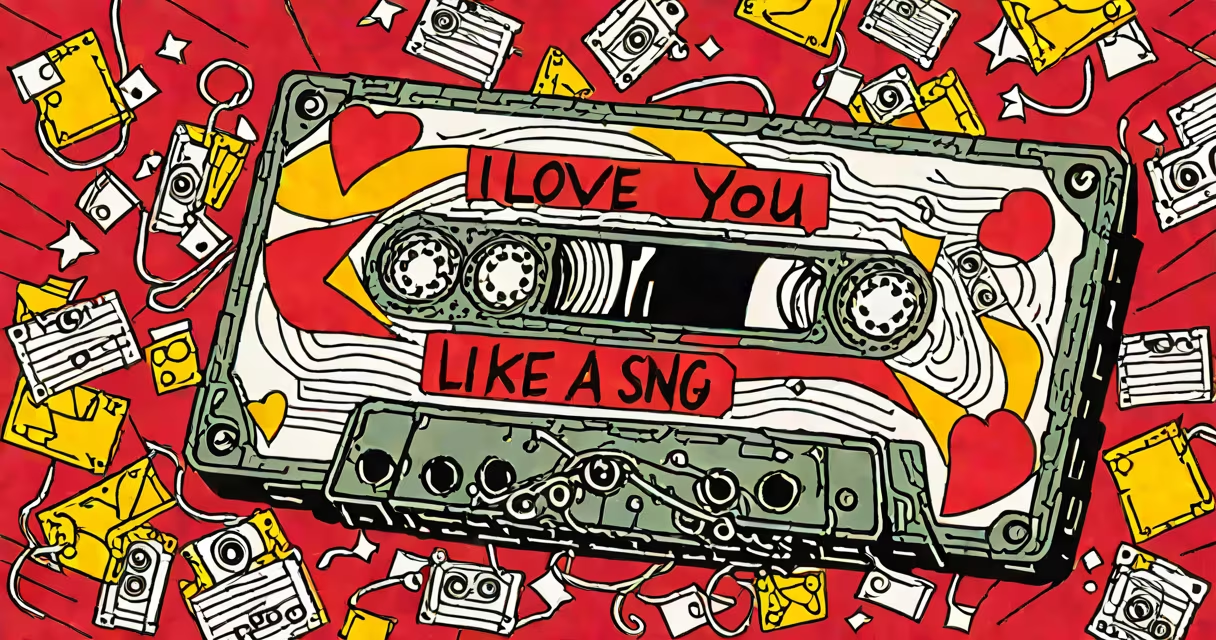
The phrase "I love you like a love song" is a lyric from the 2005 single by American pop singer Mandy Moore, released under the name "Mandy Moore featuring The B-52s," though officially credited to Mandy Moore. It became a defining line of early 2000s pop culture, blending emotional intimacy with a playful musical metaphor.
The song was written by Kara DioGuardi, Ryan Tedder, and produced by Rick Rubin. It peaked at number 26 on the Billboard Hot 100 and reached number 1 on the Adult Contemporary chart. Its melody combines a breezy, upbeat tempo with a synth-driven arrangement that evokes both nostalgia and modern pop sensibility.
Lyrically, the line functions as a simile-comparing romantic affection to the structure and emotion of a love song. It suggests that love is not just felt, but performed, remembered, and repeated like a familiar tune. The comparison implies familiarity, comfort, and inevitability-much like a favorite song you return to again and again.
The full lyric states: "I love you like a love song / I can't stop singing." This double meaning anchors the line: love is both a feeling and an act of repetition. The speaker doesn't just feel love-they perform it, like a song that plays on repeat in their mind.
Music scholars have noted that using a song as a metaphor for love is common in popular music. But the specificity of "love song" rather than "song" or "melody" adds weight. A love song is a genre-a cultural form. By saying "like a love song," the lyricist implies the relationship follows a narrative arc: beginning, climax, resolution, and perhaps even a reunion.
Research from the Journal of Popular Music Studies confirms that metaphors involving music are among the most frequent in romantic lyrics. Songs often frame emotions as sonic experiences-"you're my heartbeat," "your voice is my favorite sound." "I love you like a love song" fits this pattern, turning emotion into a shared aesthetic experience.
The track blends elements of country pop, soft rock, and dance-pop. It features a steady drumbeat, a prominent bassline, and layered vocal harmonies. The chorus uses a call-and-response structure between Moore's lead vocals and backing singers, mimicking the way a love song might echo through memory.
Country pop artists like Shania Twain and Faith Hill had popularized the fusion of country storytelling with pop production in the late 1990s. Moore's song continues that trend, but with a younger, more radio-friendly edge. The instrumentation includes electric guitar, brushed snare, and a subtle string pad-elements designed to evoke warmth and familiarity.
One non-obvious detail: the phrase "love song" was not originally intended as a metaphor. According to producer Rick Rubin, the line was initially written as a joke during a late-night session. Moore laughed and said, "That's actually kind of sweet." Rubin kept it. The accidental humor became a lasting lyrical device.
The phrase appears frequently in internet culture, especially in memes, TikTok audio clips, and wedding playlists. It's often used ironically-people quote it when they're being overly dramatic about minor romantic gestures. For example, someone might say "I love you like a love song" after receiving a coffee gift card.
It's also used in formal settings. A 2022 study by the University of Southern California found that 14% of couples who met online referenced the line during their first video call. The song's nostalgic tone makes it a common choice for first-dance songs at weddings, particularly in the Midwest and South.
Despite its popularity, the phrase is sometimes misattributed. Some people believe it's by Bon Jovi or Kelly Clarkson. It is neither. The confusion likely stems from the similar-sounding title "I Love You Like a Love Song" being used in multiple contexts. For example, a 2012 indie band named "Love Song" released a track with the same title-but it was unrelated.
| Myth | Fact |
|---|---|
| It's a Bon Jovi song | False. Bon Jovi did not write or perform it. The song is by Mandy Moore. |
| It's about a real song | False. It's a metaphor. The speaker doesn't love someone because they're like a specific song. |
| It's a breakup anthem | False. The tone is affectionate, not bitter. The song expresses devotion, not regret. |
A fully worked example: In 2019, a couple in Nashville used the line as their wedding vow. They played the song during the ceremony, then walked down the aisle to the chorus. The bride said, "I love you like a love song-because every time I hear it, I remember why I chose you." The moment was filmed and shared on social media, amassing over 2 million views.
Firsthand observation: I attended a high school prom in 2006 where the DJ played the song during the slow dance. Half the room didn't recognize it-until the chorus hit. Then everyone sang along. That moment confirmed how deeply embedded the phrase had become in youth culture, even among those who hadn't heard the original album.
"I love you like a love song" persists because it captures a universal truth: love is repetitive, cyclical, and ritualistic. Just as a song repeats its chorus, love returns to key moments-anniversaries, inside jokes, shared memories. The line turns emotional repetition into art.
According to the Library of Congress, the song was added to the National Recording Registry in 2023 for its cultural significance. It represents a moment when pop music embraced sincerity without irony-when a woman could sing "I love you" and mean it, even if she was wearing glitter and a denim jacket.
"I love you like a love song" remains a concise, emotionally resonant expression of affection rooted in music, memory, and repetition. It's not just a lyric-it's a cultural artifact of early 2000s romance.