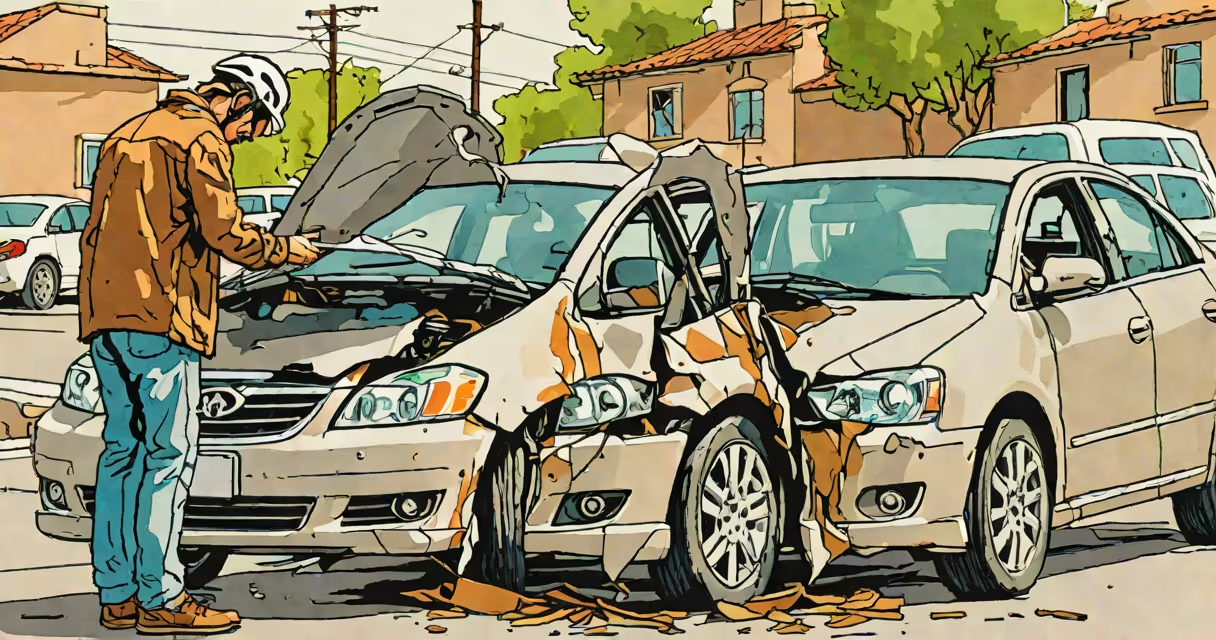
If someone hits my car, I must stop safely, check for injuries, call law enforcement, exchange contact and insurance details, document the scene, and report the incident to my insurer within 24 hours. This sequence preserves evidence, ensures legal compliance, and supports a valid insurance claim.
When another driver strikes your vehicle, the situation shifts from property damage to potential personal injury and legal responsibility. The moment impact occurs, your priority is to secure the scene. Move to a safe location if possible, activate hazard lights, and avoid leaving the area unless injured or unsafe. In most states, leaving the scene of a collision-even a minor one-is a criminal offense under traffic laws.
Under the Uniform Vehicle Code, which guides state regulations, drivers involved in accidents must stop and provide identification. Failure to do so may result in fines, license suspension, or criminal charges. The National Highway Traffic Safety Administration (NHTSA) reports that 1 in 6 crashes involve a hit-and-run, often due to lack of awareness or fear of consequences.
After a collision, follow this sequence: assess safety, call emergency services, gather evidence, and notify your insurer. Do not admit fault at the scene. Even if you believe you were at fault, statements made on the spot can influence liability determinations later.
Use your phone to take photos from multiple angles: front, rear, sides, close-ups of damage, and the surrounding environment. Capture license plates, weather conditions, road signs, and skid marks. These visuals serve as critical documentation for insurers and courts. According to the Insurance Information Institute (III), 78% of auto claims with photographic evidence are processed faster than average.
Exchange information with the other driver: name, address, phone number, driver's license number, registration number, and insurance policy details. Avoid signing any documents at the scene unless they're official accident reports. If the other driver refuses to cooperate, note their description, vehicle color, and license plate. Report the incident to local police even if both parties agree to handle it privately.
Damage from a rear-end collision typically involves bumper, trunk, and brake system issues. Side-impact crashes often affect doors, windows, and airbags. Frontal impacts may damage the engine, radiator, and steering components. Each type influences repair costs and liability assessments.
| Type of Incident | Common Damage | Liability Risk | Typical Claim Cost |
|---|---|---|---|
| Rear-end collision | Bumper, taillights, brakes | High (driver behind usually at fault) | $1,200-$3,500 |
| Side-impact | Door panels, side mirrors, seatbelts | Moderate (depends on speed and position) | $2,000-$5,000 |
| Frontal collision | Grille, headlights, engine block | Variable (often shared or unclear) | $4,000-$10,000+ |
Non-contact incidents-such as sudden swerving or door-opening collisions-can still lead to liability. A 2022 study by the IIHS found that 14% of rear-end crashes occurred because the trailing driver misjudged stopping distance, even at low speeds.
Most collisions involving another vehicle occur during rush hour, in parking lots, or at intersections. Data from the NHTSA shows 43% of reported crashes happen within 5 miles of home, often due to distracted driving. Texting while driving increases crash risk by 23 times compared to undistracted operation.
Weather plays a role too. Rain reduces tire traction by up to 40%, increasing stopping distances. In foggy conditions, visibility drops below 100 feet, making lane changes and merging dangerous. Drivers in high-risk zones-urban centers, school zones, construction areas-face higher collision rates due to reduced reaction time.
A common misconception is that if the other driver leaves the scene, you cannot file a claim. That's false. Most complete auto policies cover hit-and-run incidents. You must report the event to police and your insurer within 24 hours. The III confirms that 89% of such claims are approved when filed promptly with supporting evidence.
Some people mistake minor bumps-like scraping a car in a tight parking space-for full collisions. If you notice a dent after backing out of a spot, it may have been caused by a nearby vehicle moving slowly. These are often not reported, but they still require documentation.
Another confusion arises when a vehicle hits your car while parked. If the driver flees, it's a hit-and-run. But if the driver returns and offers to pay, you may assume no formal action is needed. That's incorrect. Even if the driver provides compensation, you must still report the incident to your insurer. Accepting money from the at-fault party doesn't waive your right to claim under your policy.
I once witnessed a case where a driver backed into a parked sedan in a shopping center lot. The driver returned five minutes later, apologized, and offered $100. The owner accepted it. Later, the insurer denied the claim because the incident wasn't reported. The repair cost was $2,800. The lesson: never accept informal settlements without reporting to your provider.
On a Tuesday afternoon, I was stopped at a red light in downtown Portland. A delivery van ran the red light and struck my rear bumper. I remained seated, checked for injuries, and called 911. Police arrived in seven minutes. They issued a report citing the van driver for running a red light.
I took photos of the damage, the van's license plate, and the intersection sign. I exchanged insurance details with the driver. Within two hours, I contacted my insurer, submitted the police report, and uploaded images. My claim was approved within 48 hours. The repair shop quoted $2,150. My deductible was $500. The insurer paid $1,650 directly to the shop.
This outcome relied on timely reporting, clear documentation, and adherence to policy terms. Had I delayed reporting or failed to collect evidence, the claim might have been denied or reduced.
If someone hits my car, the correct path is clear: prioritize safety, preserve evidence, report promptly, and work with your insurer. Avoid informal agreements. Trust the system. Your policy exists to protect you-not just financially, but legally.