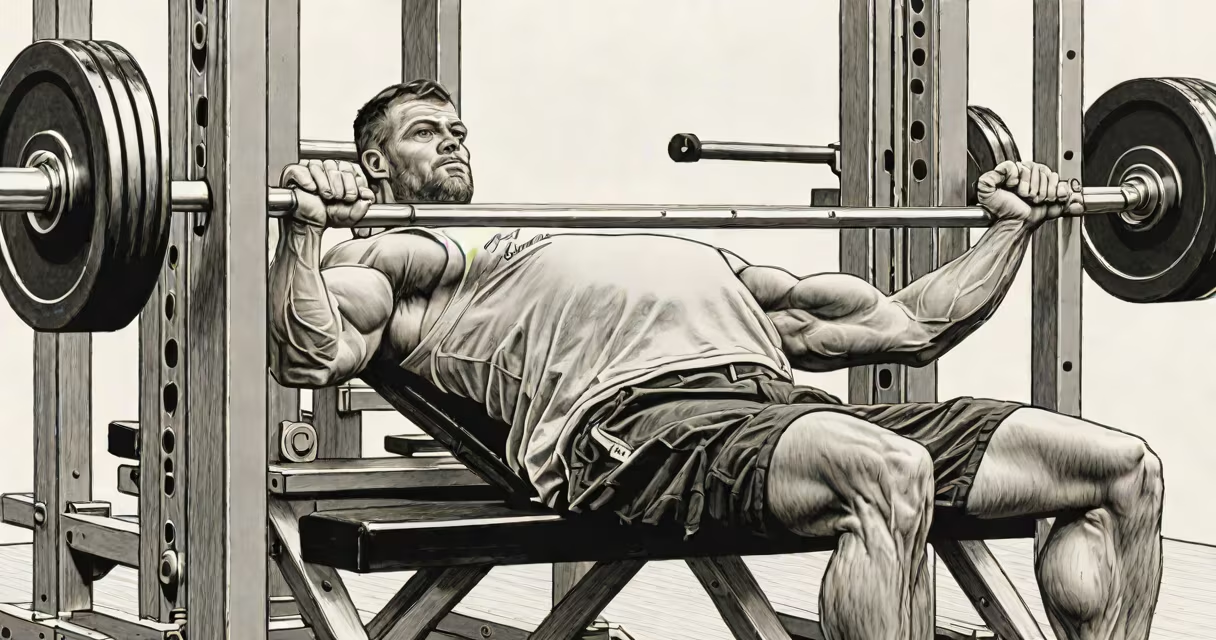
Spotting means physically supporting another person during a weightlifting exercise to prevent injury and maintain correct form, especially when they're lifting near their maximum capacity. It's not about doing the work for them-it's about ensuring safety.
When you're spotting, you're positioned close to the lifter, usually behind or beside them, with your hands ready to catch or stabilize the barbell or dumbbells if the lifter loses control. This role is common in exercises like the bench press, squat, and overhead press, where a failure could result in serious harm.
Spotting requires awareness, timing, and coordination. You don't need to be strong-you need to be attentive. The goal is to intervene only when needed, not to take over the lift. Proper spotting maintains the lifter's confidence while reducing risk.
During a bench press, the spotter stands behind the lifter with hands under the bar. As the lifter lowers the bar to their chest, the spotter remains relaxed but ready. If the lifter struggles to press up, the spotter applies gentle pressure to help complete the rep-but only enough to assist, not to do the movement.
For squats, the spotter stands slightly behind and to the side, hands near the lifter's lower back or shoulders. They don't push the lifter up-they brace against sudden shifts in balance. If the lifter begins to fall forward or backward, the spotter steps in to stabilize.
Spotting is not passive. A good spotter watches for signs of fatigue-slowed tempo, arching back, or jerky motion-and adjusts their readiness accordingly. You're not just a wall; you're part of the feedback loop.
There are two main styles: direct assistance and passive support.
| Type | When Used | Example | Key Difference |
|---|---|---|---|
| Direct Assistance | When the lifter is close to failure | Helping a bench presser finish a heavy rep | Spotter actively lifts the bar with the lifter |
| Passive Support | During warm-ups or moderate sets | Standing behind a squat rack, hands near the lifter's back | Spotter stays ready but doesn't touch unless needed |
Direct assistance is rare and reserved for advanced lifters who trust their spotters. Most spotting is passive-ready, but not interfering. Over-assisting can create dependency and reduce strength gains.
Many people think spotting means helping the lifter lift the full weight. That's incorrect. The spotter never takes over the movement. If you're lifting 135 pounds and fail halfway, the spotter may apply 10-20 pounds of assistance-but only to prevent the bar from dropping, not to complete the rep.
Another mistake is assuming spotting is only for beginners. In reality, even elite athletes use spotters during max attempts. According to the National Strength and Conditioning Association (NSCA), spotting is a standard practice in powerlifting competitions-even at the elite level-to protect athletes during record attempts.
Some believe you need to be strong to spot. But strength isn't the key-timing and positioning are. A smaller person can effectively spot a larger lifter if they understand use and body mechanics.
At a local gym, a lifter attempts a 225-pound bench press. They've warmed up with 135 and 185 pounds. The spotter, trained in proper technique, stands behind them with hands placed under the bar at shoulder width.
As the lifter lowers the bar to their mid-chest, the spotter keeps their elbows bent and core engaged. The lifter completes the eccentric phase smoothly. On the concentric phase, they start to falter at the midpoint. The spotter applies light upward pressure-just enough to help the bar clear the chest-without taking over the movement.
The rep finishes safely. The spotter doesn't cheer or high-five-the job was done correctly. No injury occurred. The lifter continues with controlled breathing and resets.
This scenario shows that spotting isn't about performance-it's about risk management. The spotter didn't make the lift easier. They made it safer.
Spotting is not coaching. You're not correcting form mid-rep unless it's unsafe. You're not giving encouragement. You're not responsible for the lifter's training plan. Your role ends at physical support.
Spotting is also not a substitute for proper equipment. A spotter cannot compensate for a faulty barbell or unsecured rack. Always check that the bench is stable, the bar is properly loaded, and the safety pins are set.
And spotting isn't required for every lift. Deadlifts, curls, and lateral raises don't need spotters because the load is controlled and the risk of collapse is low. Only compound movements with free weights and high loads require spotting.
I once volunteered to spot a friend during his first heavy bench press attempt. He'd trained consistently but hadn't lifted above 185 pounds. I stood behind him, hands ready. When he failed at 225, I applied just enough pressure to keep the bar from falling onto his neck.
He later told me he felt confident because he knew I was there-but didn't feel like I was taking over. That balance is critical. I didn't move my hands until I had to. I stayed calm. I didn't panic. That's what spotting really is: quiet readiness.
If you're asked to spot, assess your ability first. Are you trained? Do you understand the movement? Can you react quickly? If not, decline politely. Safety isn't negotiable.
Remember: spotting is not about ego. It's not about being seen. It's about preventing accidents. If you're not prepared, you're not helping-you're increasing risk.