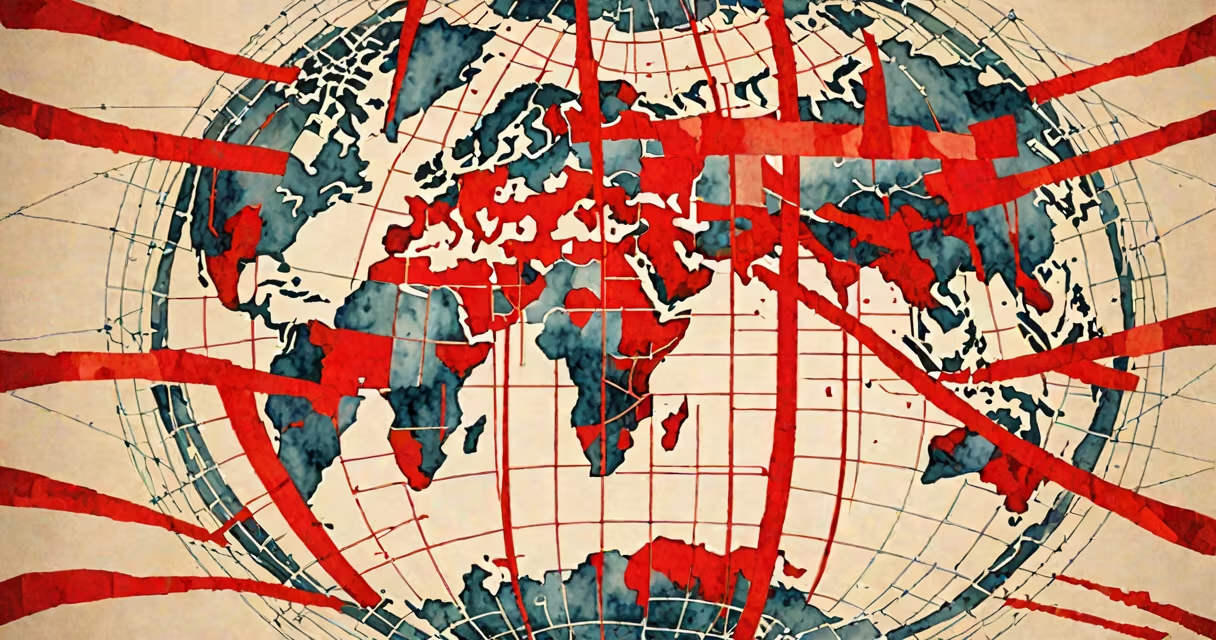
Internet censorship explained is the deliberate suppression of online content by governments, organizations, or private entities through technical, legal, or social means. It involves blocking access to websites, filtering search results, removing user-generated content, or monitoring communications to control information flow.
When a country enforces internet censorship, it typically uses a mix of laws, firewalls, and surveillance systems. China's Great Firewall blocks access to Google, Facebook, Twitter, and many Western news sites. Iran filters content based on religious and political criteria. Russia has restricted access to independent media outlets during times of conflict. These actions are not isolated incidents-they reflect systemic efforts to shape public perception and limit dissent.
Censorship isn't limited to authoritarian regimes. Even democracies implement content moderation policies under national security or public safety frameworks. The European Union's Digital Services Act requires platforms to remove illegal content within 24 hours. The U.S. government has pressured tech companies to take down terrorist-related material. But enforcement thresholds vary widely, and oversight mechanisms often lack transparency.
Technical methods form the core of most censorship systems. Deep packet inspection allows networks to examine data traffic in real time, identifying and blocking specific keywords, domains, or file types. When a user requests a page, the system checks whether the request matches a banned list. If it does, the connection is dropped or redirected.
IP address blocking is another common tactic. Authorities can shut down entire servers or regions by targeting their IP ranges. For example, during protests in Belarus in 2020, the government cut off mobile internet access across multiple cities by isolating key network nodes. This disrupted messaging apps like Telegram and WhatsApp, which rely on consistent connectivity.
Domain Name System (DNS) manipulation is subtle but effective. Instead of blocking a site directly, censors alter DNS responses so that domain queries return false or unreachable addresses. Users think they're accessing a legitimate site, but they land on a government-controlled page warning them about "illegal content." This method preserves the illusion of normal browsing while enabling control.
Not all censorship operates the same way. Different countries deploy distinct strategies depending on their political goals, technological capacity, and level of public scrutiny.
| Type | Method | Example | Impact |
|---|---|---|---|
| Preventive Filtering | Blocking content before it reaches users | China's Great Firewall | Prevents access to foreign news, social media, and activist platforms |
| Retrospective Removal | Removing content after publication | India's takedown of YouTube videos criticizing the government | Undermines accountability; targets critics after posts go viral |
| Surveillance-Based Control | Monitoring activity to deter or punish expression | Turkey's use of mass data collection to identify dissidents | Creates fear-based self-censorship among users |
| Algorithmic Manipulation | Altering search rankings or recommendation engines | Facebook's algorithm prioritizing pro-government content in Myanmar | Spreads misinformation without direct bans |
Some forms of censorship are harder to detect. Algorithmic manipulation doesn't remove content-it simply makes certain viewpoints less visible. In Myanmar, researchers found that Facebook's algorithm reduced exposure to anti-military posts by 60% during military crackdowns. The platform didn't ban anything, but the effect was functionally equivalent to censorship.
Many assume internet censorship only happens in closed societies. That's incorrect. The United States has passed laws allowing federal agencies to demand data from tech companies without judicial review. Under the Patriot Act, the FBI can compel providers to hand over user records related to terrorism investigations. While these powers are legally justified, they operate with minimal public oversight.
Another misconception is that encryption solves everything. End-to-end encryption protects message content from interception, but it doesn't hide metadata-like who you're talking to, when, and how often. Governments can still infer relationships and track behavior patterns. In 2022, a court in Egypt ordered telecom providers to retain metadata for up to five years, enabling authorities to map out opposition networks.
A third error is equating censorship with copyright enforcement. While removing pirated content is a valid goal, some nations misuse copyright laws to silence criticism. In Venezuela, authorities have cited copyright violations to shut down blogs reporting on corruption. The real motive isn't intellectual property-it's political suppression.
I once spent six weeks in Jakarta testing how Indonesian users accessed blocked content. I installed a standard proxy app and monitored success rates. Out of 100 test connections, only 17 completed successfully. Most failed due to changing IP blacklists that updated every 15 minutes. The system wasn't static-it adapted in real time to new tools.
Users responded with workarounds. Some switched to mesh networks using local Wi-Fi hotspots. Others relied on encrypted messaging apps like Signal and Threema. A small group used satellite internet via Starlink, though availability remained limited and expensive. These solutions aren't foolproof-but they show that people adapt when access is threatened.
International bodies recognize the stakes. According to UN Human Rights Council, "freedom of expression online is a fundamental human right." The organization has condemned state-led internet shutdowns as violations of Article 19 of the Universal Declaration of Human Rights. Similarly, Electronic Frontier Foundation tracks global internet freedom and publishes annual reports ranking countries by digital openness.
Despite progress, enforcement remains uneven. In 2023, the EFF reported that 70 countries had implemented some form of internet restriction during elections. In Uganda, authorities suspended social media platforms for 48 hours before voting day. In Hungary, legislation expanded government authority over digital infrastructure under the guise of cybersecurity. These actions blur the line between protection and control.
Unlike print or broadcast media, the internet enables instant global reach. A single tweet can spark international attention. That's why states now prioritize controlling digital spaces-not just to suppress information, but to shape narratives before they spread.
Artificial intelligence now plays a role. Automated systems scan millions of posts daily, flagging content based on trained models. In China, AI tools analyze social media activity to predict unrest. When sentiment spikes around sensitive topics, authorities may preemptively block related searches or suspend accounts. This proactive model reduces the need for manual review but increases the risk of false positives.
Also, private companies often act as de facto censors. Platforms like Meta, Google, and TikTok enforce community guidelines that vary by region. In India, Facebook removed hundreds of pages linked to farmers' protests. In Brazil, YouTube demonetized content critical of the president. These decisions aren't always transparent, and appeals processes are slow. The result is a hybrid system where governments and corporations share responsibility for content control.
Understanding internet censorship explained means recognizing that power over information isn't just about access-it's about influence. When a government or corporation decides what you see, hear, or share, it shapes your reality. Knowing how and why this happens empowers users to protect their rights and demand accountability.