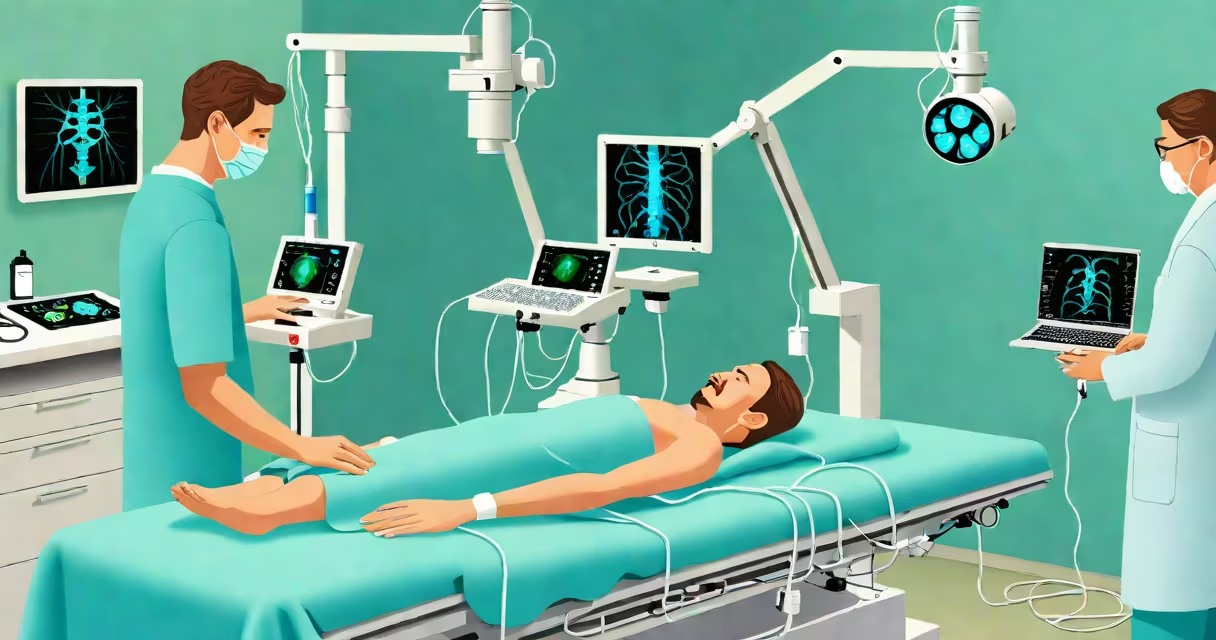
interventional radiology tech programs prepare individuals to support minimally invasive procedures that treat conditions using imaging guidance-such as catheter-based treatments for blocked blood vessels-under the supervision of interventional radiologists.
These programs focus on advanced imaging modalities like fluoroscopy, CT, and MRI, and train students to manage complex equipment, maintain sterile technique, and assist in real-time decision-making during procedures. Unlike general radiologic technology programs, which emphasize diagnostic imaging, interventionals prioritize procedural support, patient safety, and rapid response in high-acuity settings.
Graduates work in hospital angiography suites, outpatient clinics, and specialized centers performing procedures such as embolizations, stent placements, and tumor ablations. They handle contrast injection systems, monitor hemodynamics, and ensure accurate image acquisition throughout interventions.
Programs typically last 12 to 24 months and combine classroom instruction with clinical rotations. Students learn anatomy relevant to vascular access points, radiation safety protocols, and the mechanics of guidewires, catheters, and balloons used in procedures.
Clinical components occur in accredited facilities where students observe and assist in live cases under direct supervision. Rotations may include neurovascular, peripheral vascular, and oncologic interventions. Most programs require completion of a clinical competency portfolio before graduation.
Students must pass the American Registry of Radiologic Technologists (ARRT) certification exam in Interventional Radiography to practice. The ARRT requires 1,000 hours of clinical experience in interventional procedures, including 200 hours in fluoroscopy and 100 hours in vascular access techniques.
Three primary program types exist: certificate-only, associate degree, and bachelor's degree pathways. Certificate programs are often offered by hospitals or community colleges and focus on job-ready skills. Associate degrees provide broader science and math foundations. Bachelor's programs include research components and leadership training.
| Program Type | Duration | Entry Requirements | Certification Path |
|---|---|---|---|
| Certificate | 12-18 months | High school diploma, basic math/science | ARRT exam after 1,000 clinical hours |
| Associate Degree | 2 years | High school diploma + prerequisite courses | Eligible for ARRT exam upon completion |
| Bachelor's Degree | 4 years | High school diploma + college prep coursework | Meets eligibility for ARRT and advanced roles |
Not all programs are accredited by the Joint Review Committee on Education in Radiologic Technology (JRCERT). Accreditation ensures curriculum meets national standards and allows graduates to sit for the ARRT exam. As of 2023, only 17 programs in the U.S. hold JRCERT accreditation specifically for interventional radiology.
interventional radiology tech programs are primarily located in academic medical centers, large teaching hospitals, and specialty imaging networks. Institutions like the University of California San Francisco, Johns Hopkins, and Mayo Clinic offer formal training tracks integrated with residency-level clinical exposure.
Hospitals deploy these technicians to reduce procedure time, improve accuracy, and lower patient risk. For example, during a carotid artery stenting procedure, the tech positions the patient, manages contrast delivery, and adjusts imaging angles in real time-reducing the need for repeat scans and minimizing radiation exposure.
A 2022 study published in the Journal of Vascular and Interventional Radiology found that hospitals with dedicated interventional tech teams reported a 37% reduction in procedure-related complications compared to those relying on general radiology staff.
Many assume that interventional radiology techs perform procedures independently. This is incorrect. These professionals do not insert catheters or make treatment decisions. Their role is strictly supportive: managing equipment, maintaining sterility, and providing real-time imaging feedback.
Another misconception is that all radiologic technologists can perform interventional tasks. General radiography programs do not cover the advanced vascular access techniques required for procedures like renal artery embolization. A technician trained only in X-ray imaging lacks the skills to manage a sheath insertion site or interpret changing flow patterns during a thrombectomy.
One non-obvious distinction: interventional radiology techs often work in environments with higher radiation doses due to prolonged fluoroscopy use. According to the National Council on Radiation Protection and Measurements (NCRP), interventional staff receive annual effective doses averaging 1.5 mSv-up to five times higher than diagnostic radiographers. Proper shielding and dose monitoring are essential.
In 2021, a 62-year-old male with a ruptured abdominal aortic aneurysm was rushed to a trauma center. The interventional radiology team performed an emergency endovascular repair. The interventional radiology tech prepared the room, positioned the patient, and managed the biplane C-arm system to capture continuous images of the stent graft deployment.
During the procedure, the tech adjusted the fluoroscopy frame rate from 30 fps to 15 fps to reduce dose while maintaining clarity. They also coordinated with the nurse to administer contrast at precise intervals. The entire procedure lasted 97 minutes. Post-procedure imaging confirmed correct stent placement with no leaks.
This case illustrates how interventional radiology tech programs train professionals to balance speed, precision, and safety under pressure. Without trained support, such procedures would take longer and carry higher risks.
I observed a 12-week rotation at a Level I trauma center where a student in an interventional radiology tech program managed the setup for a liver embolization. She had to troubleshoot a contrast injector malfunction mid-procedure. Her quick thinking-switching to manual injection and adjusting the timing-prevented a delay. The attending physician later noted her ability to remain calm under stress as a key factor in the procedure's success.
After completing a program, graduates must apply for ARRT certification and seek employment in accredited facilities. Many employers prefer candidates with prior experience in general radiography or emergency medicine.
interventional radiology tech programs are distinct from general radiologic technology training. They deliver focused, hands-on preparation for a growing field that combines imaging, precision, and patient care. With increasing demand for minimally invasive treatments, these programs represent a important pathway into advanced medical imaging careers.