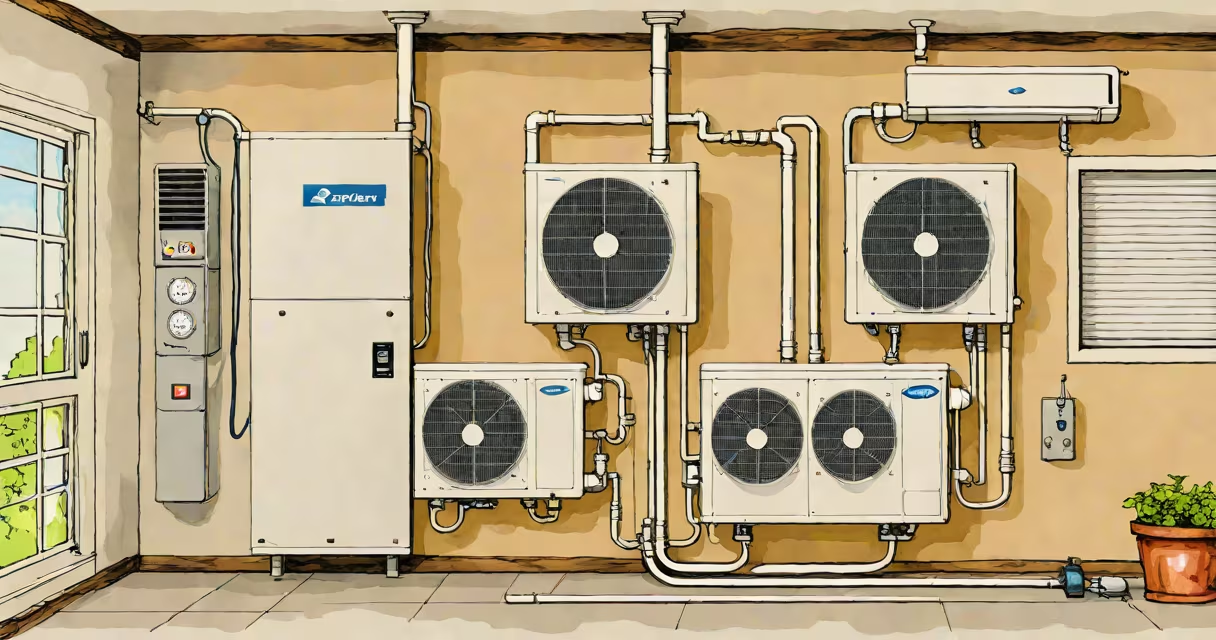
No, a heat pump is not a mini split. A heat pump is a type of HVAC technology that transfers heat rather than generating it. A mini split is a specific system architecture that uses one or more indoor units connected via refrigerant lines to a single outdoor condenser. While many mini splits use heat pumps as their core component, the two terms describe different aspects of the system.
Think of it this way: a heat pump is the engine, and a mini split is the entire vehicle. The heat pump provides the function-moving thermal energy from one place to another. The mini split is the system design that delivers that function through ductless indoor units and a remote outdoor compressor.
For example, a 24 SEER mini split system installed in a home office may use a variable-speed heat pump to move warm air from outside into the room during winter. The system runs quietly, maintains consistent temperature, and achieves high efficiency. But the heat pump itself is not the mini split-it's part of it.
Heat pumps operate using refrigeration cycles. They extract heat from the outside air-even in cold weather-and transfer it indoors. In summer, the process reverses: they pull heat from inside the home and expel it outdoors. This dual functionality makes them highly efficient compared to traditional furnaces or electric resistance heaters.
The key mechanism is the reversing valve, which changes the direction of refrigerant flow. When the valve shifts, the indoor unit becomes a heater instead of a cooler. This reversal happens automatically based on thermostat settings.
A 2023 study by the U.S. Department of Energy found that heat pumps can reduce residential heating energy use by up to 50% compared to gas furnaces in moderate climates. In regions like the Pacific Northwest, where winters are mild, heat pumps maintain efficiency down to -10°C (14°F).
A mini split is defined by its lack of ductwork. Instead, it uses individual indoor units mounted on walls or ceilings, each connected by refrigerant lines to a single outdoor condenser. This design allows zoned control-different rooms can run at different temperatures.
Mini splits come in several configurations:
These systems are ideal for homes without existing ductwork, additions, or renovations where installing ducts is cost-prohibitive. A 120-square-foot sunroom addition in a 1960s home in Colorado was retrofitted with a mini split after the homeowner rejected the $8,000 cost of running ducts through the attic.
| Type | Indoor Units | Outdoor Units | Best For |
|---|---|---|---|
| Single-zone | 1 | 1 | Small rooms, offices |
| Multi-zone | 2-4 | 1 | Whole-home comfort, multiple zones |
| VRF | Up to 16 | 1 | Commercial buildings, complex layouts |
Many people assume that "mini split" and "heat pump" are interchangeable because both are associated with energy efficiency and quiet operation. This is incorrect. Not all mini splits use heat pumps-some older models rely on electric resistance coils for heating. Conversely, heat pumps can be installed in ducted systems, such as central air conditioners with heat strips.
A critical distinction: a mini split is a system architecture. A heat pump is a functional component. You can have a ducted system with a heat pump, or a ductless system with a heat pump. The presence of a heat pump doesn't make something a mini split-only the absence of ducts and the use of separate indoor/outdoor units does.
One non-obvious fact: some mini splits marketed as "heat pumps" are actually hybrid systems. These combine a heat pump with a supplemental electric heater that activates below freezing temperatures. A 2022 report from the National Renewable Energy Laboratory noted that hybrid systems improve reliability in climates below -15°C (5°F), though they consume more electricity than pure heat pumps.
In 2022, a homeowner in Portland, Oregon, replaced an aging furnace and central AC with a 25 SEER mini split system. The house had no ductwork, and the basement was unfinished. The installer chose a multi-zone setup with two indoor units-one for the living room and one for the master bedroom.
The system used a variable-speed heat pump capable of operating efficiently at 2°C (36°F). During winter, the heat pump maintained indoor temps between 20-22°C (68-72°F) while drawing 1.2 kW of power. In summer, it cooled the home at 1.8 kW, reducing peak load on the grid.
While DIY installation of a mini split is technically possible, it requires refrigerant handling certification, proper tools, and adherence to local codes. Attempting to install a system without training risks refrigerant leaks, electrical faults, and voided warranties.
I once helped a friend install a mini split in his garage workshop. He bought a 12,000 BTU unit online and attempted to connect the refrigerant lines himself. After three hours and a significant leak, he called a licensed technician. The repair cost $650-more than the original unit. The technician explained that improper evacuation of the system led to moisture contamination, which degraded the compressor.
When someone asks, "Is a heat pump a mini split?" the answer remains no. A heat pump is a method of moving thermal energy. A mini split is a system configuration that uses ductless indoor units and a remote outdoor condenser. Many mini splits incorporate heat pumps, but the terms are not synonymous.
Understanding this difference ensures accurate selection, installation, and maintenance. A correctly sized mini split with a high-efficiency heat pump can cut energy use by half. But confusing the components leads to poor choices, higher costs, and reduced comfort.