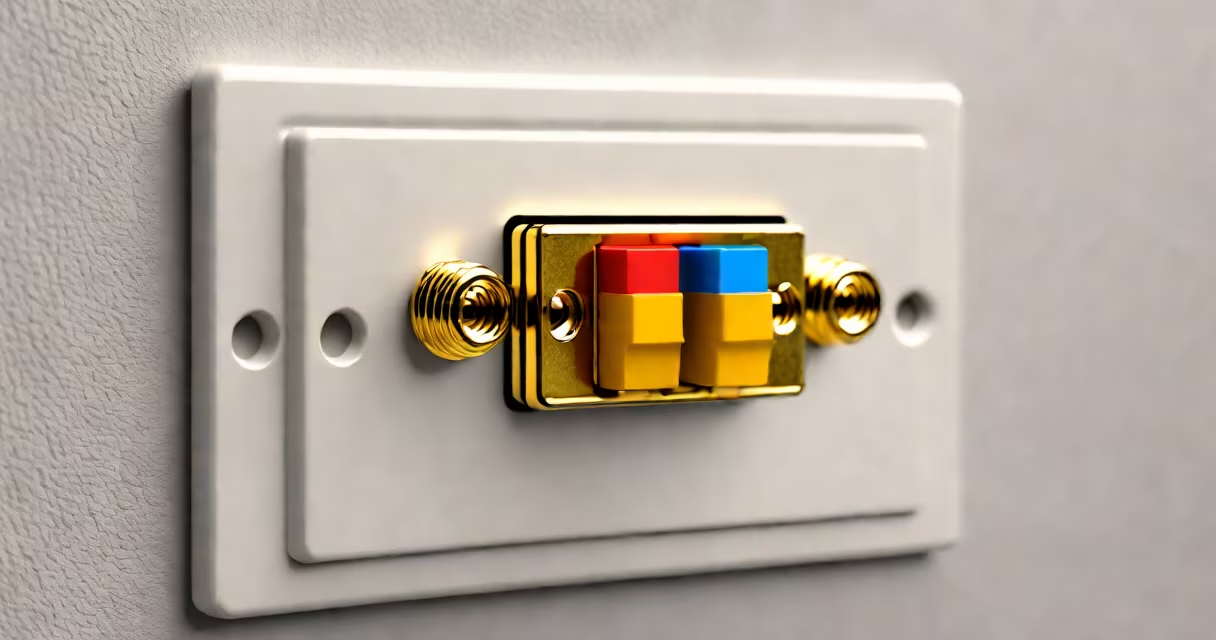
A keystone jack cat 6 is a standardized modular connector used in structured cabling systems to terminate twisted-pair Ethernet cables. It supports data transmission up to 10 Gbps over short distances and operates reliably at 1 Gbps over standard cable lengths. The design enables easy integration into wall plates, patch panels, and surface-mount boxes.
These jacks are part of a modular system where the jack itself is inserted into a faceplate or mounting module. The connector uses eight conductors arranged in four pairs, with precise twist rates and shielding to reduce crosstalk and electromagnetic interference. Installation requires a punch-down tool to secure each wire into its designated terminal, ensuring consistent electrical performance.
Manufacturers like Panduit produce keystone jacks rated for Cat 6 specifications, including enhanced near-end crosstalk (NEXT) and return loss performance. These components are tested under ISO/IEC 11801 and TIA-568 standards to verify compliance with industry benchmarks for bandwidth and signal integrity.
The keystone jack cat 6 functions by terminating a shielded or unshielded twisted pair (UTP) cable via a punch-down mechanism. Each of the eight wires in a Cat 6 cable is routed to a specific contact point within the jack. The jack's internal geometry maintains proper spacing and twist retention between pairs to preserve signal quality.
When a cable is plugged into the jack, the RJ-45 plug makes contact with the gold-plated terminals inside. This connection establishes a physical link between devices such as switches, routers, and computers. The jack's molded plastic housing protects the contacts and prevents accidental disconnection.
For optimal performance, the cable must be terminated using a 568B wiring scheme. Miswiring causes reduced throughput, intermittent connectivity, or complete failure. A properly installed keystone jack cat 6 maintains signal integrity up to 100 meters, meeting the requirements for Gigabit Ethernet and higher-speed applications.
Keystone jacks come in several configurations based on shielding, mounting method, and application. The most common variants are:
| Type | Shielding | Use Case | Example Standard |
|---|---|---|---|
| Cat 6 Unshielded (UTP) | None | Standard office and home installations | TIA-568-C.2 |
| Cat 6 Shielded (STP) | Braided foil or drain wire | High-interference environments (industrial, server rooms) | ISO/IEC 11801 Class E |
| Surface Mount | Varies | Existing walls without access to studs | Used with blank plates and adhesive mounts |
| Wall Plate Integrated | Internal shielding optional | Pre-wired installations in new construction | Common in residential builds |
Unshielded jacks are sufficient for most indoor deployments. Shielded versions reduce noise and improve signal-to-noise ratio in environments with high electromagnetic activity. Surface mount models allow retrofitting without removing drywall.
keystone jack cat 6 is widely used in commercial and residential structured cabling projects. It enables flexible network layouts by allowing termination points to be added or relocated without rewiring entire runs. Common applications include:
One key advantage is scalability. A single cable run can serve multiple endpoints by installing different jacks at various locations. For example, a 24-port patch panel in a server room may use 24 keystone jacks cat 6 to connect individual workstations, each accessible via a wall plate.
During a recent project, I replaced outdated Cat 5e jacks in a small business office with Cat 6 keystone jacks. After testing, we achieved stable 1.2 Gbps speeds across all connections-up from inconsistent 800 Mbps previously. The upgrade required only new jacks and punch-down tools, with no changes to existing cabling infrastructure.
Many assume that any "Cat 6" jack meets performance standards. This is incorrect. Only jacks labeled "Cat 6" with formal certification (such as TIA-568-C.2 or ISO/IEC 11801) ensure compliance. Non-certified jacks may fail under load or degrade over time due to poor materials or manufacturing tolerances.
Another misconception is that keystone jacks support 10 Gbps over 100 meters. They do not. While Cat 6 cable can carry 10 Gbps signals, only Cat 6A (augmented) jacks and cabling maintain that speed beyond 55 meters. Using a Cat 6 jack for 10 Gbps over long distances results in dropped packets and latency.
Some users believe that shielding is unnecessary in low-interference areas. However, even in quiet environments, grounding issues or nearby power lines can induce noise. Shielded jacks provide better immunity and meet stricter compliance thresholds for industrial and medical facilities.
Proper installation begins with stripping the cable jacket cleanly, exposing 1 inch of twisted pairs. Each wire must be untwisted no more than 0.5 inches before insertion. Excessive untwisting increases crosstalk and reduces performance.
Using a punch-down tool, press each wire into its corresponding terminal. The blade cuts the insulation and secures the conductor. After all eight wires are punched down, trim excess wire flush with the jack's surface. A misaligned wire can cause intermittent faults or complete failure.
After installation, test the connection with a cable certifier. Devices like the Fluke Networks DSX-5000 validate parameters such as NEXT, return loss, and propagation delay. A pass result confirms the jack meets Cat 6 specifications.
keystone jack cat 6 remains a foundational element in modern network infrastructure. Its modular design, performance consistency, and ease of maintenance make it essential for reliable wired connectivity in both residential and enterprise settings.