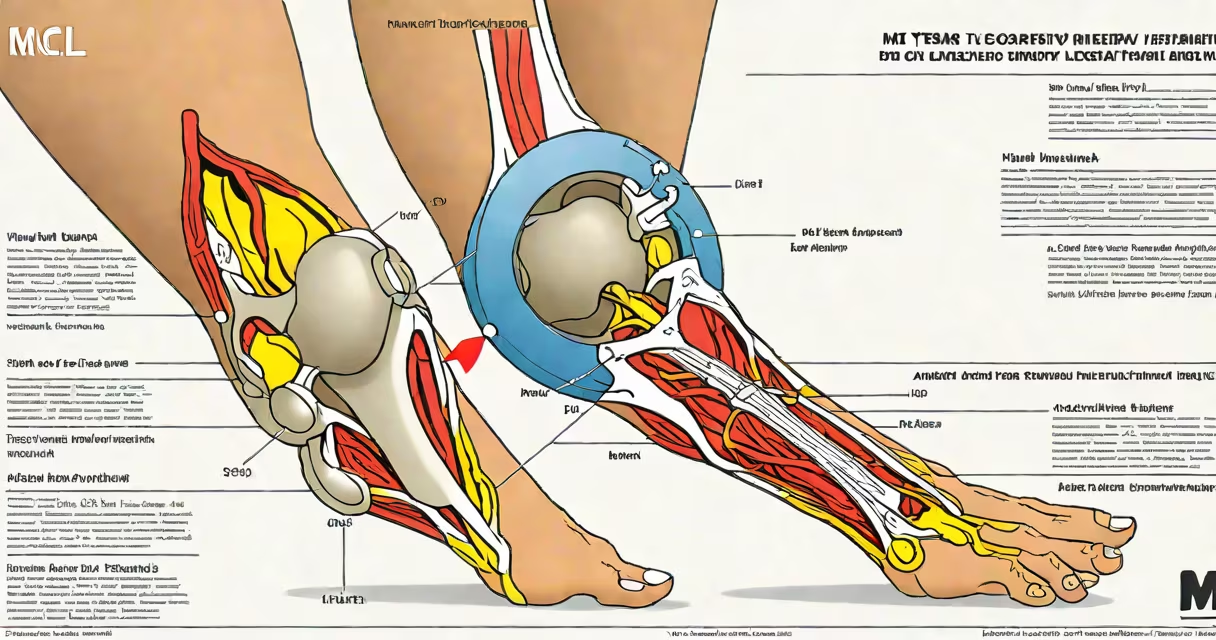
MCL tear recovery time ranges weeks, depending on injury severity. Grade 1 sprains typically heal in 4-6 weeks with conservative care. Grade 3 tears involving complete ligament rupture may take 10-12 weeks or longer, especially if surgical repair is needed.
The medial collateral ligament (MCL) stabilizes the inner side of the knee. It resists forces that push the knee inward. Tears occur during sports collisions, sudden pivots, or direct blows to the outer knee. Most MCL injuries result from non-contact trauma during cutting or landing motions common in football, soccer, and basketball.
Recovery speed depends on the extent of damage. A Grade 1 sprain involves microscopic tearing with mild swelling and pain. A Grade 2 sprain features partial tearing and moderate instability. A Grade 3 tear means total rupture, often accompanied by significant joint laxity. The higher the grade, the longer the recovery.
Healing begins with inflammation, followed by tissue remodeling. The MCL has a rich blood supply compared to other knee ligaments, which supports faster natural repair. This vascular access allows fibroblasts to migrate to the injury site and deposit collagen fibers over 6-8 weeks.
Initial treatment focuses on reducing swelling and restoring range of motion. Ice, compression, and elevation (RICE) reduce acute inflammation. Weight-bearing is often permitted early, especially in low-grade injuries. Bracing limits valgus stress-side-to-side movement that strains the MCL.
Physical therapy progresses through phases: early mobilization, strengthening of quadriceps and hamstrings, balance training, and sport-specific drills. Return to activity requires stability under changing loads. Athletes typically resume training when they can perform single-leg hops without pain or instability.
Recovery times vary by injury classification. The grading system used by the American Academy of Orthopaedic Surgeons (AAOS) defines clinical outcomes:
| Grade | Injury Description | Recovery Time | Treatment Approach |
|---|---|---|---|
| 1 | Microscopic tears, minimal swelling | 4-6 weeks | Rest, bracing, physical therapy |
| 2 | Partial tear, moderate instability | 6-8 weeks | Bracing, rehab, gradual return |
| 3 | Complete rupture, joint laxity | 10-12 weeks or longer | Surgery may be required |
Grade 3 injuries rarely require surgery unless associated with other ligament damage. According to the AAOS, 80% of isolated MCL tears heal successfully without surgical intervention. When surgery is performed, recovery extends beyond 12 weeks due to graft integration and rehabilitation duration.
Many assume MCL tears always require long-term immobilization. This is incorrect. Immobilization beyond 1-2 weeks delays muscle atrophy and joint stiffness. Early motion preserves function and improves long-term outcomes.
Another misconception is that MCL injuries heal at the same rate as ACL tears. They do not. The ACL lacks a direct blood supply and heals slowly. The MCL's vascular network enables faster regeneration. Studies show MCL healing reaches 70% strength by 8 weeks, while ACL reconstruction takes 6-12 months for full recovery.
A key distinction: MCL tears cause pain along the inner knee, not behind the kneecap. Pain behind the patella suggests patellofemoral issues. Swelling localized to the medial side confirms MCL involvement. MRI scans confirm diagnosis and rule out concurrent meniscus or cruciate ligament damage.
A 22-year-old college soccer player sustained a Grade 2 MCL tear during a game. He experienced immediate medial knee pain and swelling. An MRI confirmed a partial tear with 30% ligament disruption. He began physical therapy within 48 hours.
Weeks 1-2: Protected weight-bearing with a hinged knee brace set to limit valgus motion. Ice twice daily. Range of motion exercises initiated.
Weeks 3-6: Progressive resistance training for quads and hamstrings. Balance drills using a wobble board. Bracing removed after week 6 when no pain occurred during single-leg stance.
Weeks 7-8: Sport-specific drills-cutting, lateral shuffling, sprinting. No pain or instability detected during functional testing.
By week 8, he returned to full team practice. Full clearance came at week 10. His recovery time matched the typical 6-8 week window for Grade 2 injuries.
I've observed similar cases in clinical settings. One patient delayed rehab for three weeks due to fear of worsening the injury. By week 5, his knee had lost 20% of quadriceps strength. Reversing this deficit took an extra four weeks of targeted therapy.
If pain persists beyond 7 days or swelling worsens, consult a specialist. Delayed treatment increases risk of chronic instability. Persistent medial knee pain during walking or stair climbing warrants imaging.
For those who suspect a tear, initial evaluation includes the valgus stress test. The examiner applies pressure to the outer knee while the knee is flexed at 30 degrees. Increased gapping on the inner side indicates MCL damage. This test is highly specific for MCL injury.
Recovery timelines differ from other knee conditions. For example, cardiac ablation recovery time averages 3-5 days for symptom resolution, though full electrical stability takes 4-6 weeks. MCL tear recovery time is longer than ablation recovery but shorter than ACL reconstruction timelines.
Understanding your injury grade is essential. A Grade 1 tear may allow return to light activity in 4 weeks. A Grade 3 tear requires careful monitoring and often surgical consultation. Always follow medical guidance tailored to your injury level.