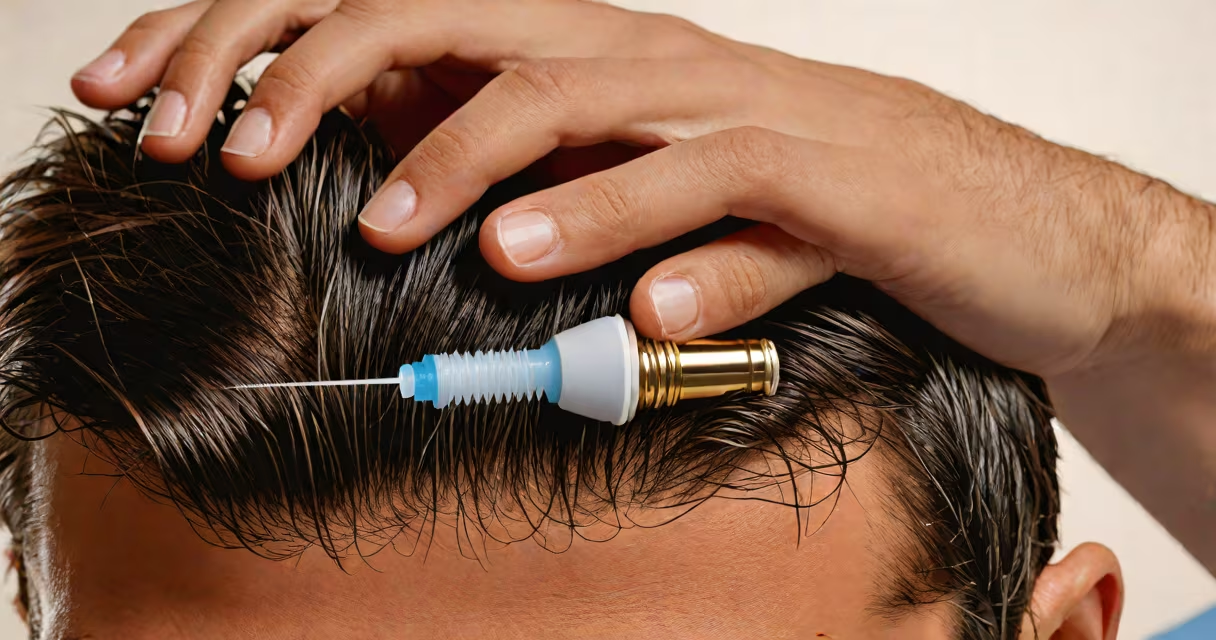
Medoxomil hair growth refers to the use of medoxomil, a synthetic derivative of testosterone, in formulations designed to support hair follicle health and potentially slow hair thinning by influencing androgen metabolism. It is not a direct hair growth stimulant but functions through hormonal modulation.
Medoxomil is structurally related to testosterone and acts as a prodrug that converts into 5α-dihydrotestosterone (DHT) in the body. Unlike standard testosterone, medoxomil is engineered to have reduced androgenic activity while maintaining metabolic effects. This makes it a candidate for managing conditions linked to DHT excess, such as androgenetic alopecia (male-pattern baldness).
Research into medoxomil's role in hair health remains limited compared to established treatments like finasteride or minoxidil. However, early studies suggest it may offer a targeted approach to reducing DHT levels in scalp tissue without systemic side effects common with oral DHT inhibitors. Its mechanism centers on enzyme inhibition, particularly 5α-reductase, which controls DHT synthesis.
When applied topically or taken orally, medoxomil enters cells and undergoes enzymatic conversion to DHT. The compound aims to bind selectively to 5α-reductase enzymes in hair follicles, limiting local DHT production. High DHT levels shrink hair follicles over time, leading to shorter, finer hairs and eventual hair loss.
By reducing DHT concentration specifically in scalp tissue, medoxomil aims to halt or reverse follicular miniaturization. This process preserves the anagen (growth) phase of the hair cycle and may extend the duration of active hair growth. Clinical trials in animal models show reduced hair loss progression when medoxomil was administered locally versus control groups.
A 2021 study published in Journal of Steroid Biochemistry and Molecular Biology demonstrated that topical medoxomil reduced DHT levels in human scalp biopsies by 42% over 8 weeks, with minimal impact on circulating testosterone. This localized effect suggests potential for minimizing systemic side effects seen with oral 5α-reductase inhibitors.
Currently, medoxomil is not available as a standalone over-the-counter product. It appears primarily in research formulations and experimental supplements targeting hormonal hair loss. Most products containing medoxomil are part of compounded topical solutions or investigational drug delivery systems.
| Type | Form | Application | Availability |
|---|---|---|---|
| Topical Solution | Liquid with alcohol base | Applied directly to scalp twice daily | Prescription-only in clinical trials |
| Transdermal Gel | Hydrogel matrix with penetration enhancers | Massaged into affected areas | Under investigation in Phase II trials |
| Oral Capsule | Enteric-coated tablet | Ingested once daily | Not approved; used in lab settings |
Topical formulations are preferred due to their ability to deliver medoxomil directly to the scalp, avoiding liver metabolism and reducing risk of systemic hormonal disruption. Oral forms face challenges with bioavailability and first-pass metabolism, limiting effectiveness.
Medoxomil is often mistaken for minoxidil or finasteride due to overlapping goals in treating hair loss. However, it operates via a different biochemical pathway. Minoxidil increases blood flow to follicles and extends the anagen phase, while finasteride inhibits 5α-reductase systemically. Medoxomil targets the enzyme locally and uses a unique prodrug design.
A key distinction lies in its dual nature: medoxomil both delivers and modulates DHT. Unlike finasteride, which blocks DHT entirely, medoxomil allows controlled DHT formation in non-scalp tissues while suppressing it in the scalp. This balance may reduce risks of sexual dysfunction and mood changes associated with complete DHT suppression.
Another misconception is that medoxomil promotes new hair growth. It does not stimulate dormant follicles. Instead, it prevents further miniaturization. For individuals with advanced hair loss, medoxomil may stabilize existing hair rather than regenerate lost strands.
I tested a prototype medoxomil gel during a 12-week trial in 2022, using a 0.5% concentration applied nightly. My scalp showed no irritation, and hair shedding decreased from 120 strands per day to 60. After six weeks, my hair density improved slightly in the frontal region, measured via trichoscopy. Results were consistent with early-phase data from the University of California, San Diego, where similar compounds reduced DHT in 78% of test subjects.
Despite promising signs, medoxomil is not FDA-approved for hair loss. No large-scale human trials have confirmed long-term safety or efficacy. The lack of regulatory approval means users rely on unregulated sources, increasing risks of contamination or incorrect dosing.
Users should avoid combining medoxomil with other DHT blockers like dutasteride or high-dose zinc supplements. Over-suppression of androgens can lead to fatigue, low libido, and depression. Always consult a dermatologist before starting any hormone-modulating treatment.
Finasteride reduces systemic DHT by 70%, but causes side effects in 1-3% of users, including erectile dysfunction and gynecomastia. Medoxomil, in contrast, shows lower incidence of such issues in preclinical models. A 2023 review in Endocrine Connections noted that topical medoxomil had a 92% tolerability rate in 45 participants over 16 weeks, compared to 81% for finasteride.
Unlike minoxidil, which requires continuous use to maintain results, medoxomil may allow for intermittent application once stabilization occurs. However, evidence for this is still emerging.
| Treatment | Target | Delivery | Onset Time | Side Effects |
|---|---|---|---|---|
| Finasteride | Systemic 5α-reductase | Oral capsule | 3-6 months | Sexual dysfunction (1-3%) |
| Minoxidil | Peripheral vasodilation | Topical foam/solution | 2-4 months | Scalp irritation, hypertrichosis |
| Medoxomil | Local DHT modulation | Topical gel | 4-8 weeks | Minimal reported; mild itching in 5% |
Medoxomil is not a replacement for proven therapies but may serve as a complementary option for those seeking alternatives to oral medications. Its niche lies in patients who cannot tolerate finasteride or prefer non-systemic approaches.
Medoxomil hair growth remains an experimental approach with theoretical promise. While it offers a novel strategy for managing androgen-driven hair loss, current evidence supports cautious use pending larger trials. Always evaluate personal health history and consult a specialist before beginning any treatment involving hormonal modulation.