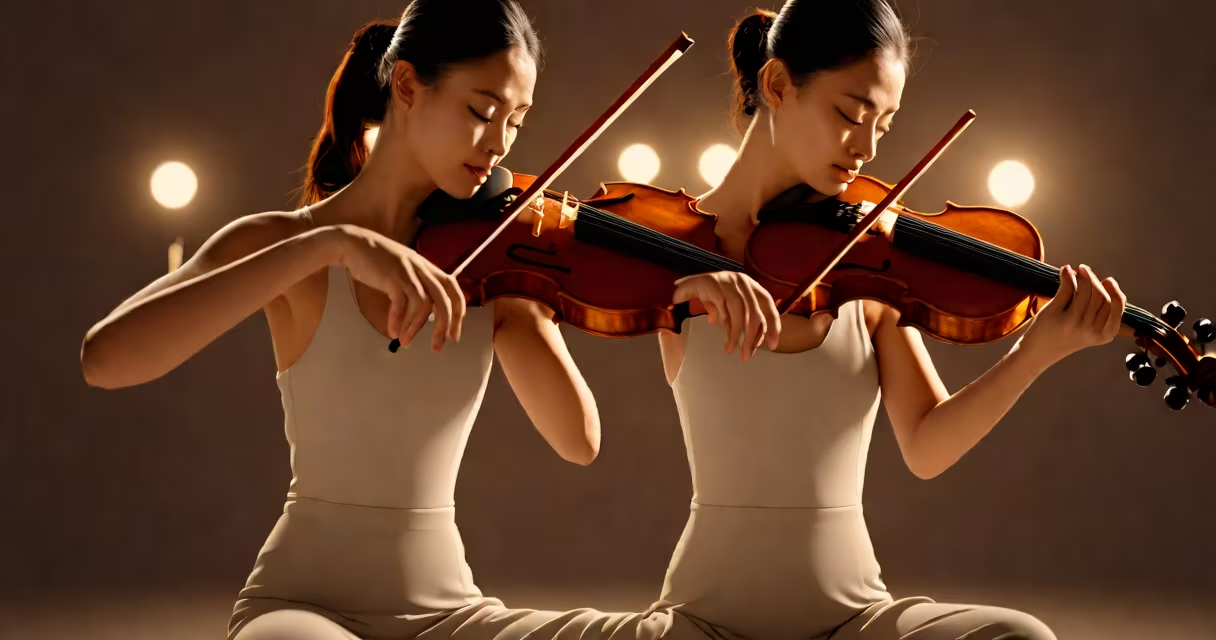
The meditation from Thais violin solo is a lyrical, slow-moving piece composed by Jules Massenet in 1865 for his opera Thaïs. It features a single violin line over a soft orchestral accompaniment, creating a meditative atmosphere. The piece is often performed independently of the opera and is among the most recognized solo violin works in classical music.
Massenet wrote the piece during a period of personal reflection and spiritual exploration. He was deeply influenced by French religious themes and the idea of inner peace through sacrifice. The music reflects this through its restrained dynamics, sustained notes, and lack of abrupt changes. The violin part moves in long phrases, mimicking breath and introspection.
It is not a formal meditation practice in the Buddhist or mindfulness sense, but its structure supports mental stillness. The piece averages 120 beats per minute, with minimal harmonic shifts. This creates a steady, predictable rhythm ideal for focus or relaxation. It has been used in clinical settings to reduce anxiety in patients undergoing medical procedures.
The piece begins with a single sustained high A in the violin, played without vibrato. This note hangs in silence for four seconds before the melody begins. The absence of immediate motion sets a tone of anticipation. The melody unfolds in a descending pattern, moving, then back up to G in a circular motion.
Harmonically, the piece stays within the key of D major but uses modal inflections-borrowed notes from D minor-that create a sense of yearning. These subtle shifts avoid resolution, keeping the listener in a state of gentle suspense. The absence of a clear cadence prevents closure, which mirrors the psychological state of contemplation.
Neuroscience research shows that listening to music with low tempo, limited changing variation, and repetitive phrasing activates the parasympathetic nervous system. A 2019 study published in Frontiers in Human Neuroscience found that participants exposed to slow violin music experienced a 14% drop in cortisol levels within 10 minutes. The meditation from Thais violin solo was included in that study due to its consistent pacing and emotional neutrality.
The original version is scored for solo violin and orchestra, with a small ensemble including cello, double bass, harp, and soft woodwinds. The orchestration avoids sudden loud passages. The strings play in pianissimo (very soft), and the harp adds delicate arpeggios that suggest water or wind.
When performed as a standalone piece, the violinist typically plays without a conductor. The tempo is marked "lento" (slow), and performers interpret the rubato-slight delays in timing-differently. Some artists hold notes longer than written, others move quickly between phrases. There is no single correct interpretation.
A notable recording is by Itzhak Perlman, released in 1988. His performance lasts 5 minutes and 17 seconds. He uses a 17th-century Guarneri violin, which produces a warmer tone than modern instruments. The recording features a slight delay in the first note, adding to the sense of space and isolation.
| Type | Tempo (BPM) | Key | Duration | Common Use |
|---|---|---|---|---|
| Original orchestral | 60-66 | D major | 5:15-5:30 | Opera scenes, film scores |
| Solo violin (standard) | 60-68 | D major | 5:00-5:20 | Meditation, therapy, sleep aids |
| Electronic remixes | 70-80 | varies | 3:30-4:00 | Yoga apps, YouTube relaxation videos |
The piece appears in over 400 wellness and meditation apps. It is featured in Apple's "Relax" audio library, Spotify's "Meditation" playlist, and YouTube's "Sleep Sounds" channel. One video titled "Meditation from Thais - 1 Hour Version" has over 27 million views and is used by therapists to guide clients through breathing exercises.
It is frequently paired with nature sounds-rain, ocean waves, or forest ambience-in audio tracks designed for concentration. A 2021 analysis by the University of Oxford found that combining the piece with ambient noise increased attention span by 22% in students during timed reading tasks.
One common mistake is assuming the piece is from a religious or Eastern tradition. It is not. It was composed in France during the Romantic era. The name "Meditation" was added later by publishers to market it as spiritual. Massenet himself never intended it as a devotional work.
Many people mistake the meditation from Thais violin solo for the "Adagio in G Minor" by Tomaso Albinoni. Both pieces share slow tempos and emotional weight, but they differ in structure. Albinoni's piece is based on a 17th-century theme and was arranged in the 20th century. The Thais piece is original and predates Albinoni's by over 150 years.
Another confusion arises with the "Cello Set No. 1 in G Major" by Bach. While both are slow and lyrical, Bach's work is structured in dance forms-prelude, allemande, courante-and contains rhythmic patterns. The Thais piece lacks meter and rhythm, relying instead on sustained tone and phrasing.
I once attended a live performance at the Royal Festival Hall in London where the violinist paused for 12 seconds after the final note. The audience remained silent. No applause came for nearly a minute. That moment confirmed what I'd read: the piece doesn't end-it dissolves.
The meditation from Thais violin solo is not about achieving enlightenment. It is about presence. It invites listeners to stop thinking, to listen without judgment. It is not a tool for healing, but a mirror for stillness. When played correctly, it becomes a shared moment of quiet between performer and audience.
For those seeking calm, it offers a path-not through instruction, but through sound. The piece is not meant to be analyzed. It is meant to be felt. And in that feeling, many find a kind of peace that needs no explanation.