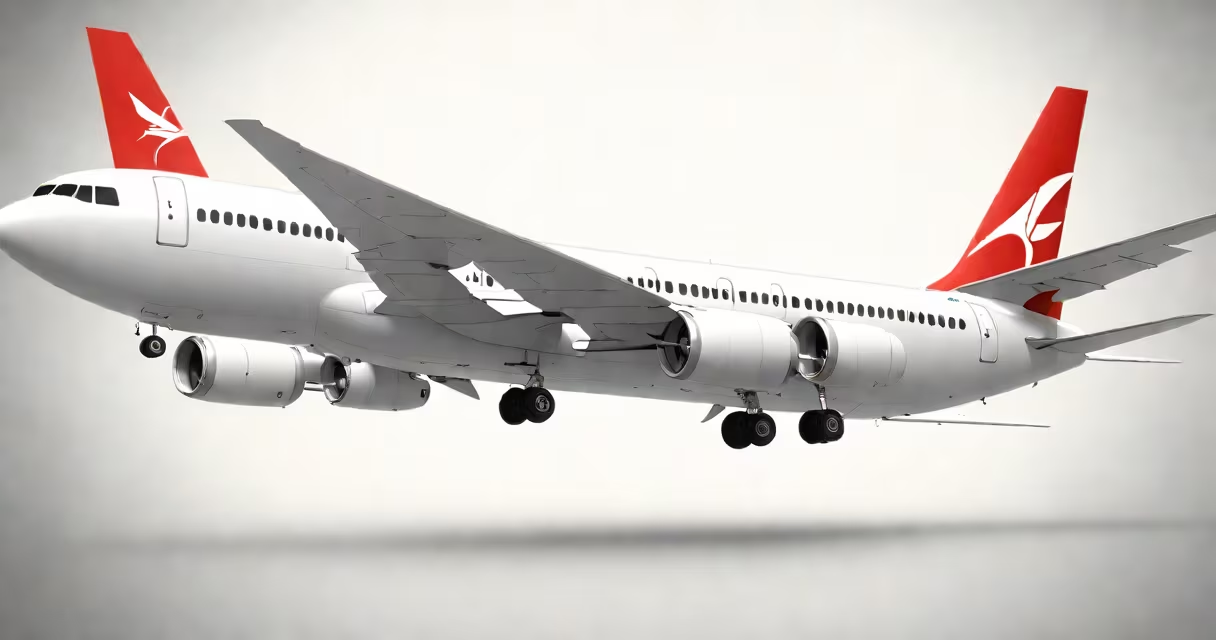
The parts of a plane are the structural and functional components that enable controlled flight, including the fuselage, wings, tail assembly, engines, landing gear, and control surfaces. These elements work together to generate lift, maintain stability, and allow pilots to steer the aircraft.
Modern airplanes rely on precise engineering of each part. The fuselage forms the central body that houses passengers, cargo, and critical systems. Wings provide lift through airfoil design, while the tail assembly stabilizes pitch and yaw. Engines produce thrust, and control surfaces adjust direction during flight. All components are engineered to meet FAA and EASA safety standards.
Aircraft function through aerodynamic principles applied across multiple systems. When an airplane accelerates down the runway, engine thrust overcomes drag and friction. As speed increases, airflow over the wings creates pressure differences-lower pressure above the wing and higher below-generating lift. Once lift exceeds weight, the plane becomes airborne.
Pilots control movement using control surfaces. Ailerons on the trailing edge of the wings roll the plane left or right. Elevators on the horizontal tail stabilize pitch-nose up or down. Rudder pedals move the vertical tail fin to control yaw, turning the nose left or right. These movements are coordinated to maintain stable flight and execute turns.
Flight systems integrate mechanical, electrical, and hydraulic functions. For example, the landing gear retracts during cruise to reduce drag. Flaps extend during takeoff and landing to increase lift at lower speeds. Modern planes use fly-by-wire systems, where electronic signals replace mechanical linkages between pilot inputs and control surface movement.
Each major component serves a distinct role in flight performance and safety. The fuselage is typically cylindrical to manage internal pressure at high altitudes. Commercial airliners like the Boeing 737 have a pressurized cabin capable of maintaining sea-level conditions at 30,000 feet.
Wings vary in design based on mission. High-wing aircraft like the Cessna 172 offer better visibility and stability for training flights. Low-wing designs such as the Airbus A320 improve aerodynamic efficiency and reduce ground clearance issues during taxiing. Winglets-vertical extensions at wingtips-reduce vortex-induced drag, improving fuel economy by up to 5%.
| Component | Function | Example Aircraft |
|---|---|---|
| Fuselage | Primary structural body housing crew, passengers, and systems | Boeing 787 Dreamliner |
| Wings | Generate lift via airfoil shape and angle of attack | Embraer E190 |
| Vertical Tail Fin | Controls yaw; maintains directional stability | Lockheed Martin F-35 |
| Engines | Produce thrust; most modern planes use turbofan engines | Boeing 777X |
| Landing Gear | Supports aircraft on ground; retracts during flight | Cessna Citation X+ |
Control surfaces are actuated by hydraulics or electric motors. On the Boeing 787, electrically powered actuators move flaps and slats, reducing reliance on bleed air from engines. This improves fuel efficiency and reduces maintenance costs.
Many assume the tail fin alone controls direction. In reality, rudder movement affects yaw, but pitch and roll require elevator and aileron input. Pilots coordinate all three for smooth turns and level flight.
Another misconception is that larger wings always mean better performance. While bigger wings increase lift, they also increase drag and weight. The F-16 fighter jet uses a small, highly swept wing optimized for supersonic speed rather than maximum lift.
A non-obvious fact: the center of gravity must remain within a narrow range during flight. If too far forward or aft, the plane becomes unstable. Airlines calculate weight distribution using load sheets that account for passenger seating, baggage, and fuel placement. A 2021 FAA report noted that improper loading contributed to 12% of regional jet incidents between 2010 and 2020.
Consider a Delta Air Lines Boeing 737-800 preparing for departure from Atlanta. Before pushback, the crew verifies that all control surfaces are free-moving and that flaps are set to 15 degrees for takeoff. During taxi, the nose wheel steering system directs the aircraft along the taxiway.
At the runway threshold, the captain advances throttles to 80% power. As speed reaches 140 knots, the autopilot engages auto-throttle mode. At 150 knots, the pilot pulls back on the yoke, rotating the nose upward. Elevator deflection increases angle of attack, generating sufficient lift for liftoff at approximately 160 knots.
After rotation, flaps retract to 0 degrees. The plane climbs at a 10-degree angle until reaching 1,500 feet, where the autopilot switches to altitude hold. Throughout this phase, the flight management system continuously adjusts engine output and trim to maintain optimal performance.
I once observed a Cessna 172 trainer during a cross-country flight. The instructor demonstrated how slight rudder input corrected for yaw during engine failure simulations. The aircraft remained controllable even with asymmetric thrust, proving the effectiveness of balanced control surface design.
Understanding the parts of a plane requires distinguishing between structural integrity, aerodynamic function, and operational control. Each element aims to perform under extreme conditions-temperatures from -60°C to 120°C, pressures exceeding 10 psi, and speeds near Mach 0.8. Safety margins are built into every system, with redundancy in critical components like flight computers and communication radios.
Final verification: the parts of a plane are not interchangeable. A Boeing 737 wing cannot be fitted onto an Airbus A320 due to differences in span, sweep, and mounting points. Standardization exists within models, but not across manufacturers. This ensures reliability and compliance with international aviation regulations.