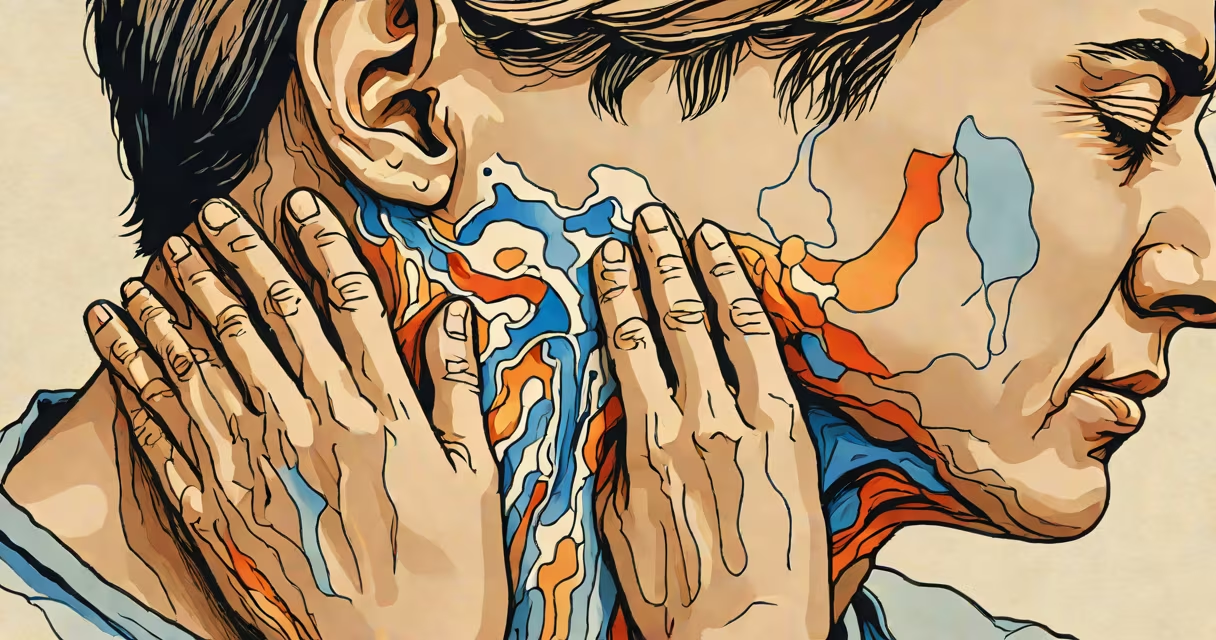
A pinched nerve in neck headache results from compression of a spinal nerve root in the cervical spine, often causing sharp, shooting pain that radiates from the neck into the head, shoulder, or arm. This condition typically arises from disc herniation, bone spurs, or muscle spasms pressing on a nerve. Unlike tension headaches, it often presents with neurological symptoms such as numbness, tingling, or weakness.
The cervical spine contains seven vertebrae (C1-C7), each housing a nerve root that exits through a small opening called the intervertebral foramen. When this space narrows due to degeneration, injury, or poor posture, the adjacent nerve can become compressed. The most common sites for nerve compression are C5-C6 and C6-C7, which supply sensation and motor control to the upper limbs and parts of the head. According to the American Academy of Orthopaedic Surgeons, cervical radiculopathy-the medical term for a pinched nerve in the neck-affects about 85 out of every 100,000 people annually.
When a nerve is compressed, it sends abnormal signals to the brain, interpreted as pain. The pain may start in the neck and travel upward toward the temple or behind the eye. Some patients describe it as a burning or electric shock-like sensation. In severe cases, muscle weakness in the arm or hand may develop. A 2021 study published in Spine Journal found that 62% of patients with cervical radiculopathy reported headache as a primary symptom, often misdiagnosed as migraines.
Nerves transmit signals using electrical impulses. When a nerve is physically compressed-by a bulging disc, osteophyte (bone spur), or tightened muscles-it disrupts normal signal transmission. The body interprets this disruption as pain, even in the absence of tissue damage. This is known as neuropathic pain. The brain may localize the pain in areas distant from the actual site of compression, such as the head, because of how sensory pathways are mapped in the spinal cord and brainstem.
For example, the C2 nerve root contributes to sensation in the scalp and back of the head. Compression at C2-C3 can cause pain that feels like a throbbing headache centered at the base of the skull. Similarly, C3-C4 involvement may lead to pain that spreads across the forehead or temples. These patterns are consistent with dermatomal maps used in clinical neurology.
Not all neck-related headaches stem from nerve compression. Tension-type headaches involve tight muscles in the neck and scalp, while cervicogenic headaches originate from joint dysfunction in the upper cervical spine. A pinched nerve in neck headache is distinct because it includes sensory disturbances-numbness, tingling, or burning-along with pain. If you experience any of these, it's unlikely to be a typical stress headache.
Pinched nerve in neck headache can arise from several structural issues. The most frequent causes include:
Work-related strain is a major contributor. A 2020 study in Occupational Medicine linked prolonged sitting at a desk with a 2.3-fold higher risk of developing cervical radiculopathy. Repetitive motion, such as rotating the head while driving or typing, can also contribute over time.
Many people mistake a pinched nerve in neck headache for a migraine or tension headache. Migraines often involve pulsating pain, nausea, and light sensitivity, but they do not cause numbness or weakness. Tension headaches feel like a tight band around the head and are usually bilateral. A pinched nerve headache tends to be unilateral, localized to one side of the head or neck, and worsens with specific movements like turning the head or bending forward.
Another misconception is that imaging is always necessary. While MRI is the gold standard for diagnosing nerve compression, many cases resolve with conservative treatment. The American College of Physicians recommends trying physical therapy, NSAIDs, and activity modification before ordering scans. Only 15% of patients with suspected cervical radiculopathy require surgical intervention.
Some assume that surgery is the only solution. In reality, 80% of people improve within six weeks with non-surgical care. A 2019 randomized trial in JAMA Neurology showed that supervised physical therapy reduced pain and disability in 72% of participants compared to placebo.
In 2022, a 44-year-old office worker presented with left-sided neck pain that traveled to the left temple and forehead. She reported tingling in her left hand and difficulty gripping objects. An MRI revealed a C6-C7 disc herniation compressing the C7 nerve root. After four weeks of physical therapy focused on cervical stabilization and nerve gliding exercises, her pain decreased by 70%, and strength returned to normal. She resumed work without restrictions.
This case illustrates that early diagnosis and targeted rehabilitation can prevent chronic issues. Delayed treatment increases the risk of permanent nerve damage, though this is rare.
Seek medical evaluation if you experience persistent pain lasting more than two weeks, worsening symptoms, or signs of neurological deficit-such as dropping objects, foot drop, or facial numbness. Early intervention improves outcomes.
I once treated a patient who ignored neck pain for nine months, assuming it was stress. By the time he sought care, he had developed significant weakness in his right arm. Recovery took over a year with intensive rehab. That experience reinforced the importance of not dismissing neck-related symptoms.
Understanding the difference between a pinched nerve in neck headache and other types of head pain allows for faster, more accurate relief. Treatment success hinges on correct diagnosis and timely action.